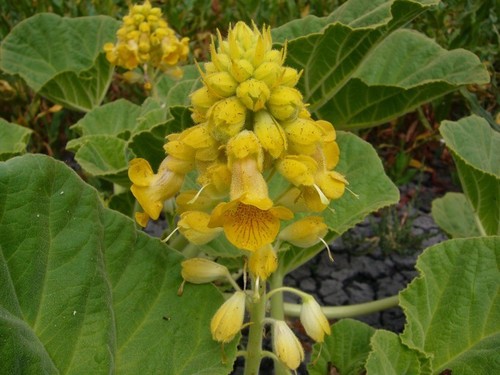
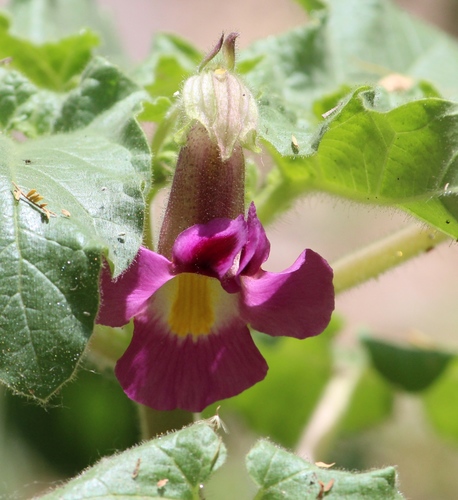
Craniolaria annua
Linn.
Escorzonera
MartyniaceaeRoots

iNaturalist · cc-by-nc
(c) Jeir Ortega Galvan, some rights reserved (CC BY-NC), uploaded by Jeir Ortega Galvan
(c) Jeir Ortega Galvan, some rights reserved (CC BY-NC), uploaded by Jeir Ortega Galvan

iNaturalist · cc-by-nc
(c) Jeir Ortega Galvan, some rights reserved (CC BY-NC)
(c) Jeir Ortega Galvan, some rights reserved (CC BY-NC)

iNaturalist · cc-by-nc
(c) Jeir Ortega Galvan, some rights reserved (CC BY-NC)
(c) Jeir Ortega Galvan, some rights reserved (CC BY-NC)
What to Eat
Edible parts: Roots
The roots are cooked and eaten. The sweet, fleshy roots are also preserved in sugar.
Where to Find It
A tropical plant.
Cuba*, Dominican Republic*, Guyana, Haiti, Puerto Rico, South America, Venezuela, West Indies*,
Countries: Antigua & Barbuda, Argentina, Barbados, Bolivia, Brazil, Bahamas, Chile, Colombia, Cuba, Dominica, Dominican Republic, Ecuador, Grenada, French Guiana, Guyana, Haiti, Jamaica, St Kitts & Nevis, St Lucia, Peru, Puerto Rico, Paraguay, Suriname, Trinidad & Tobago, Uruguay, St Vincent, Venezuela
How to Identify
A tropical herb in the Martyniaceae family with edible roots.
References (5)
- Hedrick, U.P., 1919, (Ed.), Sturtevant's edible plants of the world. p 224
- Plants of Haiti Smithsonian Institute http://botany.si.edu/antilles/West Indies
- Smith, N., Mori, S.A., et al, 2004, Flowering Plants of the Neotropics. Princeton. p 239 (Drawing)
- Sp. Pl. 2:618. 1753
- World Checklist of Useful Plant Species 2020. Royal Botanic Gardens, Kew