Cedrus libani
A. Rich.
Cedar of Lebanon
(c) Zeke Marshall, some rights reserved (CC BY), uploaded by Zeke Marshall

(c) Rytis Skominas, some rights reserved (CC BY-NC), uploaded by Rytis Skominas
(c) Michael and Antoni Hinczewski, some rights reserved (CC BY), uploaded by Michael and Antoni Hinczewski
What to Eat
Edible parts: Manna
A manna is obtained from the tree, though no further details about its collection or use were recorded.
Where to Find It
A Mediterranean plant. Wild plants grow in Cypress above 1100 m altitude. It suits hardiness zones 5-9. Arboretum Tasmania. Hobart Botanical Gardens.
Afghanistan, Africa, Algeria, Australia, Britain, Europe, Himalayas, Lebanon, Mediterranean, Middle East, North Africa, North America, Syria, Tasmania, Turkey, Türkiye, USA,
How to Identify
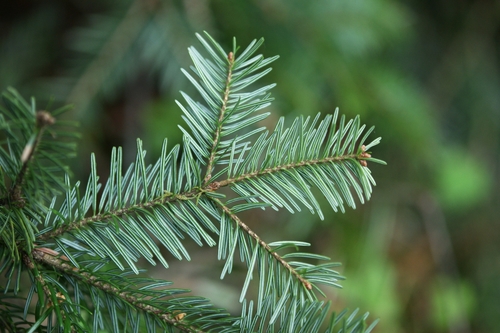
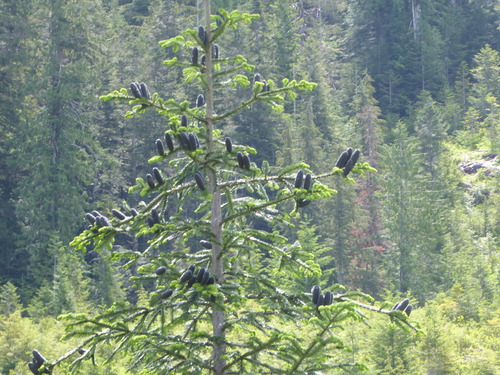
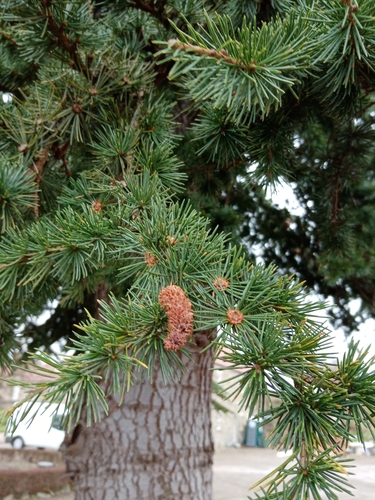
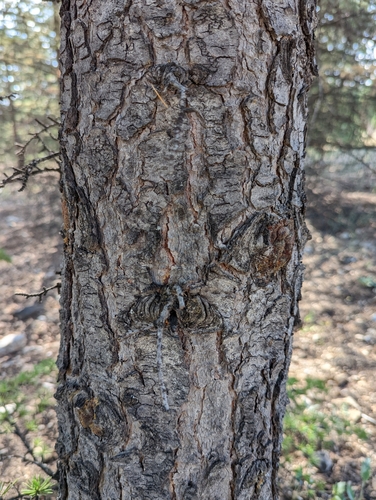
A large tree. It can be 45 m high. The trunk can be 3.5 m across. Young trees are cone shaped. The leaves are greyish-green. They are needle like. They are 25 mm long. They are arranged in spirals at the tips of branches. The cones are separately male and female. They are both large.
How to Grow
Thrives on most soils, being very tolerant of chalk, dry sites and of drought when it is established. Prefers a rich loam or a sandy clay in full sun. Succeeds in warm dry areas with less than 40cm of rain a year, but also in areas with cool summers and up to 200cm of rain. Very intolerant of atmospheric pollution. Small trees less than 50cm tall establish much quicker and better than taller trees, those more than 2 metres tall are difficult to establish. Larger trees will check badly and hardly put on any growth for several years. This also badly affects root development and wind resistance. Fairly slow growing, trees rarely average more than 30cm increase in height per year. Trees can be very long lived, to 300 years or more. There are several named varieties selected for their ornamental value. Small male cones are formed on the lower branches of trees, whilst the larger female cones are formed on higher branches. These female cones persist on the tree for 2 - 3 years before breaking up. Trees are notably susceptible to honey fungus. The trees have a broad canopy and tend to hold any falling snow. This can lead to branches being broken by the weight of snow.
Propagation: Collect cones in winter and keep them in a warm room until they open, then sow the seed immediately in a cold frame. A cold stratification period of one month can improve germination rates. Keep the seed pot moist but ensure good ventilation, as young seedlings are very prone to damping off. Prick seedlings into individual pots when large enough to handle, grow on in a cold frame through their first winter, and plant out in late spring or early summer. Provide protection from winter cold for the first year or two outdoors. Cuttings of terminal shoots can be attempted in a frame in November but are very difficult to root.
Medicinal Uses
The leaves and wood are antiseptic and expectorant, acting to disinfect and cleanse the respiratory tract.
Other Uses
An oil resembling turpentine is obtained from the wood, and an essential oil distilled from the wood is used in perfumery. The wood itself is moderately hard and durable, used in construction. It is notably long-lasting and retains a pleasing fragrance for many years.
Wikipedia
Source ↗Cedrus libani, commonly known as cedar of Lebanon, Lebanon cedar, or Lebanese cedar (Arabic: أرز لبناني, romanized: ʾarz lubnāniyy), is a species of large evergreen conifer in the genus Cedrus, which belongs to the pine family and is native to the mountains of the Eastern Mediterranean basin. Known for its longevity, height, and durable wood, it has held profound significance for millennia. The tree features in ancient Mesopotamian and Israelite literature, notably in the Hebrew Bible, according to which the tree was used in the construction of the Jerusalem Temple by Solomon, who received the trees from Hiram of Tyre. Today, it is the national emblem of Lebanon and is widely used as an ornamental tree in parks and gardens.
Production
It is a long lived tree.
Notes
There is only one Cedrus species or 2 subspecies. Some people have 4 species.
Names & Synonyms
References (9)
- Blamey, M and Grey-Wilson, C., 2005, Wild flowers of the Mediterranean. A & C Black London. p 28
- Bodkin, F., 1991, Encyclopedia Botanica. Cornstalk publishing, p 231
- Bory, Dict. class. hist. nat. 3:299. 1823
- Cundall, P., (ed.), 2004, Gardening Australia: flora: the gardener's bible. ABC Books. p 349
- Etherington, K., & Imwold, D., (Eds), 2001, Botanica's Trees & Shrubs. The illustrated A-Z of over 8500 trees and shrubs. Random House, Australia. p 194
- Hedrick, U.P., 1919, (Ed.), Sturtevant's edible plants of the world. p 177, 320
- Hibbert, M., 2002, The Aussie Plant Finder 2002, Florilegium. p 62
- Little, E.L., 1980, National Audubon Society Field Guide to North American Trees. Alfred A. Knopf. p 279
- Marinelli, J. (Ed), 2004, Plant. DK. p 138