Encephalartos caffer
(Thunb.) Lehm.
Hottentot bread-fruit, Kaffir bread, Caffir bread
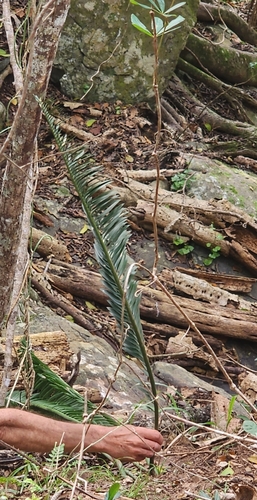
iNaturalist · cc-by
(c) Jane le Roux, some rights reserved (CC BY)
(c) Jane le Roux, some rights reserved (CC BY)
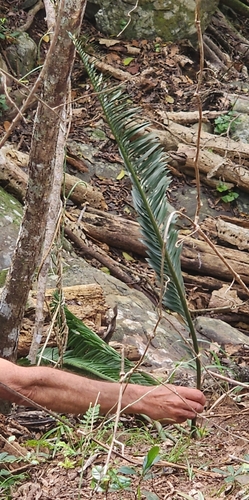
iNaturalist · cc-by
(c) Jane le Roux, some rights reserved (CC BY)
(c) Jane le Roux, some rights reserved (CC BY)
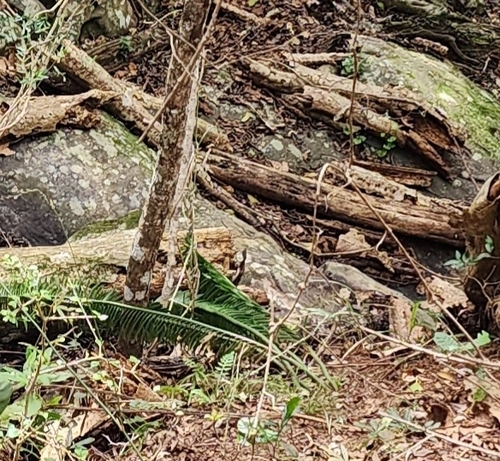
iNaturalist · cc-by
(c) Jane le Roux, some rights reserved (CC BY)
(c) Jane le Roux, some rights reserved (CC BY)
What to Eat
Edible parts: Pith, Fruit, Stem
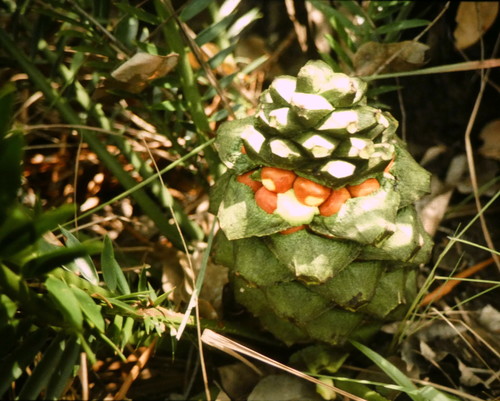
The pith of the stem is a major source of starch used to make bread and is traditionally processed by burying for several months before pounding. The flesh and centre of female cones are also eaten.
Where to Find It
It is a subtropical plant.
Africa, South Africa, Southern Africa,
Countries: Angola, Burkina Faso, Burundi, Benin, Botswana, Congo (DRC), Central African Republic, Congo (Republic), Cote d'Ivoire, Cameroon, Cape Verde, Djibouti, Algeria, Egypt, Eritrea, Ethiopia, Gabon, Ghana, Gambia, Guinea, Equatorial Guinea, Guinea-Bissau, Kenya, Comoros, Liberia, Lesotho, Libya, Morocco, Madagascar, Mali, Mauritania, Mauritius, Malawi, Mozambique, Namibia, Niger, Nigeria, Rwanda, Seychelles, Sudan, Sierra Leone, Senegal, Somalia, South Sudan, Sao Tome & Principe, Eswatini, Chad, Togo, Tunisia, Tanzania, Uganda, South Africa, Zambia, Zimbabwe
How to Identify
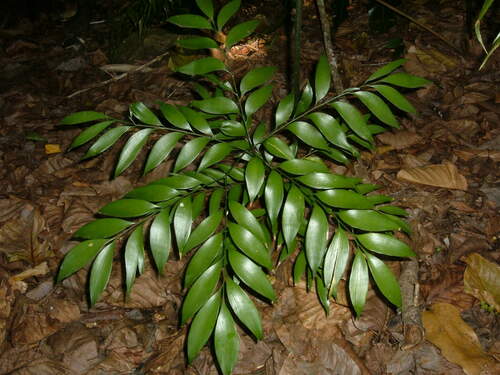
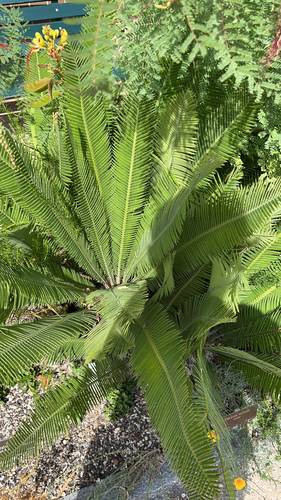
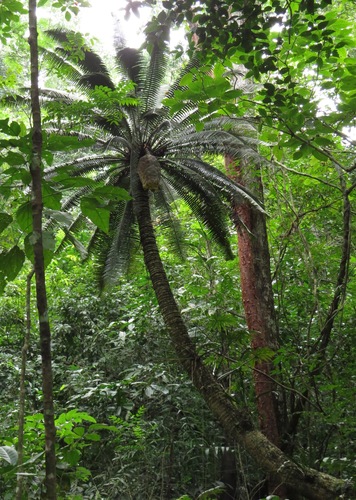
A cycad. It is a plant with an underground stem. It has tuberous roots. The stem is 30 cm long and 15-25 cm wide. It is woolly at the crown. The leaves are 40-90 cm long. There are several leaflets.
Names & Synonyms
Cycas caffra Thunb.
Cycas villosa A. DC.and others
References (6)
- Facciola, S., 1998, Cornucopia 2: a Source Book of Edible Plants. Kampong Publications, p 247
- Hedrick, U.P., 1919, (Ed.), Sturtevant's edible plants of the world. p 290
- Nov. stirp. pug. 6:14. 1834
- Ruiters-Welcome, A. K., 2019, Food plants of southern Africa. Ph.D. thesis. Univ. of Johannesburg p 108
- Uphof,
- Welcome, A. K. & Van Wyk, B.-E., 2019, An inventory and analysis of the food plants of southern Africa. South African Journal of Botany 122 (2019) 136–179