Larix decidua
Mill.
European larch, Common larch

(c) reddad, some rights reserved (CC BY-NC), uploaded by reddad
(c) Jens-Christian Svenning, some rights reserved (CC BY), uploaded by Jens-Christian Svenning

(c) Andreas Rockstein, some rights reserved (CC BY-SA)
What to Eat
Edible parts: Sap, Manna, Bark, Gum
The inner bark can be eaten raw or dried, ground into a powder, and blended with cereal flours for bread and similar preparations. A sweet-tasting manna can be tapped from the trunk and eaten raw, though it is mainly used medicinally. A separate report notes that 'Briancon manna' is exuded from the leaves during summer — it is white, sweet, and almost odourless.
Known Hazards
Where to Find It
It is a temperate plant. It suits cool sites. Arboretum Tasmania.
Australia, Austria, Britain, Europe, Hungary, Luxembourg, Norway, Russia, Scandinavia, Siberia, Slovakia, Slovenia, Tasmania,
How to Identify
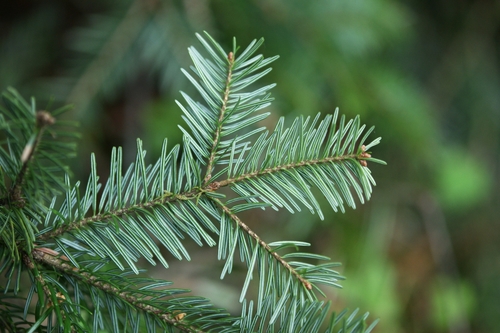
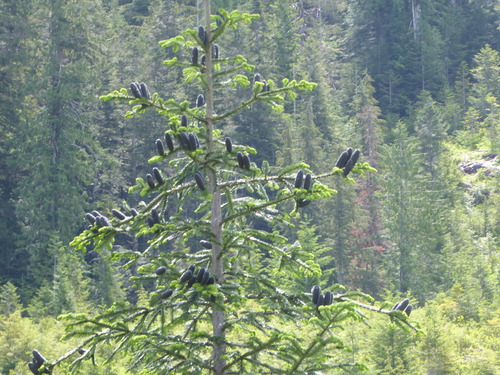
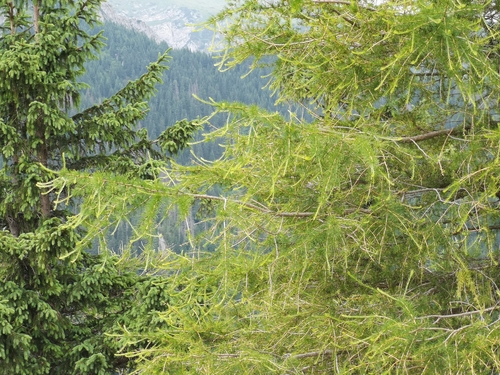
A deciduous conifer tree. It grows 30 m tall and spreads 4-6 m wide. The bark is grey and scaly. The branches droop. The needles and light green and soft and are in rings. They turn yellow before falling in autumn. The female cones are 2.5-4 cm long. They are pink and erect.
How to Grow
Prefers an open airy position in a light or gravelly well-drained soil. It tolerates acid and infertile soils, though it dislikes very peaty or very chalky soils. Another report says that it tolerates chalky soils. Succeeds on rocky hill or mountain sides and slopes. Tolerates salt-laden gales according to one report whilst another says that it dislikes exposed positions. The larch dislikes atmospheric pollution and so does not grow well in towns. A north or east aspect is more suitable than west or south. It dislikes growing in wet ground or frost pockets, and grows best in areas with abundant rainfall. The larch is a very ornamental tree that is widely grown for forestry. It is very fast growing with new annual growth of 1.5 metres often found and trees can average 60cm or more for many years. The dormant trees are very cold hardy, but they are often excited into premature growth in Britain by mild spells during the winter, the plants are then subject to damage by late frosts and cold winds. The young shoots have a delicate mossy fragrance as the leaves unfold. Hybridizes freely with other members of this genus. Open ground plants, 1 year x 1 year are the best for planting out, do not use container grown plants with spiralled roots. Plants transplant well, even when coming into growth in the spring. Plants in this genus are notably resistant to honey fungus.
Propagation: Sow seed in late winter in pots in a cold frame; one month of cold stratification aids germination. Give seedlings light shade in their first year. Prick out into individual pots once large enough to handle — even small seedlings can be planted into permanent positions in summer if given an effective weed-excluding mulch and some winter protection in their first year. Alternatively, overwinter in the cold frame and plant out in early summer the following year. Seed remains viable for 3 years. For larger quantities, sow in an outdoor seedbed in late winter and grow on for a couple of years before moving to permanent positions, planting out during winter.
Medicinal Uses
The bark, stripped of its outer layer, is astringent, balsamic, diuretic, expectorant, stimulant, and vulnerary. Its primary use is as an expectorant in chronic bronchitis; it has also been given internally for haemorrhage and cystitis. A cold extract of the bark acts as a laxative, and applied externally it is useful for chronic eczema and psoriasis. Powdered bark can be applied to purulent or difficult-to-heal wounds to encourage healing. Bark is harvested in spring and should be dried rapidly. The turpentine derived from the resin is antiseptic, balsamic, diuretic, haemostatic, rubefacient, and vermifuge — valuable for kidney, bladder, and rheumatic conditions, as well as diseases of the mucous membranes and respiratory complaints. Other reports caution that it is contraindicated for those with kidney complaints. Externally, the turpentine is applied as liniment plasters and inhalers, and has been suggested as a treatment for cyanide or opium poisoning. The plant is used in Bach flower remedies, with keywords 'Lack of confidence', 'Anticipation of failure', and 'Despondency'. The German Commission E Monographs approve it for fevers and colds, coughs and bronchitis, tendency to infection, blood pressure problems, inflammation of the mouth and pharynx, and the common cold.
Other Uses
Large quantities of resin are obtained by tapping the trunk — small holes are bored near the centre, and when properly made, the same borehole can be used for 20–30 years. Holes are made in spring and resin extracted in autumn, with extraction possible from May to October at a yield of around 40 grams per tree. The resin requires only straining through cloth to remove debris and has a wide range of uses including wood preservatives, varnish, and medicinal applications. Larch is a fast-growing pioneer species that establishes quickly and is said to improve soil quality, making it useful for reforesting cleared or exposed land to assist the establishment of other woodland trees. The bark contains tannin — on a 10% moisture basis it contains 11.6% tannin — and is widely used in northern Europe, though in Britain oak is considered a superior source. The wood is durable, tough, elastic, easy to split, and takes a good polish. It is among the toughest softwoods available and is resistant to woodworm, making it widely used in construction, railway sleepers, and cabinet work.
Wikipedia
Source ↗Larix decidua, the European larch, is a species of larch native to the mountains of central Europe, in the Alps and Carpathian Mountains, with small disjunct lowland populations in northern Poland. Its life span has been confirmed to be close to 1000 years, with ages of around 2000 years likely.
Other Information
The resin is chewed mainly by children.
Names & Synonyms
Cerveni smrek, Fenyo, Lerk, Navadni macesen
References (10)
- Brown, D., 2002, The Royal Horticultural Society encyclopedia of Herbs and their uses. DK Books. p 251
- Christanell, A., et al, 2010, The Cultural Significance of Wild Gathered Plant Species in Kartitsch (Eastern Tyrol, Austria) and the Influence of Socioeconomic Changes on Local Gathering Practices. Chapter 3 in Ethnobotany in the New Europe. Berghahn Books.
- Denes, A., et al, 2012, Wild plants used for food by Hungarian ethnic groups living in the Carpathian Basin. Acta Societatis Botanicorum Poloniae 81 (4): 381-396
- Gard. dict. ed. 8: Larix no. 1. 1768
- Girard, N. J., 2020, Sustainable Foraging of Wild Edible Plants in Norway. A Biocultural Approach. M. Sc. thesis Norwegian University. p 133
- Hedrick, U.P., 1919, (Ed.), Sturtevant's edible plants of the world. p 320, 371 (As Larix europea)
- Hibbert, M., 2002, The Aussie Plant Finder 2002, Florilegium. p 179 (As Larix europea)
- http://www.botanic-gardens-ljubljana.com/en/plants
- Luczaj, L., 2012, Ethnobotanical review of wild edible plants of Slovakia. Acta Societatis Botanicorum Poloniae 81(4):245-255
- Ryan, S., 2008, Dicksonia. Rare Plants Manual. Hyland House. p 67