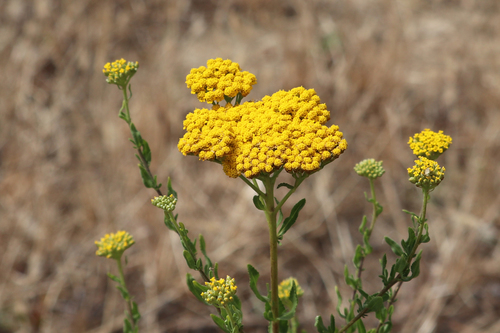
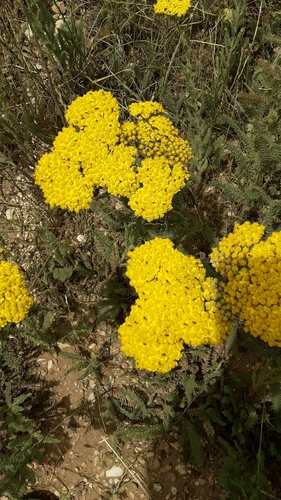
Plecostachys serpyllifolia
(Bergius) Hilliard & B.L. Burtt
Hottentot tea

iNaturalist · cc0
no rights reserved, uploaded by Irene
no rights reserved, uploaded by Irene
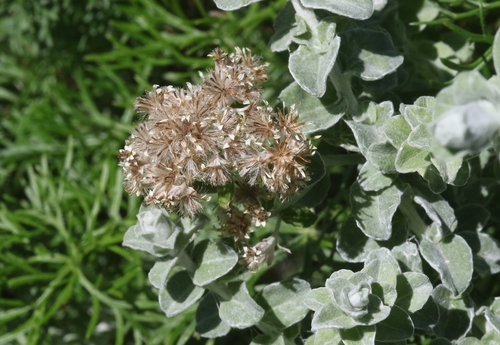
iNaturalist · cc-by-nc
(c) James Bailey, some rights reserved (CC BY-NC), uploaded by James Bailey
(c) James Bailey, some rights reserved (CC BY-NC), uploaded by James Bailey
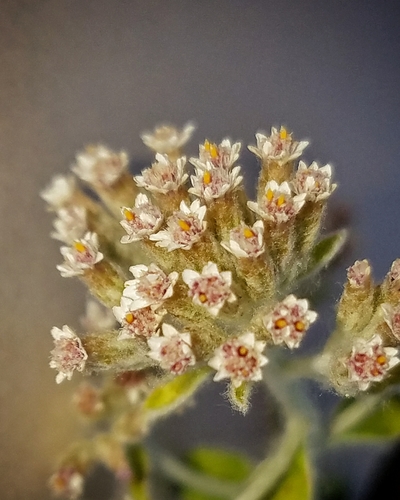
iNaturalist · cc-by-nc-sa
(c) Benjamin J. Dion, some rights reserved (CC BY-NC-SA), uploaded by Benjamin J. Dion
(c) Benjamin J. Dion, some rights reserved (CC BY-NC-SA), uploaded by Benjamin J. Dion
What to Eat
Edible parts: Leaves - tea
The leaves are used as a tea substitute.
Where to Find It
It is a Mediterranean plant. It grows in coastal regions on flat land. It can grow in arid places.
Africa, South Africa, Southern Africa,
Countries: Angola, Burkina Faso, Burundi, Benin, Botswana, Congo (DRC), Central African Republic, Congo (Republic), Cote d'Ivoire, Cameroon, Cape Verde, Djibouti, Algeria, Egypt, Eritrea, Ethiopia, Gabon, Ghana, Gambia, Guinea, Equatorial Guinea, Guinea-Bissau, Kenya, Comoros, Liberia, Lesotho, Libya, Morocco, Madagascar, Mali, Mauritania, Mauritius, Malawi, Mozambique, Namibia, Niger, Nigeria, Rwanda, Seychelles, Sudan, Sierra Leone, Senegal, Somalia, South Sudan, Sao Tome & Principe, Eswatini, Chad, Togo, Tunisia, Tanzania, Uganda, South Africa, Zambia, Zimbabwe
How to Identify
A small shrub. The branches are slender and young parts have a white coating. The leaves are 10 mm long by 7 mm wide. The edges are wavy.
Names & Synonyms
Vaaltee
Gnaphalium globuliferum E. Mey. ex DC.Gnaphalium helianthemifolium Burm. f.Gnaphalium orbiculare Thunb.Gnaphalium serpyllifolium P. J. BergiusHelichrysum orbiculare (Thunb.) DruceHelichrysum serpyllifolium Pers.Xeranthemum serpyllifolium Lam.
References (7)
- Fox, F. W. & Young, M. E. N., 1982, Food from the Veld. Delta Books. p 123 (As Helichrysum serpyllifolium)
- Hedrick, U.P., 1919, (Ed.), Sturtevant's edible plants of the world. p 340 (As Helichrysum serpyllifolium)
- Royal Botanic Gardens, Kew (1999). Survey of Economic Plants for Arid and Semi-Arid Lands (SEPASAL) database. Published on the Internet; http://www.rbgkew.org.uk/ceb/sepasal/internet [Accessed 11th April 2011] (As Helichrysum serpyllifolium)
- Ruiters-Welcome, A. K., 2019, Food plants of southern Africa. Ph.D. thesis. Univ. of Johannesburg p 36
- van Wyk, Be., & Gericke, N., 2007, People's plants. A Guide to Useful Plants of Southern Africa. Briza. p 108
- Welcome, A. K. & Van Wyk, B.-E., 2019, An inventory and analysis of the food plants of southern Africa. South African Journal of Botany 122 (2019) 136–179 (Also as Helichrysum serpyllifolium)
- World Checklist of Useful Plant Species 2020. Royal Botanic Gardens, Kew