Grewia crenata
(Forst.) Schinz & Guillaumin
Siti, Sitisiti

no rights reserved

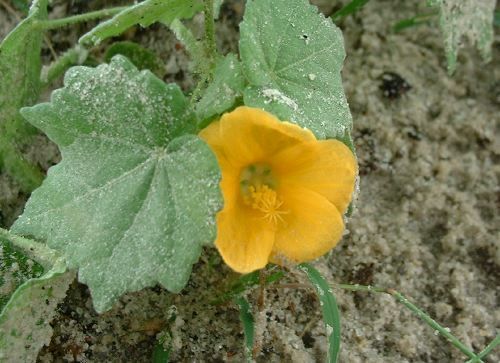
(c) Dominik Maximilián Ramík, some rights reserved (CC BY)

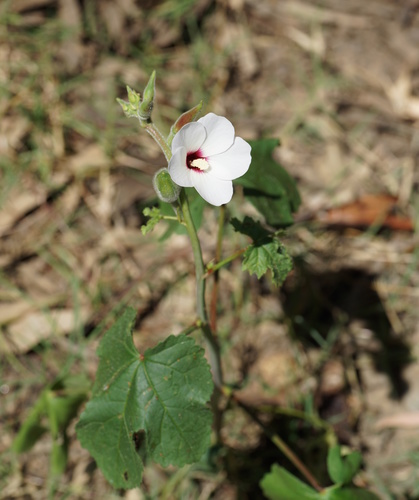
(c) Dominik Maximilián Ramík, some rights reserved (CC BY)
What to Eat
Edible parts: Fruit
The round black fruit are eaten, particularly by children.
Where to Find It
A tropical plant. It grows from sea level up to 300 m altitude in Samoa.
American Samoa, Cook Islands, Fiji, French Polynesia, New Caledonia, Niue, Pacific, Samoa, Tonga, Vanuatu,
How to Identify
A small tree. It grows 6-10 m high. It has narrow leafy growths near the leaf which fall off. These are 1.6 cm long. The young stems are hairy. The leaves are simple and alternate. The leaf blade is narrowly oval and 5-20 cm long. It can be rounded or heart shaped at the base. The leaf is slightly darker on the upper side. There can be some hairs. There are rounded teeth along the edge. The leaf stalk is 2-12 mm long. The flowers occur in groups or 3-6. There are many yellow stamens. The fruit is round and black. It has 2-4 lobes. The fruit are 4-6 mm across.
Other Information
The fruit are eaten especially by children.
Notes
These were in the Sparrmanniaceae and the Tiliaceae.
Names & Synonyms
Fauui, Mboko ni ngata, Nithe, Vauvau
References (4)
- Franklin, J., Keppel, G., & Whistler, W., 2008, The vegetation and flora of Lakeba, Nayau and Aiwa Islands, Central Lau Group, Fiji. Micronesica 40(1/2): 169–225, 2008
- Smith, A.C., 1981, Flora Vitiensis Nova, Lawaii, Kuai, Hawaii, Volume 2 p 374
- Walter, A. & Sam C., 2002, Fruits of Oceania. ACIAR Monograph No. 85. Canberra. p 280
- Whistler, W.A., 2004, Rainforest Trees of Samoa. Isle Botanica Honolulu, Hawaii. p 171