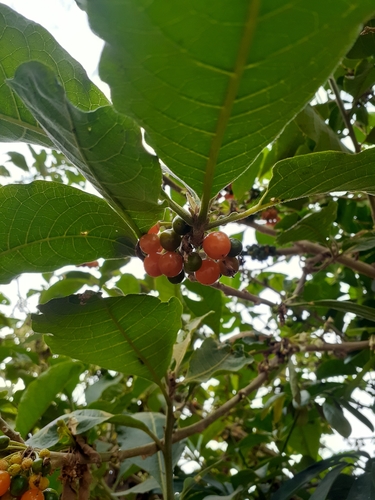
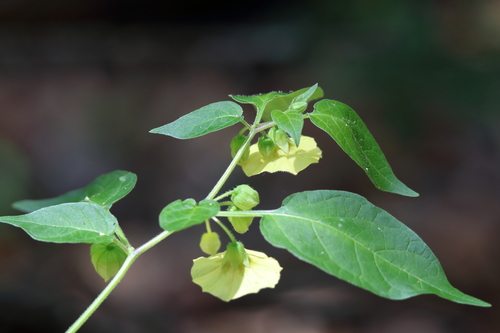
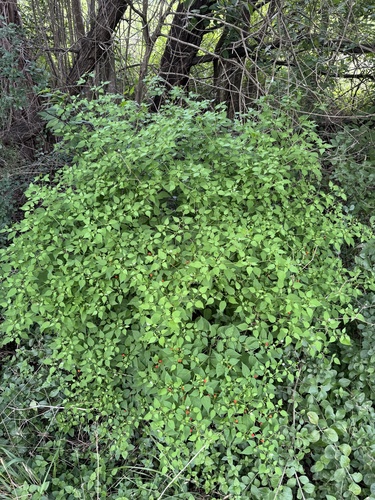
Solanum chenopodioides
Lam.
Whitetip nightshade

(c) jasperidium, some rights reserved (CC BY-NC)
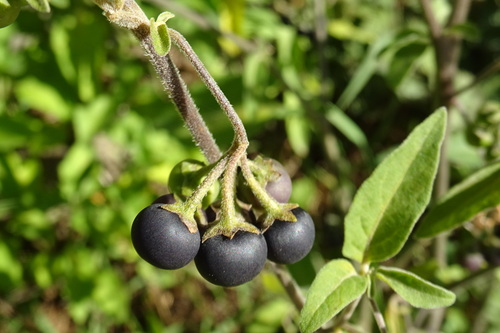
(c) Alba Rovira, some rights reserved (CC BY-NC), uploaded by Alba Rovira
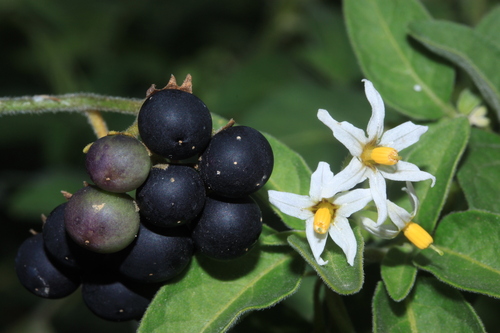
(c) jltasset, some rights reserved (CC BY-NC), uploaded by jltasset
What to Eat
Edible parts: Fruit, Leaves
The fruit can be used for jam, jellies, and processed products. The leaves and fruit are edible.
Where to Find It
It is a subtropical plant. It grows in coastal regions and near watercourses. It can grow in arid places. In Argentina it grows below 500 m above sea level.
Africa, Argentina, Australia, Brazil*, Chile, Mauritius, New Zealand, Paraguay, South Africa, Southern Africa, South America*,
How to Identify
A herb. It grows to 1 m high. It grows each year from seed. The leaves are 3-6 cm long by 1-3 cm wide. The fruit are round and 6-8 mm across.
Wikipedia
Source ↗Solanum chenopodioides, commonly known as the whitetip nightshade or velvety nightshade, is a shrub of the family Solanaceae native to South America. It has become naturalised in North America, Europe, Australia, and New Zealand.
Names & Synonyms
Erva-moura, Maria-preta, Maria-pretinha
References (11)
- Brack, P., et al, 2020, Frutas nativas do Rio Grande do Sul, Brasil: riqueza e potencial alimentício. Native fruits of Rio Grande do Sul, Brazil: richness and potential as food. Rodriguésia 71: e03102018
- Fox, F. W. & Young, M. E. N., 1982, Food from the Veld. Delta Books. p 347 (As Solanum gracile Dun.)
- Kinupp, V. F., 2007, Plantas alimenticias nao-convencionais da regiao metropolitana de Porto Alegre, RS, Brazil p 103
- Royal Botanic Gardens, Kew (1999). Survey of Economic Plants for Arid and Semi-Arid Lands (SEPASAL) database. Published on the Internet; http://www.rbgkew.org.uk/ceb/sepasal/internet [Accessed 11th June 2011]
- Tabl. encycl. 2(vol. 3):18. 1794
- Ruiters-Welcome, A. K., 2019, Food plants of southern Africa. Ph.D. thesis. Univ. of Johannesburg p 103
- Samuels, J., 2015, Biodiversity of Food Species of the Solonaceae Family: A Preliminary Taxonomic Inventory of Subfamily Solanoideae. Resources 2015, 4. 277-322
- van Wyk, B., 2005, Food Plants of the World. An illustrated guide. Timber press. p 349
- van Wyk, Be., & Gericke, N., 2007, People's plants. A Guide to Useful Plants of Southern Africa. Briza. p 56
- van Wyk, B-E., 2011, The potential of South African plants in the development of new food and beverage products. South African Journal of Botany 77 (2011) 857–868
- Welcome, A. K. & Van Wyk, B.-E., 2019, An inventory and analysis of the food plants of southern Africa. South African Journal of Botany 122 (2019) 136–179