Anacyclus pyrethrum
(L.) Link
Pellitory of Spain
(c) Rebbas, some rights reserved (CC BY-NC), uploaded by Rebbas
(c) meyssoun, some rights reserved (CC BY-NC), uploaded by meyssoun
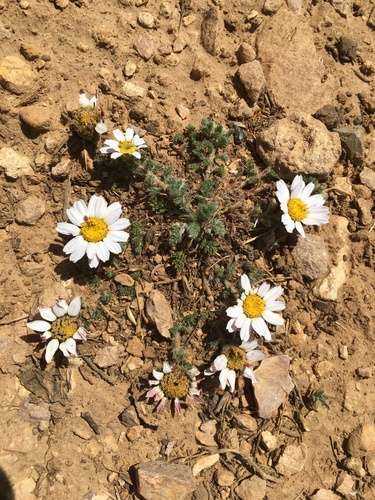
(c) Thomas Friedrich, some rights reserved (CC BY-NC), uploaded by Thomas Friedrich
What to Eat
Edible parts: Leaves - flavouring, Roots, Spice
None known.
Where to Find It
It is a Mediterranean climate plant. It needs a well drained soil. It is hardy to frosts. It is resistant to drought.
Africa, Algeria*, Arabia, Asia, Australia, Austria, Europe, Germany, Hungary, India, Mediterranean, Middle East, Morocco, Myanmar, North Africa, Pakistan, SE Asia, Spain,
How to Identify
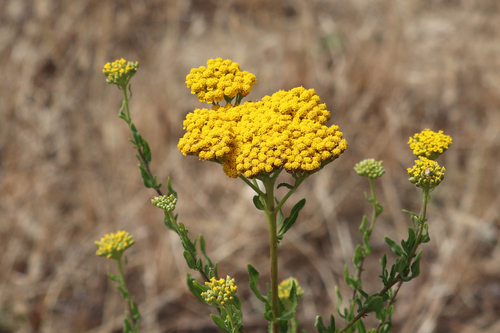
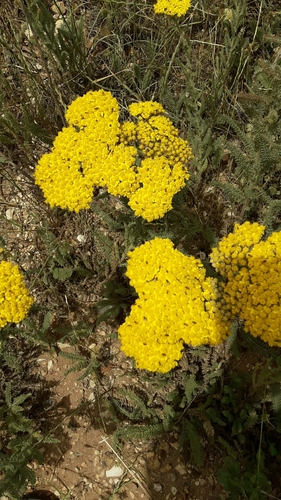
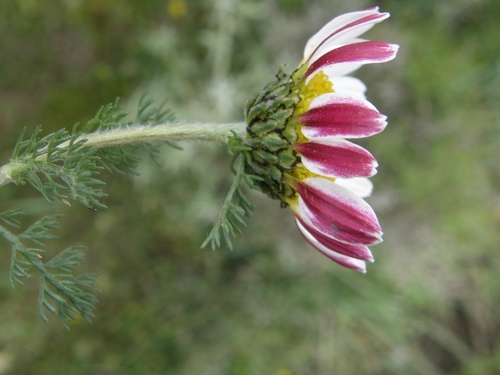
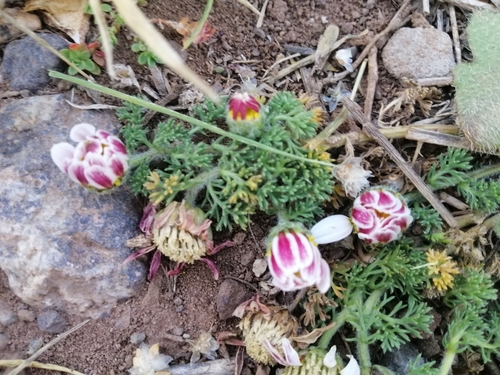
A low herb. It grows 30 cm high and spreads 25-30 cm wide. There is a smaller variety. It forms rings. The leaves are finely divided and grey-green. They are 10-14 cm long. The flower occurs singly and is daisy like. They are 2.5-5 cm across. They have yellow centres and white ray petals.
How to Grow
Plants are grown from seed. It can also be grown by softwood cuttings.
Propagation: Seed requires approximately 3 weeks of cold stratification and germinates best at around 13–16°C. Prick out seedlings into individual pots once large enough to handle, grow on in a greenhouse through their first winter, and plant out in late spring or early summer. Softwood cuttings can be taken in spring.
Medicinal Uses
The root is a pungent, acrid herb that stimulates the salivary glands and irritates local tissues, increasing blood flow to the area. It is used externally to treat toothache, facial neuralgia, and chronic catarrh, and as a gargle to soothe sore throats. The root is harvested in autumn and dried for later use. In Ayurvedic medicine it is considered tonic and is used in the treatment of paralysis and epilepsy. The diluted essential oil from the root is used in mouthwashes and for toothache, but should not be taken internally except under professional supervision.
Other Uses
None known.
Wikipedia
Source ↗Anacyclus pyrethrum, the pellitory, Spanish chamomile, Mount Atlas daisy, bertram, or Akarkara, is a species of flowering plant in the daisy family Asteraceae. It is native to Mediterranean Europe and parts of North Africa, but also naturalised in other parts of Europe, India and Pakistan. This herbaceous perennial resembles chamomile species in habitat and appearance. The plants known as pellitory-of-the-wall and spreading pellitory belong to a different family, the nettles (Urticaceae).
Other Information
It has been cultivated.
Notes
There are 9 Anacyclus species.
Names & Synonyms
Kok-ka-ya, Roman pellitory
References (7)
- Bircher, A. G. & Bircher, W. H., 2000, Encyclopedia of Fruit Trees and Edible Flowering Plants in Egypt and the Subtropics. AUC Press. p 26
- Bodkin, F., 1991, Encyclopedia Botanica. Cornstalk publishing, p 78
- Brown, D., 2002, The Royal Horticultural Society encyclopedia of Herbs and their uses. DK Books. p 119
- Enum. hort. berol. alt. 2:344. 1822
- Facciola, S., 1998, Cornucopia 2: a Source Book of Edible Plants. Kampong Publications, p 32
- Seidemann J., 2005, World Spice Plants. Economic Usage, Botany, Taxonomy. Springer. p 39
- Zeven, A. C. & de West, J. M. J., 1982, Dictionary of cultivated plants and their regions of diversity. Wageningen. p 105