Swertia chirata
(Wall.) C. B. Clarke
Chiretta

Wikimedia Commons - Rison Thumboor from Thrissur, India

Wikimedia Commons - Bernd Haynold
What to Eat
Edible parts: Leaves - flavouring, Medicine
Extracts of the plant are used to flavour both alcoholic and non-alcoholic drinks. The leaves are also used for flavouring and medicine.
Known Hazards
Where to Find It
It is a subtropical plant. In Sikkim it grows between 1,500-2,500 m above sea level.
Asia, Himalayas, India, Nepal, Northeastern India, Sikkim,
How to Identify
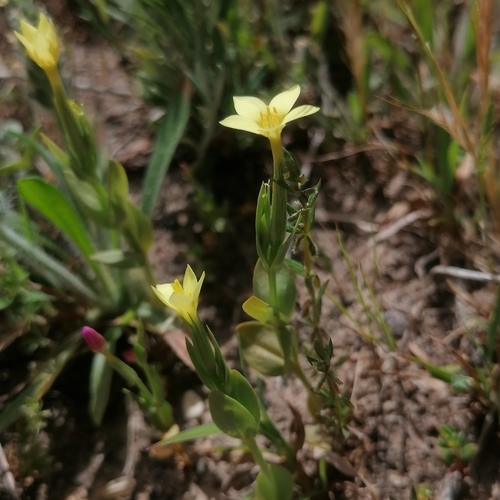
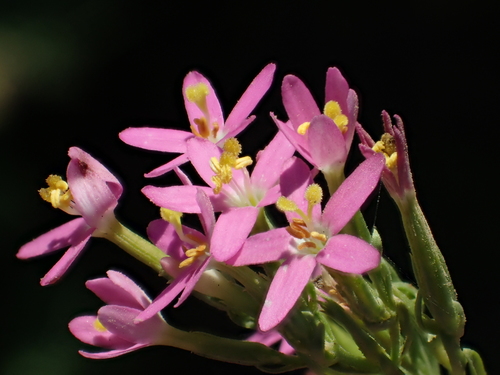
An annual herb. The stems are robust and branching. They become angular towards the top of the stems. The stems contain a large pith. The leaves are broadly sword shaped and have short stalks. The flowers are in large panicles. They are greenish yellow with a purple tinge. The fruit are egg shaped capsules. They have many sides and sharp points. The seeds are smooth and many angled.
Medicinal Uses
The plant is used in medicine to reduce fevers.
Notes
It is used in medicine. It reduces fevers.
Names & Synonyms
Chiraita, Chirauto, Chirayata, Chirayta
References (6)
- Aryal, K. P., et al, 2018, Diversity and use of wild and non-cultivated edible plants in the Western Himalaya. Journal of Ethnobiology and Ethnomedicine (2018) 14:10
- Facciola, S., 1998, Cornucopia 2: a Source Book of Edible Plants. Kampong Publications, p 119
- J. D. Hooker, Fl. Brit. India 4:124. 1883
- Kumar, R. & Saikia, P., 2020, Wild edible plants of Jharkhand and their utilitarian perspectives. Indian Journal of Traditional Knowledge Vol 19 (2), April 2020, pp 237-250
- Sundriyal, M., et al, 1998, Wild edibles and other useful plants from the Sikkim Himalaya, India. Oecologia Montana 7:43-54
- Sundriyal, M., et al, 2004, Dietary Use of Wild Plant Resources in the Sikkim Himalaya, India. Economic Botany 58(4) pp 626-638