Capsicum chacoense
A. T. Hunz
Chaco pepper

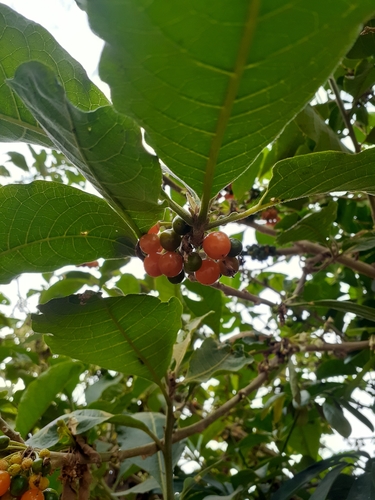
(c) aacocucci, some rights reserved (CC BY), uploaded by aacocucci

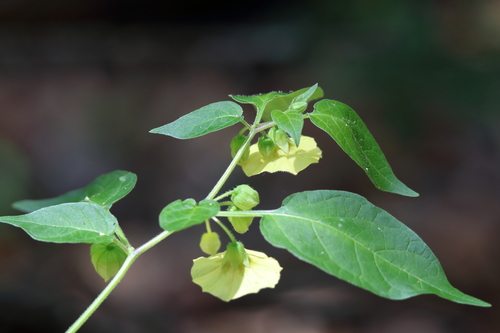
(c) jlcartes, some rights reserved (CC BY-NC)
What to Eat
Edible parts: Fruit - spice
Fruit - cooked. The hot, pungent fruits are used as a condiment. The fruit grows to be around 3cm in length when fully ripe, and is bright red in colour, with a roundish/triangular shape.
Known Hazards
Where to Find It
A subtropical plant. In Argentina it grows from sea level to 2,000 m above sea level.
Argentina, Bolivia, Paraguay, South America,
How to Identify
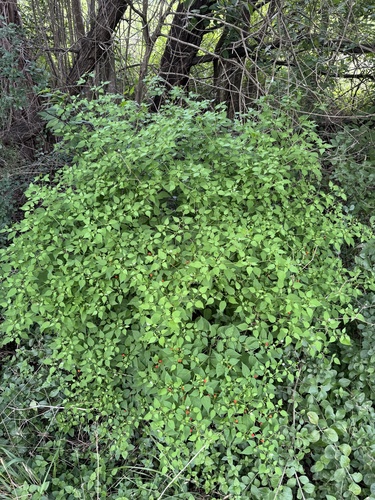
A herb. It grows 40-100 cm high. The leaves are narrowly oval and 2-6 cm long by 1-3 cm wide. The fruit are red.
How to Grow
A plant of low to moderate elevations in the subtropics and tropics. Plants tend to crop heavily each season and in warm areas can easily keep producing for four or five years.
Propagation: Seed - sow in a seedbed or in containers. The seed usually germinates in 3 - 4 weeks at 20°c. Plant out into permanent positions when about 8 - 10cm tall.
Wikipedia
Source ↗Capsicum chacoense is a species of the genus Capsicum native to South America. While it is rarely cultivated by humans, it, like domesticated Capsicum species, produces edible fruit.
Other Information
It is enjoyed as a seasoning.
Notes
There are 10 Capsicum species.
Names & Synonyms
Aji del monte, Aribibi, Ateshyuk, Awaranink i'i, Jnopita, Natekhet, Nurunja, Pahana, Quitoucho
References (15)
- Arenas, P. and Scarpa, G. F., 2006, Edible wild plants of the Chorote Indians, Gran Chaco, Argentina. Botanical Journal of the Linnean Society. Vol. 153 (1): pp 73-85
- Carretero, A. L., 2005, Useful Plants and traditional knowledge in the Tucumano-Boliviano Forest. M. Sc. Thesis Institute of Biological Science University of Aarhus, Denmark p 55
- Darwiniana 9:228, fig. 2. 1950
- Facciola, S., 1998, Cornucopia 2: a Source Book of Edible Plants. Kampong Publications, p 232
- Kermath, B. M., et al, 2014, Food Plants in the Americas: A survey of the domesticated, cultivated and wild plants used for Human food in North, Central and South America and the Caribbean. On line draft. p 180
- Montani, M. C. & Scarpa, G. F., 2016, Recursos vegetales y prácticas alimentarias entre indígenas tapiete del noreste de la provincia de Salta, Argentina. Darwiniana, nueva serie vol.4 no.1 San Isidro jul. 2016
- Palmieri, V. S., et al, 2018, Aproximaciones etnobotánicas de las especies y prácticas de frutos nativos comestibles de la Actualidad. Aportes para la interpretación del pasado prehispánico de cerro colorado (Córdoba, Argentina). Bol. Soc. Argent. Bot. 53 (1): 115-133
- Palmeiri, V. S., & Geisa, M. G., 2019, Las plantas comestibles empleadas por las comunidades comechingonas de San Marcos Sierras (Córdoba, Argentina). Primeras aproximaciones. Bol. Soc. Argent. Bot. 54: 295-309.
- Palmieri, V. S., et al, 2022, Wild edible plants of the Central Mountains in Argentina. Comparing subregions to understand the complexity of local botanical knowledge. Rodriguésia 73: e01092021. 2022
- Polini, G., et al, Useful and edible plants of Paraguay Region of Chaco. p 124
- Samuels, J., 2015, Biodiversity of Food Species of the Solonaceae Family: A Preliminary Taxonomic Inventory of Subfamily Solanoideae. Resources 2015, 4. 277-322
- Scarpa, G. F., 2009, Wild food plants used by the indigenous peoples of South American Gran Chaco: A general synopsis and intercultural comparison. Journal of Applied Botany and Food Quality 83:90-101
- Schmedia-Hirschmann, G., 1994, Plants resources Used by the Ayoreo of the Paraguayan Chaco. Economic Botany Vol. 48. No. 3. pp. 252-258
- Wiersema, J. H. & Leon, B., 2013, World Economic Plants. A Standard Reference CRC Press. 2nd Ed. p 141
- World Checklist of Useful Plant Species 2020. Royal Botanic Gardens, Kew