Cestrum nocturnum
Linnaeus
Night-flowering Cestrum

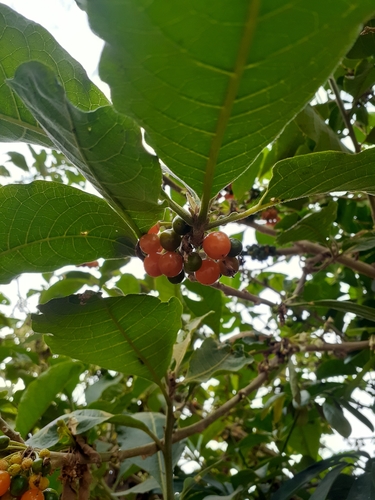
(c) bgilberto, some rights reserved (CC BY-NC)
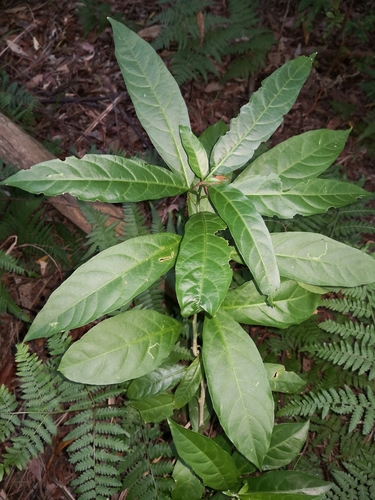
(c) Nick Lambert, some rights reserved (CC BY-NC-SA), uploaded by Nick Lambert

(c) Jason Searle, some rights reserved (CC BY-NC), uploaded by Jason Searle
What to Eat
Edible parts: Leaves
The leaves are cooked in fat with tortillas, though the plant should only be eaten with great caution.
Known Hazards
Where to Find It
A tropical plant. It is best with rich, moist, well-drained soils. It needs a protected, sunny position. It is damaged by drought or frost. In Yunnan.
Africa, Andaman Is., Asia, Australia, Bangladesh, Belize, Burundi, Cambodia, Cameroon, Central America*, Chile, China, Colombia, Comoros, Cook Is., Congo DR, Costa Rica, Cuba, Dominican Republic, East Africa, El Salvador, Eritrea, Ethiopia, Fiji, French Guiana, Guatemala, Haiti, Hawaii, Himalayas, Honduras, India, Indochina, Indonesia, Jamaica, Kenya, Kiribati, Laos, Leeward Is., Lesser Antilles, Madagascar, Malawi, Mauritius, Mexico, Myanmar, Nauru, Nepal, New Caledonia, New Zealand, Nicaragua, Niue, North America, Northeastern India, Pacific, Pakistan, Panama, Philippines, Puerto Rico, Reunion, Rotuma, Samoa, SE Asia, South America*, Sri Lanka, Tanzania, Thailand, Trinidad-Tobago, Tuvalu, Uganda, USA, Venezuela, Vietnam, West Indies, Zambia, Zimbabwe,
How to Identify
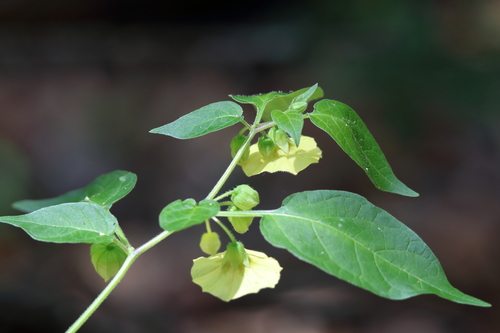
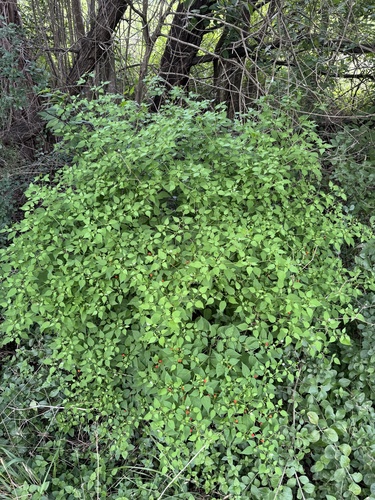
An evergreen shrub. It grows 2-4 m tall. The leaf stalk is less than 1.2 cm long. The leaf blades are narrowly oval and 8-16 cm long by 3-5 cm wide. The flowers have a strong smell at night. The fruit are small white berries.
How to Grow
It can be grown from seed or cuttings.
Propagation: Seed - Soft tip cuttings. Cuttings of semi-ripe wood, 8 - 10cm long.
Medicinal Uses
An extract of the plant is used as an antispasmodic and as a treatment for epilepsy. Various studies have been carried out on the medicinal virtues of the plant. One study isolated two new flavonoid glycosides and seven steroidal saponins. The study reports cytotoxic activities of the compounds against human oral squamous cell carcinoma and normal human gingival fibroblasts. Decoctions of the dried leaves were not effective against pharmacologically induced convulsions, but repeated administration reduced the amplitude of epileptic spikes in both primary and secondary foci. Results suggest the plant possesses analgesic activity through a peripheral mechanism. Both aqueous and methanol extracts of the plant have shown bactericidal activity against Staphylococcus aureus and various other bacteria. In laboratory tests, extracts of the plant were shown to inhibit tumour growth and prolong the lifetime in a dose-dependent manner.
Other Uses
The plant is grown as an ornamental hedge.
Wikipedia
Source ↗Cestrum nocturnum, the lady of the night, night-blooming jasmine, night-blooming jessamine, night-scented jessamine, night-scented cestrum or poisonberry, is a species of plant in the potato family Solanaceae. It is native to Mexico, Central America and northern South America and is naturalized in South Asia. Despite its common name, the species is not a "true jasmine" and not of the genus Jasminum.
Production
It is fast growing.
Other Information
It is a cultivated food plant. It should only be eaten with great caution.
Names & Synonyms
'Alaaumoe, Chinese inkberry, Fafine o te po, Huele de noche, Kembang wangi malam, Kupaoa, Lady of the night, Night jessamine, Night scented jasmine, Nya-hmwe-pan, Onaona iapana, Raat ki rani, Saung-taw-ku
References (18)
- Arellanes, Y., et al, 2013, Influence of traditional markets on plant management in the Tehuacan Valley. Journal of Ethnobiology and Ethnomedicine 9:38
- Bodkin, F., 1991, Encyclopedia Botanica. Cornstalk publishing, p 243
- Bost, J. B., 2009, Edible plants of the Chinantla, Oazaca, Mexico. Master's thesis University of Florida. p 34
- Ekman Herbarium records Haiti
- Flora of Pakistan. www.eFloras.org
- Facciola, S., 1998, Cornucopia 2: a Source Book of Edible Plants. Kampong Publications, p 232
- Fowler, D. G., 2007, Zambian Plants: Their Vernacular Names and Uses. Kew. p 85
- Kermath, B. M., et al, 2014, Food Plants in the Americas: A survey of the domesticated, cultivated and wild plants used for Human food in North, Central and South America and the Caribbean. On line draft. p 206
- Kew Plants of the World Online
- Kunkel,
- Parham, B. E. V., 1972, Plants of Samoa. New Zealand Department of Scientific and Industrial Research. Information Series. No. 85 p 113
- Pascual-Mendoza, S. et al, 2021, Traditional knowledge of edible plants in an indigenous community in the Sierra Norte of Oaxaca, Mexico. Plant Biosystems - An International Journal Dealing with all Aspects of Plant Biology
- Pena, F. B., et al, 1998, Los quelites de la Sierra Norte de Puebla, Mexico: Inventory Y Formas de Preparacion. Bol. Soc. Bot. Mexico 62:49-62
- Plants of Haiti Smithsonian Institute http://botany.si.edu/antilles/West Indies
- Sp. pl. 1:191. 1753
- Staples, G.W. and Herbst, D.R., 2005, A tropical Garden Flora. Bishop Museum Press, Honolulu, Hawaii. p 533
- Thaman, R. R., 1987, Plants of Kiribati: A listing and analysis of vernacular names. Atoll Research Bulletin No. 296
- Thaman, R. R, 2016, The flora of Tuvalu. Atoll Research Bulletin No. 611. Smithsonian Institute p 115