Lycium shawii
Roemer & Schultes
Desert thorn, African honey-thorn
(c) Anas Qiblawi, some rights reserved (CC BY-NC), uploaded by Anas Qiblawi
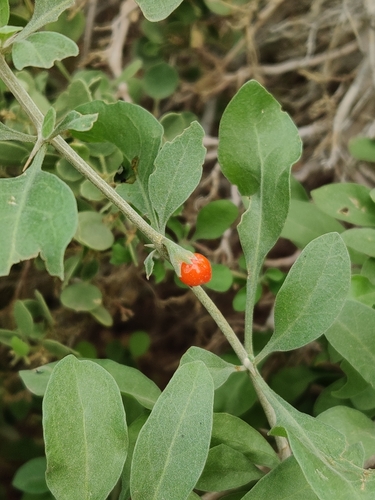
(c) Anas Qiblawi, some rights reserved (CC BY-NC), uploaded by Anas Qiblawi

(c) Ahmed Almansoori, some rights reserved (CC BY-NC), uploaded by Ahmed Almansoori
What to Eat
Edible parts: Fruit, Leaves
The leaves are chopped and cooked as a vegetable and eaten with other greens. The fruit are edible though rarely eaten.
Known Hazards
Where to Find It
It grows in Mediterranean climates. In Bahrain it grows in gravelly and stony soil in desert areas. It grows between 800-3,000 m above sea level. It grows in areas with an annual rainfall between 0-100 mm. It grows in the Sahara. It can grow in arid places. It is highly salt tolerant.
Africa, Arabia, Bahrain, Botswana, East Africa, Egypt - Sinai, Eswatini, Ethiopia, India, Iran, Iraq, Jordan, Kenya, Kuwait, Malawi, Mediterranean, Middle East, North Africa, Oman, Pakistan, Palestine, Qatar, Saudi Arabia, Somalia, South Africa, Southern Africa, Sudan, Swaziland, Tanzania, Turkey, Türkiye, United Arab Emirates, UAE, Yemen, Zambia, Zimbabwe,
How to Identify
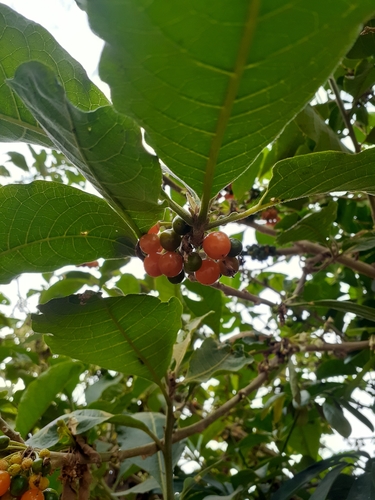
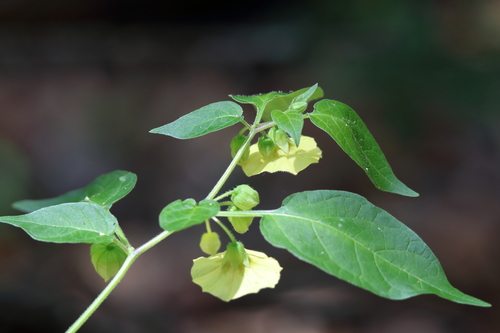
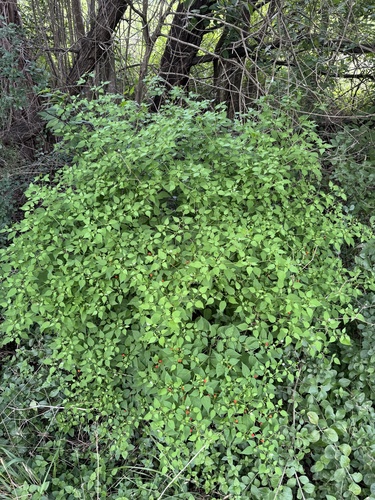
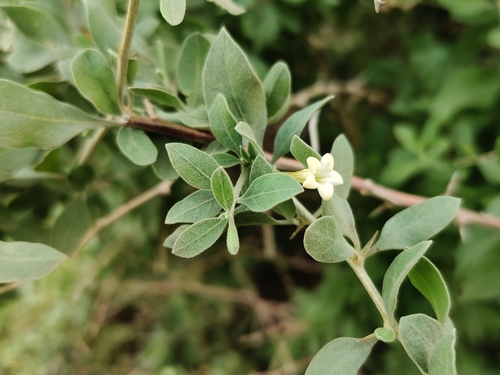
A thorny shrub. It grows 1.5 m high. It loses its leaves during drought. The leaves are spoon shaped and leathery. They are 2-3.5 cm long by 1 cm wide. The flowers can be pink, blue or white. They are on stalks in the axils of leaves. The fruit are orange-red berries. They are edible.
How to Grow
It can be grown from seed or from stem cuttings.
Propagation: Seed - Cuttings.
Medicinal Uses
The stems, leaves and berries are used in traditional medicine. In Yemen, the pounded leaves of this shrub have been used as a cure for eye ailments. The berries have a laxative effect and were used in traditional medicine to relieve constipation and as a diuretic. Livestock eat new growth on the plant.
Other Uses
The branches are used for fencing. The plant can be used as a hedge.
Wikipedia
Source ↗Lycium shawii, desert thorn or Arabian boxthorn is a species of thorny shrub adapted to desert environments, and can be found throughout the Arabian Peninsula, and some places in Africa. The thin leaved, rigid bush grows up to 3 metres (9.8 feet) high, with a lot of branches and alternating spines that vary in size, and grow along the branches and on their tips. The leaves narrow towards their base. It produces small whitish-pink or purple flowers from September until April, and red pea-sized seedy berries that are edible. Habitats include gravel plains and foothills up to 4,000 ft (1,200 m), as well as wadis. Plants often growing nearby include Acacia tortilis and Prosopis cineraria.
Other Information
The fruit are rarely eaten.
Names & Synonyms
Ausaj, 'awsaj, Doreda, Serim
References (16)
- Al-Sodany, Y. M., et al, 2013, Medicinal Plants in Saudi Arabia: I. Sarrwat Mountains at Taif, KSA. Academic Journal of Plant Sciences 6 (4): 134-145
- Bidak, L. M., et al, 2015, Goods and services provided by native plants in desert ecosystems: Examples from the northwestern coastal desert of Egypt. Global Ecology and Conservation 3 (2015) 433–447
- Flora of Pakistan. www.eFloras.org
- Fl. orient. 4:289. 1879 (As Lycium arabicum)
- Karim, F. M. & Dakheel, A, J., 2006, Salt-tolerant plants of the United Arab Emirates. 2006. International Center for Biosaline Agriculture, Dubai, UAE. p 150
- Lulekal, E., et al, 2011, Wild edible plants in Ethiopia: a review on their potential to combat food insecurity. Afrika Focus - Vol. 24, No 2. pp 71-121
- Mandaville, J. P., 2004, Bedouin ethnobotany: Plant concepts and plant use in a desert pastoral world. PhD thesis University of Arizona. p 163
- Miller, A. G., Morris, M. & Stuart-Smith, S., 1988, Plants of Dhofar. The Southern Region of Oman, Traditional, Economic and Medicinal Uses. Sultanate of Oman. p 276
- Mutie, F. M., et al, 2023, Important Medicinal and Food Taxa (Orders and Families) in Kenya, Based on Three Quantitative Approaches. Plants 2023, 12, 1145
- Oran, S. A. S., 2015, Selected Wild Aromatic Plants in Jordan. International Journal of Medicinal Plants. Photon 108 (2015) 686-699
- Phillips, D.C., 1988, Wild Flowers of Bahrain. A Field Guide to Herbs, Shrubs, and Trees. Privately published. p 149
- Plants for a Future database, The Field, Penpol, Lostwithiel, Cornwall, PL22 0NG, UK. http://www.scs.leeds.ac.uk/pfaf/ (As Lycium arabicum)
- Royal Botanic Gardens, Kew (1999). Survey of Economic Plants for Arid and Semi-Arid Lands (SEPASAL) database. Published on the Internet; http://www.rbgkew.org.uk/ceb/sepasal/internet [Accessed 11th June 2011]
- Syst. veg. 4:693. 1819
- Swaziland's Flora Database http://www.sntc.org.sz/flora
- World Checklist of Useful Plant Species 2020. Royal Botanic Gardens, Kew