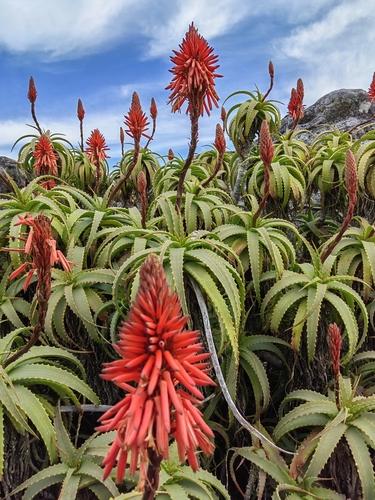
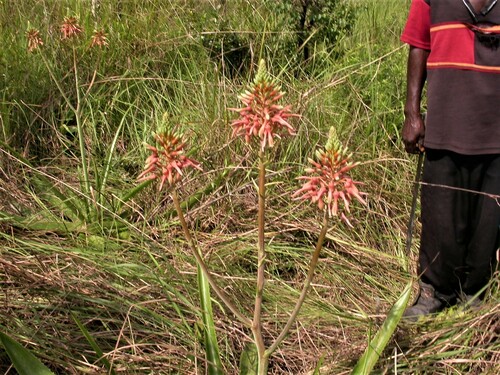
Aloe boylei
Bak.
Broad-leaved grass Aloe
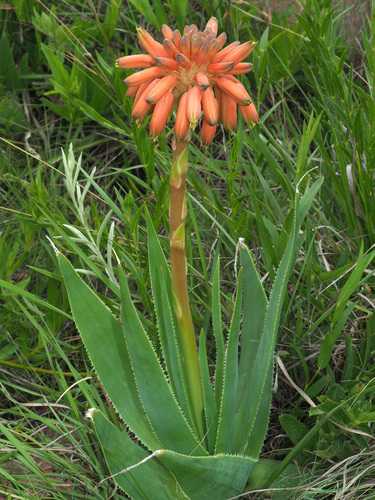
iNaturalist · cc-by-nc
(c) Felix Riegel, some rights reserved (CC BY-NC), uploaded by Felix Riegel
(c) Felix Riegel, some rights reserved (CC BY-NC), uploaded by Felix Riegel
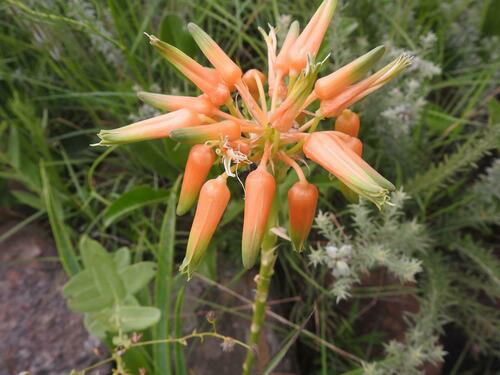
iNaturalist · cc-by-nc-sa
(c) Rob Palmer, some rights reserved (CC BY-NC-SA), uploaded by Rob Palmer
(c) Rob Palmer, some rights reserved (CC BY-NC-SA), uploaded by Rob Palmer

iNaturalist · cc-by-nc
(c) matthewj_za, some rights reserved (CC BY-NC)
(c) matthewj_za, some rights reserved (CC BY-NC)
What to Eat
Edible parts: Leaves, Flowers, Vegetable
The flowers are cooked as a vegetable.
Where to Find It
It is a subtropical or Mediterranean climate plant. It grows in marshy places.
Africa, Algeria, North Africa, South Africa, Southern Africa,
Countries: Angola, Burkina Faso, Burundi, Benin, Botswana, Congo (DRC), Central African Republic, Congo (Republic), Cote d'Ivoire, Cameroon, Cape Verde, Djibouti, Algeria, Egypt, Eritrea, Ethiopia, Gabon, Ghana, Gambia, Guinea, Equatorial Guinea, Guinea-Bissau, Kenya, Comoros, Liberia, Lesotho, Libya, Morocco, Madagascar, Mali, Mauritania, Mauritius, Malawi, Mozambique, Namibia, Niger, Nigeria, Rwanda, Seychelles, Sudan, Sierra Leone, Senegal, Somalia, South Sudan, Sao Tome & Principe, Eswatini, Chad, Togo, Tunisia, Tanzania, Uganda, South Africa, Zambia, Zimbabwe
How to Identify
A succulent plant. It is an aloe without a stem. It grows 50 cm tall. The leaves are long, narrow and yellow-green. They are arranged in fan shaped. It forms clumps. The flowers are orange.
Notes
Also put in the family Aloaceae. Also put in the family Asphodelaceae.
References (5)
- Fox, F. W. & Young, M. E. N., 1982, Food from the Veld. Delta Books. p 255
- INFOODSUpdatedFGU-list.xls
- Ogle and Grivetti, 1985,
- Peters, C. R., O'Brien, E. M., and Drummond, R.B., 1992, Edible Wild plants of Sub-saharan Africa. Kew. p 9
- Plowes, N. J. & Taylor, F. W., 1997, The Processing of Indigenous Fruits and other Wildfoods of Southern Africa. in Smartt, L. & Haq. (Eds) Domestication, Production and Utilization of New Crops. ICUC p 184