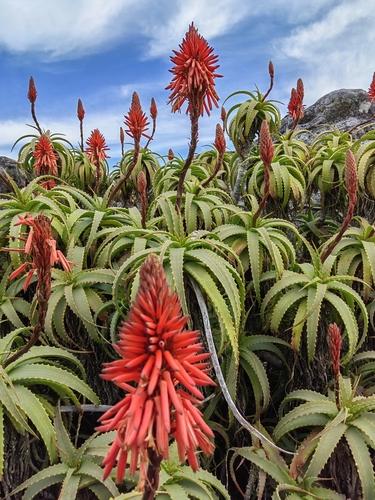
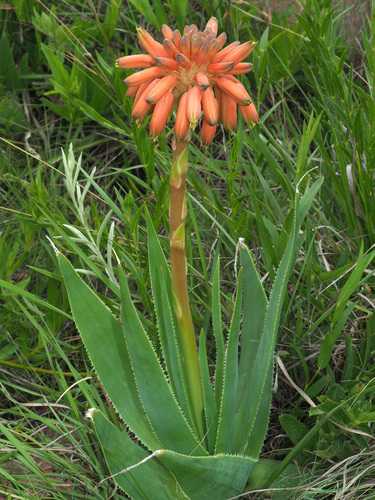
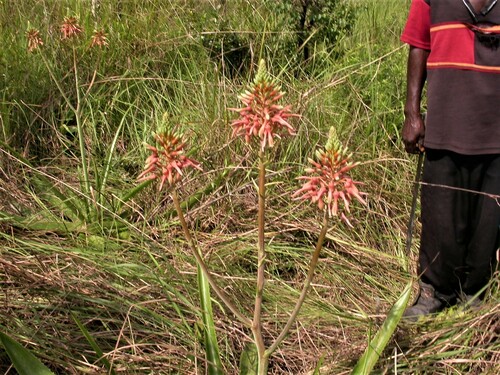
Aloe asperifolia
A. Berger
Rough-leafy aloe

(c) John Barkla, some rights reserved (CC BY), uploaded by John Barkla

(c) Sebastian Hatt, some rights reserved (CC BY-NC)
What to Eat
Edible parts: ? medicine
Known Hazards
Where to Find It
It is a subtropical plant. It grows in arid regions.
Namibia, Southern Africa,
How to Identify
A succulent plant. It grows 15-30 cm tall. It does not have a stem and has a ring of leaves in a cluster of 20-40.
How to Grow
A plant of the Namib Desert, growing in areas which are not only devoid of other plant life, but almost devoid of soil, and where most of the moisture available to plants of this species is derived from fog. Aloe species follow the Crassulacean acid metabolism (CAM). CAM plants can fix carbon dioxide at night and photosynthesize with closed stomata during the day, thus minimizing water loss. This, plus their succulent leaves and stems, and the presence of a thick cuticle, makes them well adapted to dry conditions.
Propagation: Seed - we have no specific information on this species - in general Aloes are sown in a sandy, well-drained potting soil in a warm, shady position in standard seed trays. Germination takes about three weeks. Cover the seed with a thin layer of sand (1 - 2mm), keep moist. The seedlings can be planted out in individual bags or containers as soon as they are large enough to handle.
Medicinal Uses
Used in traditional medicine.
Notes
Also put in the family Asphodelaceae.