Aloe barbadensis
Mill.
Medicine plant, Barbados aloe

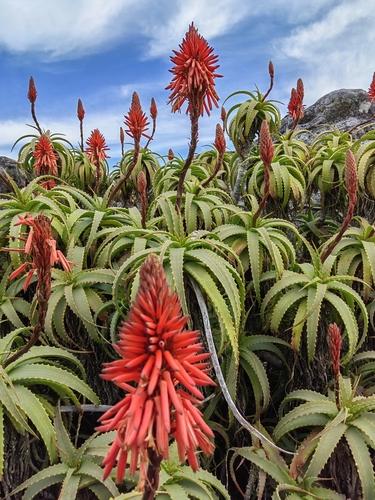
(c) Carlos Domínguez-Rodríguez, some rights reserved (CC BY-NC)

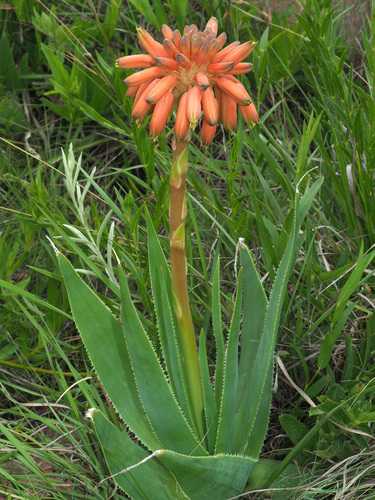
(c) Carlos Domínguez-Rodríguez, some rights reserved (CC BY-NC)

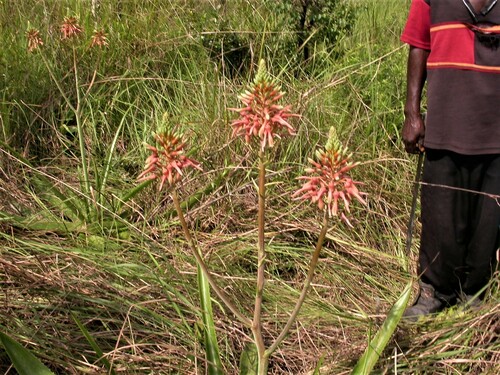
(c) Carlos Domínguez-Rodríguez, some rights reserved (CC BY-NC)
What to Eat
Edible parts: Leaves, Flower stalks
Aloin, a bitter-tasting compound found in the semi-liquid latex of some Aloe species, was a common ingredient in over-the-counter (OTC) laxative products in the United States until 2002 when the Food and Drug Administration banned it because manufacturers failed to provide the necessary safety data. Aloe vera and its (alcohol) extracts have potential toxicity, with side effects occurring at some dose levels both when ingested and when applied topically. Although toxicity may be less when aloin is removed by processing, Aloe vera ingested in high amounts may induce side effects, such as abdominal pain, diarrhea or hepatitis. Chronic ingestion of aloe (dose of 1 gram per day) cause adverse effects, including hematuria, weight loss, and cardiac or kidney disorders. Aloe vera juice is marketed to support the health of the digestive system, but there is neither scientific evidence nor regulatory approval for this claim. The extracts and quantities typically used for such purposes are associated with toxicity in a dose-dependent way.
Known Hazards
Where to Find It
It will tolerate light frost.
Africa*, Asia, Australia, Bolivia, Central America, China, East Africa, Ethiopia, Himalayas, India, Saudi Arabia, West Indies, Zambia,
How to Identify
A succulent plant. It forms a rosette of upright leaves. It grows 20 cm wide. Leaves are dull green. They are 5 cm wide. The flowers are yellow. They occur in an un-branched spike 1 m tall.
How to Grow
It can be grown from seed. It is mostly grown from offsets.
Medicinal Uses
Aloe vera is used in traditional medicine as a skin treatment. Early records of its use appear from the fourth millennium BCE. It is also written of in the Juliana Anicia Codex of 512 CE.
Other Information
It is cultivated.
Notes
There are about 400 Aloe species. Also put in the family Aloaceae. Also put in the family Asphodelaceae.
Names & Synonyms
Chinnakata banda, Chirukattali, Chothukathalai, Curacao aloe, Ghee-kunvar, Ghikumar, Ghrita-kumari, Ghritkumari, Guarpatha, Gwar-patha, Korphad, Kumari, Kumarpathu, Loli-sara
References (14)
- Ambasta S.P. (Ed.), 2000, The Useful Plants of India. CSIR India. p 29
- Anderson, M., 2002, The World Encyclopedia of Cacti and Succulents. Hermes House, New York. p 131
- Arinathan, V., et al, 2007, Wild edibles used by Palliyars of the western Ghats, Tamil Nadu. Indian Journal of Traditional Knowledge. 6(1) pp 163-168
- Bodkin, F., 1991, Encyclopedia Botanica. Cornstalk publishing, p 69
- Facciola, S., 1998, Cornucopia 2: a Source Book of Edible Plants. Kampong Publications, p 142
- Fowler, D. G., 2007, Zambian Plants: Their Vernacular Names and Uses. Kew. p 85
- Gard. dict. ed. 8: Aloe no. 2. 1768 Apr 16
- GUPTA & KANODIA,
- Hepper, E.N., 1993, Illustrated Encyclopedia of Bible Plants, IVP, England. p 152
- Kumar, P. D., et al, 2015, Ethnobotanical Knowledge and Usage of Wild Plants in Theog Forest Division, Himachal Pradesh, North Western Himalaya. The Journal of Ethnobiology and Traditional Medicine. Photon 124(2015) 922-935
- Molla, A., Ethiopian Plant Names. http://www.ethiopic.com/aplants.htm
- SAXENA;
- SHANKARNARAYAN & SAXENA
- Zeven, A. C. & de West, J. M. J., 1982, Dictionary of cultivated plants and their regions of diversity. Wageningen. p 116