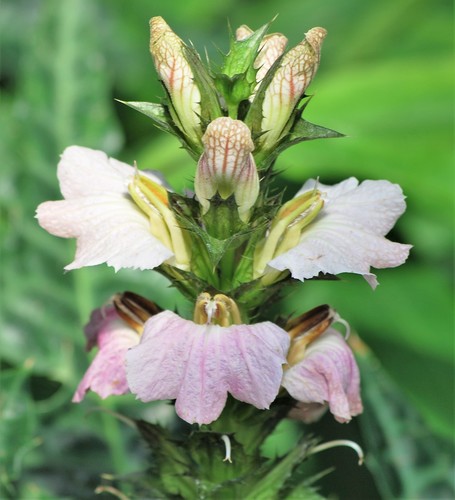
Justicia caerulea
Forssk.
AcanthaceaeFlowers

gbif · cc-by
The New York Botanical Garden
The New York Botanical Garden

gbif · cc0
Conveyor Belt
Conveyor Belt

gbif · cc-by-nc
RSA - California Botanic Garden Herbarium (RSA-RSA)
RSA - California Botanic Garden Herbarium (RSA-RSA)
What to Eat
Edible parts: Flowers
The blue flowers are eaten, particularly by children.
Where to Find It
It is a tropical plant. It grows between 75-1,650 m above sea level.
Africa, East Africa, Kenya, Somalia,
Countries: Angola, Burkina Faso, Burundi, Benin, Botswana, Congo (DRC), Central African Republic, Congo (Republic), Cote d'Ivoire, Cameroon, Cape Verde, Djibouti, Algeria, Egypt, Eritrea, Ethiopia, Gabon, Ghana, Gambia, Guinea, Equatorial Guinea, Guinea-Bissau, Kenya, Comoros, Liberia, Lesotho, Libya, Morocco, Madagascar, Mali, Mauritania, Mauritius, Malawi, Mozambique, Namibia, Niger, Nigeria, Rwanda, Seychelles, Sudan, Sierra Leone, Senegal, Somalia, South Sudan, Sao Tome & Principe, Eswatini, Chad, Togo, Tunisia, Tanzania, Uganda, South Africa, Zambia, Zimbabwe
How to Identify
A herb. It keeps growing from year to year. It can be 35 cm tall. The leaves are narrowly sword shaped and 2-6 cm long by 1-3 cm wide. They are slightly hairy. The flowers are in opposite clusters. There are about 3 flowers in a group. They are blue.
Other Information
The flowers are eaten especially by children.
References (3)
- Herb., E. A., 1981,
- Mutie, F. M., et al, 2023, Important Medicinal and Food Taxa (Orders and Families) in Kenya, Based on Three Quantitative Approaches. Plants 2023, 12, 1145
- Peters, C. R., O'Brien, E. M., and Drummond, R.B., 1992, Edible Wild plants of Sub-saharan Africa. Kew. p 44