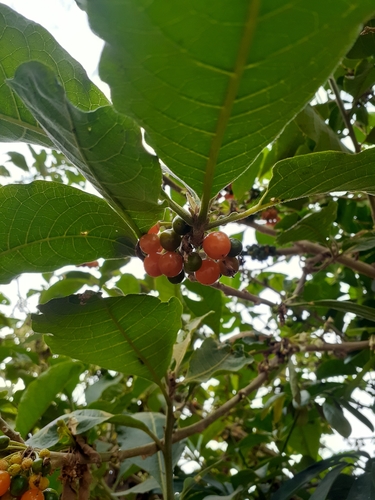
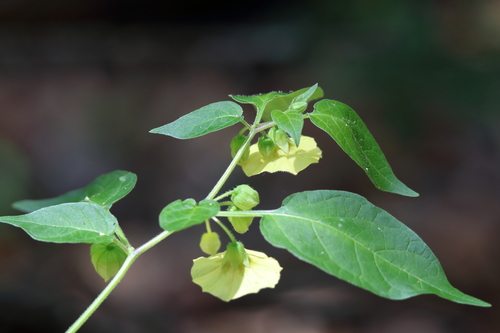
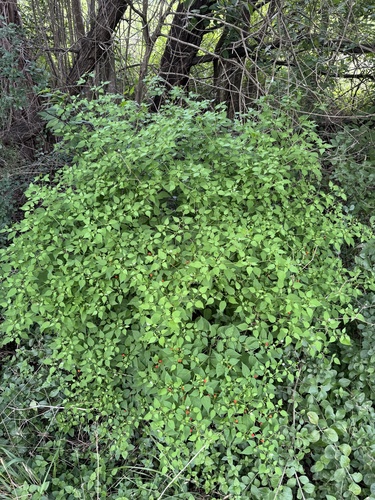
Solanum gilo
Raddi
Bitter berries, Scarlet eggplant

iNaturalist · cc-by-nc
(c) Pete Zivkov, some rights reserved (CC BY-NC)
(c) Pete Zivkov, some rights reserved (CC BY-NC)

iNaturalist · cc-by-nc
(c) inatpeshualien001, some rights reserved (CC BY-NC)
(c) inatpeshualien001, some rights reserved (CC BY-NC)
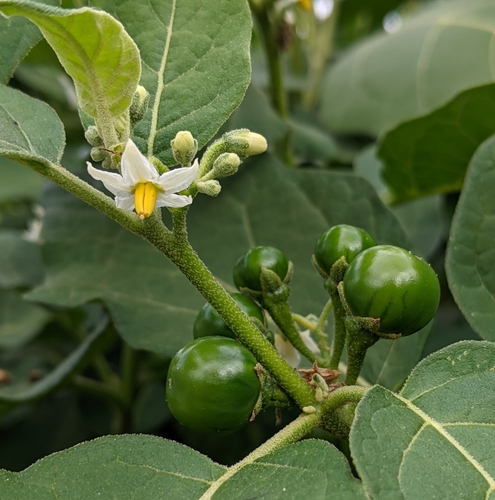
iNaturalist · cc-by-nc
(c) accidentalshrike, some rights reserved (CC BY-NC)
(c) accidentalshrike, some rights reserved (CC BY-NC)
What to Eat
Edible parts: Fruit, Shoots, Leaves, Vegetable
The fruit are eaten raw as a vegetable, or fried and boiled. The shoots and leaves are also edible.
Where to Find It
It is a tropical plant.
Africa, Asia, Brazil, Central Africa, East Africa, India, Niger, Nigeria, Northeastern India, Sierra Leone, South America, Uganda, West Africa,
Countries: United Arab Emirates, Afghanistan, Armenia, Angola, Argentina, Azerbaijan, Bangladesh, Burkina Faso, Bahrain, Burundi, Benin, Brunei, Bolivia, Brazil, Bhutan, Botswana, Congo (DRC), Central African Republic, Congo (Republic), Cote d'Ivoire, Chile, Cameroon, China, Colombia, Cape Verde, Djibouti, Algeria, Ecuador, Egypt, Eritrea, Ethiopia, Gabon, Georgia, French Guiana, Ghana, Gambia, Guinea, Equatorial Guinea, Guinea-Bissau, Guyana, Indonesia, Israel, India, Iraq, Iran, Jordan, Japan, Kenya, Kyrgyzstan, Cambodia, Comoros, North Korea, South Korea, Kuwait, Kazakhstan, Laos, Lebanon, Sri Lanka, Liberia, Lesotho, Libya, Morocco, Madagascar, Mali, Myanmar, Mongolia, Mauritania, Mauritius, Maldives, Malawi, Malaysia, Mozambique, Namibia, Niger, Nigeria, Nepal, Oman, Peru, Philippines, Pakistan, Paraguay, Qatar, Rwanda, Saudi Arabia, Seychelles, Sudan, Singapore, Sierra Leone, Senegal, Somalia, Suriname, South Sudan, Sao Tome & Principe, Syria, Eswatini, Chad, Togo, Thailand, Tajikistan, Timor-Leste, Turkmenistan, Tunisia, Turkey, Taiwan, Tanzania, Uganda, Uruguay, Uzbekistan, Venezuela, Vietnam, Yemen, South Africa, Zambia, Zimbabwe
How to Identify
A small tropical shrub in the Solanaceae family, now cultivated as a variety of Solanum aethiopicum and sold commercially in local markets.
Other Information
It is a commercially cultivated vegetable. Fruit are sold in local markets.
Names & Synonyms
Enjagi, Entula engana, Entura, Entuula, Gilo, Goma, Hepi keho, Jagi, Jilo, Ocugocuga, Panthao kenkathai, Samtawk
Solanum naumannii Engl.Probably now a synonym of Solanum aethiopicum L.
References (15)
- Andabati, B., & Muyonga, J., 2014, Phenolic content and antioxidant activity of selected Ugandian traditional medicinal foods. African Journal of Food Science. 8(8), pp 427-434
- Bernholt, H. et al, 2009, Plant species richness and diversity in urban and peri-urban gardens of Niamey, Niger. Agroforestry Systems 77:159-179
- East African Herbarium records, 1981,
- Ethnobotany of Karbis. Chapter 4 in p 101
- Gbile, Z. O. and Adesina, S. K., 1988, Nigerian Solanum Species of Economic Importance. Annals of the Missouri Botanical Garden, Vol. 75, No. 3. p 864
- Goode, P., 1989, Edible Plants of Uganda. FAO p 26
- Kar, A., et al, 2013, Wild Edible Plant Resources used by the Mizos of Mizoram, India. Kathmandu University Journal of Science, Engineering and Technology. Vol. 9, No. 1, July, 2013, 106-126
- Kays, S. J., and Dias, J. C. S., 1995, Common Names of Commercially Cultivated Vegetables of the World in 15 languages. Economic Botany, Vol. 49, No. 2, pp. 115-152
- Medhi, P. & Borthakur, S. K., 2012, Phytoresources from North Cachur Hills of Assam -3: Edible plants sold at Hflong market. Indian Journal or Natural Products and Resources. 3(1) pp 84-109
- Musinguzi, E., et al, 2006, Utilization of Indigenous Food Plants in Uganda: A Case Study of South-Western Uganda. AJFAND Vol. 6(2):
- Oniang’o, R., Grum, M. and Obel-Lawson, E., editors. 2008. Developing African leafy vegetables for improved nutrition. Regional workshop, 6-9 December 2005. Rural Outreach Program, Nairobi, Kenya. p 3
- Peters, C. R., O'Brien, E. M., and Drummond, R.B., 1992, Edible Wild plants of Sub-saharan Africa. Kew. p 186
- Rubaihayo, E. B., Conservation and use of traditional vegetables in Uganda. Bioversity International.
- Smith, F. I. and Eyzaquirre, P., 2007, African leafy vegetables: Their role in the World Health Organization's global Fruit and Vegetables Initiative. AJFAND, Vol. 7 No. 3
- Teron, R. & Borthakur, S. K., 2016, Edible Medicines: An Exploration of Medicinal Plants in Dietary Practices of Karbi Tribal Population of Assam, Northeast India. In Mondal, N. & Sen, J.(Ed.) Nutrition and Health among tribal populations of India. p 155