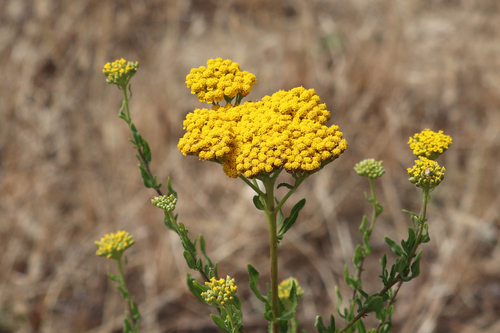
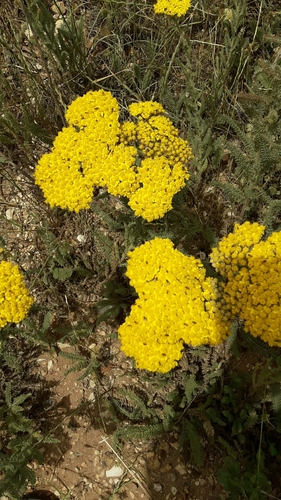
Centrapalus pauciflorus
(Willd.) H. Rob.
Bitterleaf

Digitization Interns, Laura Tancredi

Conveyor Belt
What to Eat
Edible parts: Leaves, Vegetable
The leaves are eaten as a vegetable.
Where to Find It
It is a tropical plant. It grows in woodland and savannah woodland. It can grow in flooded rice crops and other disturbed areas.
Africa, Benin, Burkina Faso, East Africa, Ethiopia, Guinea, Guinée, Guinea-Bissau, Kenya, Malawi, Mozambique, Tanzania, West Africa, Zimbabwe,
How to Identify
An erect annual herb. It can grow 1.5 m tall. The stems are straight and leafy.
How to Grow
Centrapalus pauciflorus is a plant of the semi-arid tropics, where it is found at elevations up to 2,000 metres, occasionally to 2,500 metres. It is found in areas where the mean annual rainfall may be as low as 250 - 500mm for some types, but as high as 1,850mm for others. In cultivation, it requires a rainy season that provides sufficient moisture to permit the main flowerheads to develop; a longer rainy season that permits secondary flowerheads to develop will result in poor uniformity of maturation and a risk of seed shattering. Plants tolerate substantial shading, which may make cultivation in agroforestry systems possible. On poorly drained soils, growth of the main stem stops before flowering; branches develop from the base of the plant, but they also wither and die. A well-drained soil with a pH in the range 5.0 - 8.5 is preferred. The plant is viewed traditionally as a weed. In an experiment with selections of var. ethiopica at different locations in Ethiopia, flowering started 87 - 117 days after sowing, and seeds matured after 161 - 261 days. When growing conditions permit, branching starts after formation of the main inflorescence and occurs only at the higher nodes; these branches may also form flowerheads. Topping of young plants may reduce the risk of lodging and enhance uniform maturation. In a trial in Zimbabwe, plants of var. ethiopica topped at a height of 15cm led to the development of 18 - 20 main branches per plant, each with 3 - 5 flowerheads. At harvesting, plant heights were less, lodging was significantly reduced and seed maturity more uniform. Shattering of mature fruiting heads occurs in most types, but types with limited shattering have been identified. The best yields recorded in Ethiopia from local selections are 4,000 kilos of seed per hectare, equivalent to 1,625 kilos of oil. The plant is self-fertile, but rates of outcrossing of up to 16% have been found.
Propagation: Seed - it may show some dormancy for a few months after maturation; thereafter germination takes about 10 days. Seed is usually sown in situ in rows, seedling growth is slow and weeding of the crop is essential.
Medicinal Uses
The leaves are cooked in porridge, or drunk as a tea, in order to treat chest pain. The plant is used to treat stomach pain.
Other Uses
The seed contains a high content of an oil that is rich in vernolic acid. Known as 'vernonia oil', it can be used in the chemica industry for making commodities such as glue, paint and plastics; it is also used in the pharmaceutical and agro-industrial industries. In the paint industry it is being tested as a component of low volatile-organic-solvent paints. As a component of heat-baked films and coatings, vernonia oil provides outstanding adhesion, flexibility and chipping resistance, and good resistance to alkaline, acid and non-polar solvents. In plastics it can be used as a plasticizer of PVC and as a structural component of polymers. The leaves have been smoked as a substitute for tobacco.
Notes
Possibly edible. The seeds are used to extract an industrial oil.
References (5)
- Grubben, G. J. H. and Denton, O. A. (eds), 2004, Plant Resources of Tropical Africa 2. Vegetables. PROTA, Wageningen, Netherlands. p 565 (As Vernonia galamensis)
- INFOODSUpdatedFGU-list.xls (As Vernonia galamensis)
- Molla, A., Ethiopian Plant Names. http://www.ethiopic.com/aplants.htm (As Vernonia galamensis)
- Molla, A., Ethiopian Plant Names. http://www.ethiopic.com/aplants.htm (As Vernonia pauciflora)
- World Checklist of Useful Plant Species 2020. Royal Botanic Gardens, Kew (As Vernonia galamensis)