Solanum pseudocapsicum
Linn.
Mirchala

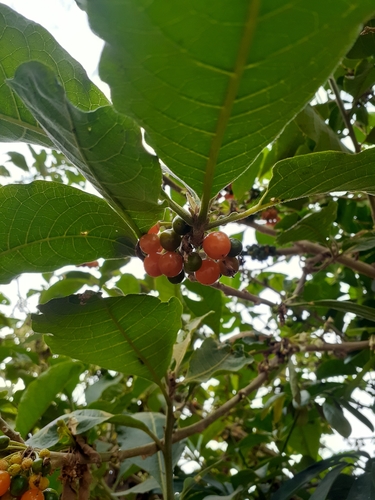
(c) Pat Enright, some rights reserved (CC BY-NC), uploaded by Pat Enright

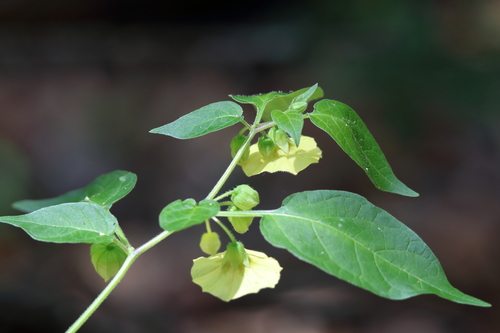
(c) miwalsh1, some rights reserved (CC BY-NC)
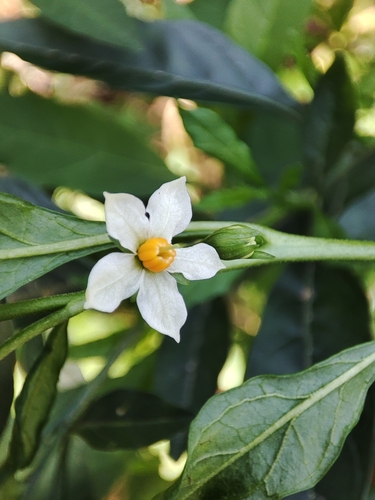
(c) DVG, some rights reserved (CC BY-NC), uploaded by DVG
What to Eat
Edible parts: Fruit - colouring
The fruit is used as a colouring agent in various dishes.
Known Hazards
Where to Find It
It is a temperate plant. In Pakistan it grows up to 2,200 m altitude. In Argentina it grows from sea level to 2,600 m above sea level.
Africa, Argentina, Asia, Australia, Brazil, Caucasus, Chile, China, Christmas Island, Cuba, East Africa, Ecuador, Georgia, Himalayas, India, Iran, Middle East, Myanmar, Nepal, New Zealand, NW India, Pakistan, Paraguay, Peru, SE Asia, Slovenia, South Africa, South America*, Tasmania, Uruguay, West Indies, Zimbabwe,
How to Identify
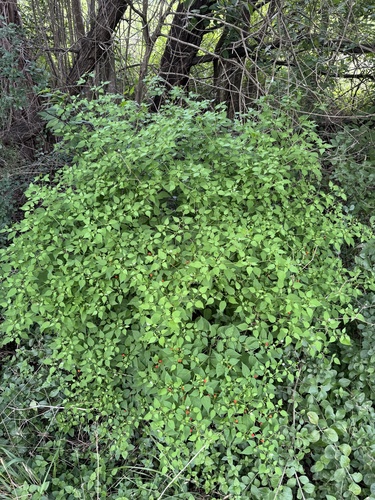
An erect shrub. It grows 90-120 cm tall. The leaves are 4-8 cm long by 1-2 cm wide. They are narrowly oval. There are 1-3 flowers in a group in the axils of leaves. The flowers are white. The fruit is a berry 8-12 mm across. It is scarlet red and shiny. The seeds are 3 mm wide.
Wikipedia
Source ↗Solanum pseudocapsicum is a nightshade species with mildly poisonous fruit. It is commonly known as the Jerusalem cherry, Madeira winter cherry, or, ambiguously, "winter cherry". These perennials can be grown decoratively as house plants, but in some areas of South Africa, India, Australia and New Zealand it is regarded as a weed.
Notes
It has anticancer properties.
Names & Synonyms
Jerusalem cherry, Madeirski koralni grm, Madeira winter cherry, Pan-ngayok
References (8)
- Bussman, R. W., et al, 2021, Unity in diversity—food plants and fungi of Sakartvelo (Republic of Georgia), Caucasus. Journal of Ethnobiology and Ethnomedicine (2021) 17:72 p 15
- Flora of Pakistan. www.eFloras.org
- http://www.botanic-gardens-ljubljana.com/en/plants
- Kintzios, S. E., 2006, Terrestrial Plant-Derived Anticancer Agents and Plant Species Used in Anticancer research. Critical Reviews in Plant Sciences. 25: pp 79-113
- Miguel, E., et al, 1989, A checklist of the cultivated plants of Cuba. Kulturpflanze 37. 1989, 211-357
- Ramachandran,V. S., & Udhayavani, C., 2013, Knowledge and uses of wild edible plants by Paniyas and Kurumbas of Western Nilgiris, Tamil Nadu. Indian Journal of Natural Products and Resources. 4(4) December 2013, pp 412-418
- Rashid, A., Anand, V.K. & Serwar, J., 2008, Less Known Wild Plants Used by the Gujjar Tribe of District Rajouri, Jammu and Kashmir State. International Journal of Botany 4(2):219-244
- Tasmanian Herbarium Vascular Plants list p 55