Notobasis syriaca
(L.) Cass.
Syrian thistle

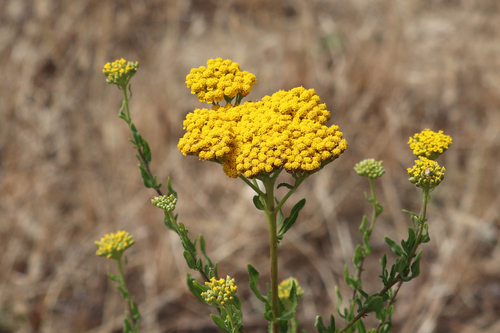
(c) Uriah Resheff, some rights reserved (CC BY-NC), uploaded by Uriah Resheff

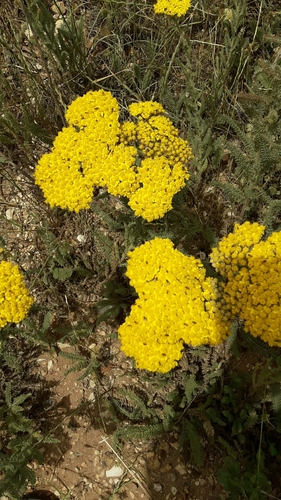
(c) Martin A. Prinz, some rights reserved (CC BY-NC)
What to Eat
Edible parts: Stem, Roots, Leaves, Shoots
Young leaves and stems are eaten raw or boiled, typically served with bread and goat's cheese; stems are peeled before eating.
Where to Find It
It is a Mediterranean plant. It grows in dry soils. It can grow in arid places.
Africa, Armenia, Azerbaijan, Canary Islands, Caucasus, Cyprus, Egypt, Europe, Greece, Iran, Iraq, Israel, Italy, Jordan, Libya, Mediterranean, Middle East, North Africa, Palestine, Portugal, Sicily, Spain, Syria, Turkey, Türkiye,
How to Identify
An annual herb of the Mediterranean region that grows in dry to arid soils. The young leaves, stems, shoots, and roots are edible portions of the plant.
Wikipedia
Source ↗Notobasis syriaca, or the Syrian thistle, is a species of flowering plant in the tribe Cardueae within the family Asteraceae. It is native to the Mediterranean region and the Middle East, from Madeira, the Canary Islands, Morocco and Portugal east to Egypt, Iran and Azerbaijan. It is an annual plant belonging to the semi-desert flora, growing to 30–100 cm tall. The leaves are spirally arranged on the stems, deeply lobed, grey-green with white veins, and sharp spines on the margins and apex. The flowers are purple, produced in a dense flowerhead (capitulum) 2 cm diameter, surrounded by several spiny basal bracts. In the Greek island of Crete, where it is called agavanos (αγκάβανος), its tender shoots are peeled and eaten raw by the local people. It is naturalised in Australia.
Names & Synonyms
Akcadiken, Aynbeloqe, Chawbazza, Kelbese belek, Kerbese karan, Khurfaish, Lamanna, Nerokavlos, Patsalokavlos, Piscialasinu, Sutlegen, Tuzlu gavulya, Yavankenker
References (21)
- Ahiskali, M., Ari, C. & Selvi, S., Edible wild plants and their consumption during winterin a rural village of Kazdagi (Mount Ida)
- Ahmad, S. A. & Askari, A. A., 2015, Ethnobotany of the Hawraman Region of Kurdistan Iraq. Harvard Papers in Botany, Vol. 20, No. 1, 2015, pp. 85–89.
- Ali-Shtayeh, M. S., et al, 2008, Traditional knowledge of wild edible plants used in Palestine (Northern West Bank): A comparative study. J Ethnobiol Ethnomed. 4: 13
- Al-Qura'n, S. A., 2010, Ethnobotanical and Ecological Studies of Wild Edible Plants in Jordan. Libyan Agriculture Research Center Journal International 1(4):231-243
- Ciftcioglu, C. G., 2015, Sustainable wild-collection of medicinal and edible plants in Lefke region of North Cyprus. Agroforest Syst. Springer
- Della, A., et al, 2006, An ethnobotanical survey of wild edible plants of Paphos and Larnaca countryside of Cyprus. J. Ethnobiol. Ethnomed. 2:34
- Demir, I. & Ayaz, N., 2022, Wild edible plants contributing to the traditional foods of Mardin (Turkey) Province. Indian Journal of Traditional Knowledge Vol 21(3), July 2022, pp 569-582
- Ertug, F, Yenen Bitkiler. Resimli Türkiye Florası -I- Flora of Turkey - Ethnobotany supplement
- Ertug, F., 2004, Wild Edible Plants of the Bodrum Area. (Mugla, Turkey). Turk. J. Bot. 28 (2004): 161-174
- Galalaey, A. M. K., et al, 2021, Ethnobotanical study of some wild edible plants in Hujran Bason, Kurdistan Region of Iraq. ZANCO Journal of Pure and Applied Sciences. Salahaddin University-Erbil p 25
- Geraci, A., et al, 2018, The wild taxa utilized as vegetables in Sicily (Italy): a traditional component of the Mediterranean diet. Journal of Ethnobiology and Ethnomedicine (2018) 14:14
- Hadjichambis, A. C., et al, 2007, Wild and semi-domesticated food plant consumption in seven circum-Mediterranean areas. International Journal of Food Sciences and Nutrition. 2007, 1-32.
- Lentini, F. and Venza, F., 2007, Wild food plants of popular use in Sicily. J Ethnobiol Ethnomedicine. 3: 15
- Licata, M., et al, 2016, A survey of wild plant species for food use in Sicily (Italy) – results of a 3-year study in four Regional Parks. Journal of Ethnobiology and Ethnomedicine 12:12
- Mahklouf, M. H., 2019, Ethnobotanical Study of Edible Wild Plants in Libya. European Journal of Ecology. 5(2): 30-40
- Pasta, S., et al, 2020, An Updated Checklist of the Sicilian Native Edible Plants: Preserving the Traditional Ecological Knowledge of Century-Old Agro-Pastoral Landscapes. Frontiers in Plant Science. Volume 11|Article 388
- Royal Botanic Gardens, Kew (1999). Survey of Economic Plants for Arid and Semi-Arid Lands (SEPASAL) database. Published on the Internet; http://www.rbgkew.org.uk/ceb/sepasal/internet [Accessed 11th April 2011]
- Tukan, S. K., et al, 1998, The use of wild edible plants in the Jordanian diet. International Journal of Food Sciences and Nutrition. 49:225-235
- World Checklist of Useful Plant Species 2020. Royal Botanic Gardens, Kew
- Yesil, Y., et al, 2019, Wild edible plants in Yeşilli (Mardin-Turkey), a multicultural area. Journal of Ethnobiology and Ethnomedicine (2019) 15:52
- Yesil, Y., et al, 2019, Traditional knowledge of wild edible plants in Hasankeyf (Batman Province, Turkey). Acta Societatis Botanicorum Poloniae. 88(3):3633