Pinus brutia
Ten.
Cam, Calabrian pine, Turkish pine

(c) Zeynel Cebeci, some rights reserved (CC BY-SA)

(c) andersonf16, some rights reserved (CC BY-NC)

(c) debm, some rights reserved (CC BY-NC), uploaded by debm
What to Eat
Edible parts: Seeds, Resin - chewed
The resin has been used since ancient times to flavour white wines known as retsina. A sap-sucking insect, Marchalina hellenica, produces large quantities of honeydew that honeybees harvest and convert into what is sold as pine honey. Pinus brutia was planted outside its native range in Greece from early times specifically to support this harvest.
Where to Find It
It is a temperate plant. It grows from sea level to 1,500 m above sea level.
Australia, Bulgaria, Caucasus, Europe, Greece, Italy, Mediterranean, Middle East, Pakistan, Syria, Turkey, Türkiye,
How to Identify
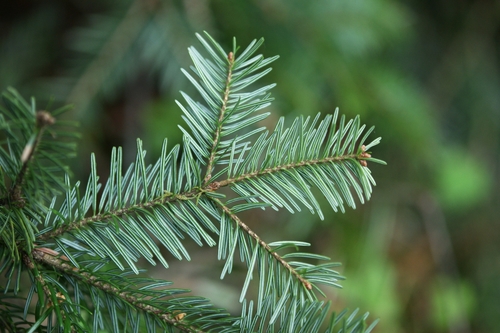
Fast-growing evergreen tree reaching 30m tall and 25m wide. Hardy to UK zone 8. Tolerates light sandy, medium loamy, and heavy clay soils with good drainage; grows in poor soils and acid to alkaline pH. Requires full sun. Adapts to drought and maritime exposure. Wind-pollinated.
How to Grow
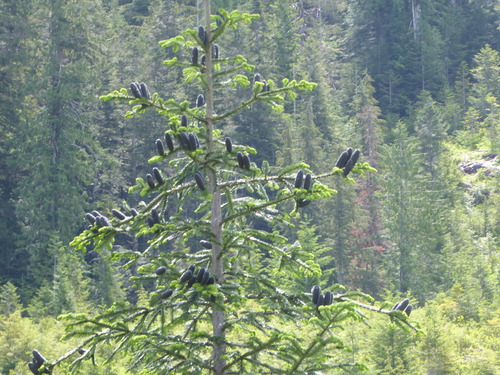
It is a moderately cold-hardy plant, able to tolerate temperatures down to around -15°c when fully dormant. Established plants are drought tolerant. The plant regenerates after fire by seed dispersal and can successfully invade maquis vegetation when this does not burn for several years. In contrast with planted forests, natural forests of Pinus brutia have a diverse undergrowth of shrubs and herbs and form important habitat for wildlife. Pinus brutia has been planted extensively in countries around the eastern Mediterranean and Black Sea as it is the easiest pine to grow (with Pinus halepensis) in the Mediterranean climate. Pinus brutia forms natural hybrids with its close congener Pinus halepensis where the two species are sympatric in Turkey, with matings successful only when Pinus halepensis is the pollen donor and Pinus brutia is the female parent. The seed cones are - 8cm wide, ripening a shiny red-brown in spring two years after pollination. They open to release their seed the same summer or 1 - 2 years later, though the seeds are often not shed till winter rain softens the scales. The seeds are grey-brown, 7-8 × 5mm with a broad, auricled 15-20 × 10 mm wing. Carbon Farming Solutions - Cultivation: regional timber. Management: standard (Describes the non-destructive management systems that are used in cultivation).
Propagation: Seed. Direct sow outdoors in autumn.
Medicinal Uses
Oil of turpentine, obtained from the oleo-resin of pine trees, is antiseptic, antispasmodic, astringent, diuretic, rubefacient, stimulant, and vermifuge. It is a valuable remedy used internally for kidney and bladder complaints and is applied both internally and as a rub and steam bath for rheumatic conditions. It also benefits the respiratory system, making it useful for diseases of the mucous membranes and complaints such as coughs, colds, influenza, and TB.
Other Uses
Resin tapped from the stem is used to flavour white wines known as retsina and in the production of turpentine. The timber is used for fencing posts, telephone poles, building timbers, railway sleepers, carpentry, boxes and crates, hardboard, and pulp. A notable landmark tree of this species, known as the Lone Pine, stood at an ANZAC First World War battlefield at Gallipoli; cones from the site were taken to Australia, and plants grown from those seeds were planted as living memorials. Lone Pine memorials derived from cones brought back from Gallipoli may use either this species or Aleppo pine. The tree is widely planted in coastal Mediterranean areas for soil protection and as windbreaks, and is a popular ornamental. It is also cultivated as an industrial hydrocarbon crop, providing materials, chemicals, and energy resources including traditional materials such as lumber.
Wikipedia
Source ↗Pinus brutia, commonly known as the Turkish pine and Calabrian pine, is a species of pine native to the eastern Mediterranean region. The bulk of its range is in Turkey, with smaller populations occurring in Bulgaria, Crete, Cyprus, Iraq, western Syria, Northern Iran, Crimea, the western Caucasus, and Azerbaijan; it is also naturalised as far east as Afghanistan and Pakistan. It is also known as East Mediterranean pine, Afghan pine, and Brutia pine. The name "Calabrian pine" comes from an introduced grove in the region of Calabria in southern Italy; historically this region was called Bruttium, which is likely where the specific epithet "brutia" comes from. Pinus brutia bears many similarities with other, closely related species such as Pinus halepensis and Pinus canariensis. Turkish pine forms a species complex with the former.
Names & Synonyms
Kizilcam
References (5)
- Ertug, F., 2004, Wild Edible Plants of the Bodrum Area. (Mugla, Turkey). Turk. J. Bot. 28 (2004): 161-174
- Ertug, F, Yenen Bitkiler. Resimli Türkiye Florası -I- Flora of Turkey - Ethnobotany supplement
- Flora of Pakistan. www.eFloras.org
- Hancer, C. K., et al, 2020, Traditional Knowledge of Wild Edible Plants of Biga (Çanakkale), Turkey. Acta Societatis Botanicorum Poloniae / 2020 / Volume 89 / Issue 1 / Article 8914
- Özdemir, E. and Kültür, S., 2017, Wild Edible Plants of Savaştepe District (Balıkesir, Turkey), Marmara Pharm J 21/3: 578-589