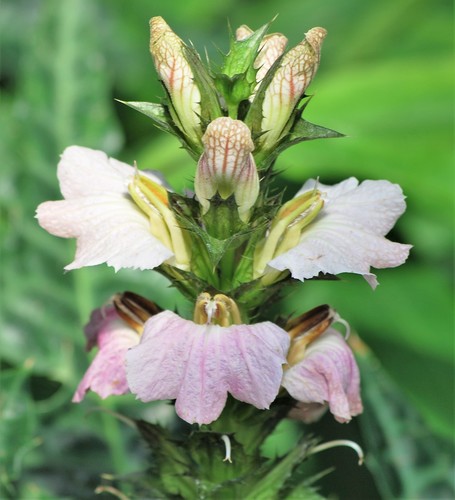
Strobilanthes helicta
T. Anderson
Thaning-hamang
AcanthaceaeLeaves

iNaturalist · cc-by-nc
(c) Phub Gyeltshen, some rights reserved (CC BY-NC), uploaded by Phub Gyeltshen
(c) Phub Gyeltshen, some rights reserved (CC BY-NC), uploaded by Phub Gyeltshen

iNaturalist · cc-by-nc
(c) Phub Gyeltshen, some rights reserved (CC BY-NC)
(c) Phub Gyeltshen, some rights reserved (CC BY-NC)
What to Eat
Edible parts: Leaves
The leaves are eaten and used for making salt.
Where to Find It
It is a subtropical plant. In south China it grows in evergreen broad-leaved forests between 1,700-2,200 m above sea level. In Yunnan.
Asia, Bhutan, China, Himalayas, India, Myanmar, Nepal, Northeastern India, SE Asia, Tibet,
Countries: United Arab Emirates, Afghanistan, Armenia, Azerbaijan, Bangladesh, Bahrain, Brunei, Bhutan, China, Georgia, Indonesia, Israel, India, Iraq, Iran, Jordan, Japan, Kyrgyzstan, Cambodia, North Korea, South Korea, Kuwait, Kazakhstan, Laos, Lebanon, Sri Lanka, Myanmar, Mongolia, Maldives, Malaysia, Nepal, Oman, Philippines, Pakistan, Qatar, Saudi Arabia, Singapore, Syria, Thailand, Tajikistan, Timor-Leste, Turkmenistan, Turkey, Taiwan, Uzbekistan, Vietnam, Yemen
How to Identify
A small shrub. It grows 50-100 cm tall. The stems are 4 angled. The leaves are in opposite pairs and almost equal in size. The leaves are oval to sword shaped and 5-12 cm long by 1-6 cm wide. They are more pale underneath. The flowers are in spikes in the axils of leaves. These are 2-12 cm long. The fruit is an oblong capsule 2 cm long with 4 seeds.
Names & Synonyms
Asystasia calycina NeesPteracanthus calycinus (Nees) Bremek.
References (1)
- Gangwar, A. K. & Ramakrishnan, P. S., 1990, Ethnobotanical Notes on Some Tribes of Arunachal Pradesh, Northeastern India. Economic Botany, Vol. 44, No. 1 pp. 94-105