Trema micranthum
(L.) Blume
Jamaica nettletree
(c) Martin Reith, some rights reserved (CC BY-NC)
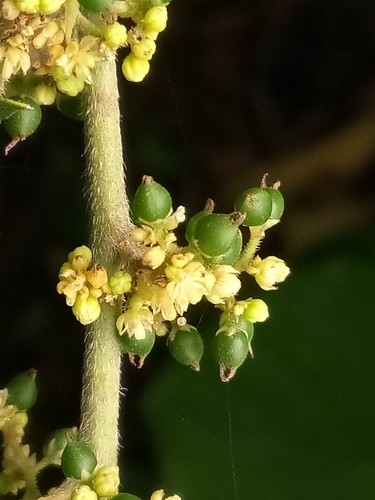
(c) Martin Reith, some rights reserved (CC BY-NC)
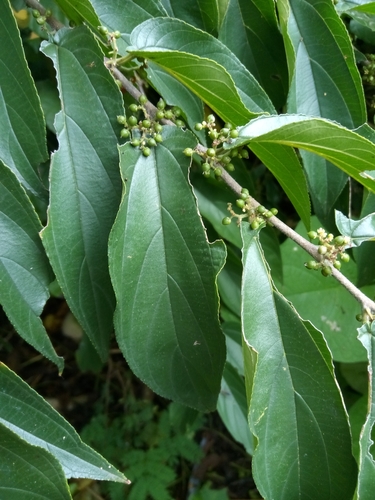
(c) Martin Reith, some rights reserved (CC BY-NC)
What to Eat
Edible parts: Fruit
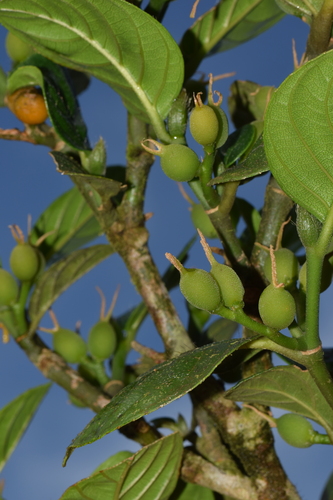
The fruit are eaten.
Where to Find It
It is a tropical plant. It grows in dry and wet places and also in lower mountain regions. In Argentina it grows between sea level to 2,500 m above sea level.
Amazon, Andes, Argentina, Bolivia, Brazil, Central America*, Colombia, Costa Rica, Cuba, Dominican Republic, Ecuador, Guiana, Guianas, Guyana, Haiti, Mexico, North America, Panama, Paraguay, Puerto Rico, South America, Suriname, USA, Venezuela, West Indies,
How to Identify
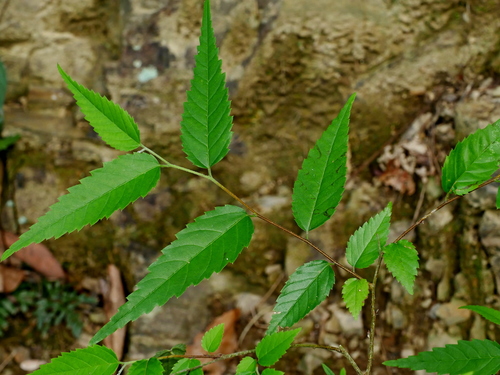
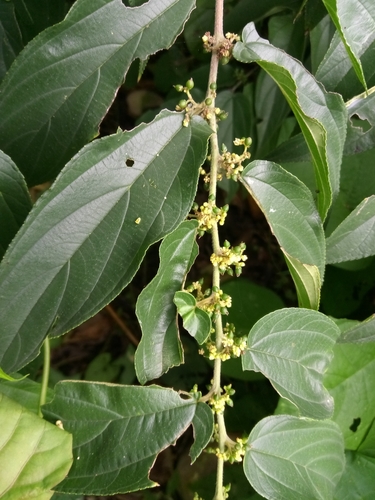
A shrub or small tree. The trunk is straight and usually only branches at the top. The crown is thin. The leaves are simple and alternate. They have teeth and have 3 prominent veins from the base. The flowers are very small and white. The fruit are berries.
Production
It grows very quickly.
Notes
Also put in the family Ulmaceae.
Names & Synonyms
Atadijo, Candiuba, Capulin, Cerezo, Kaka, Kara baska, Kari bush, Lincha-ma, Mantili, Merabi, Mutamba, Niguito, Sapan, Shalipu, Sui seije, Togalapoli, Waska
References (9)
- Condit, R., et al, 2011, Trees of Panama and Costa Rica. Princeton Field Guides. p 112
- Kermath, B. M., et al, 2014, Food Plants in the Americas: A survey of the domesticated, cultivated and wild plants used for Human food in North, Central and South America and the Caribbean. On line draft. p 872
- Lopez-Diago, D. & Garcia, N., 2021, Wild edible fruits of Colombia. Biota ColomBiana 22 (2) p 34
- Piedra-Malagón, E. M. et al, 2022, Edible native plants of the Gulf of Mexico Province. Biodiversity Data Journal 10: e80565 p 16
- Plants of Haiti Smithsonian Institute http://botany.si.edu
- Roa, J. A. G. & Boada, D. S. G., 2018, Fundación para el Fortalecimiento de la Fruticultura y Plantas Alimenticias no Convencionales en Colombia.
- Torre, de la, L., et al, 2008, Enciclopedia de las Plantas Útiles del Ecuador. Herbario QCA. Pontificia Universidad Católica del Ecuador. p 272
- Van den Eynden, V., et al, 2003, Wild Foods from South Ecuador. Economic Botany 57(4): 576-603
- World Checklist of Useful Plant Species 2020. Royal Botanic Gardens, Kew