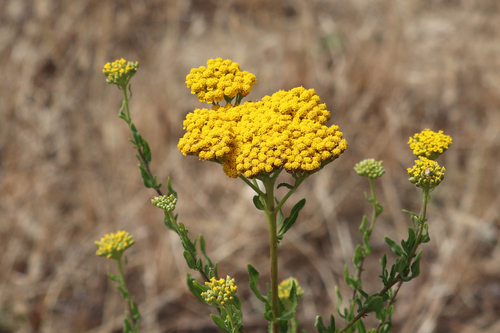
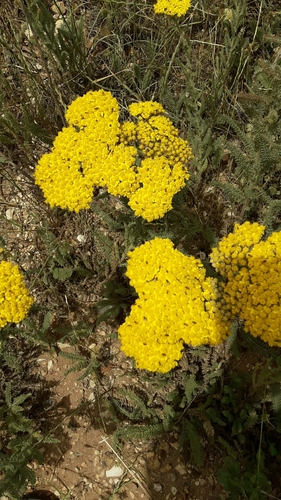
Lactuca orientalis
(Boiss.) Boiss.

(c) MRN, some rights reserved (CC BY-NC), uploaded by MRN
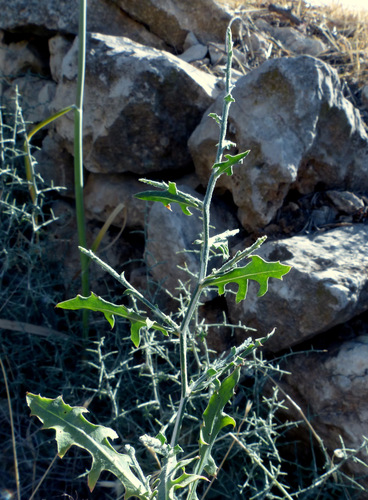
(c) Ron Frumkin, some rights reserved (CC BY-NC), uploaded by Ron Frumkin
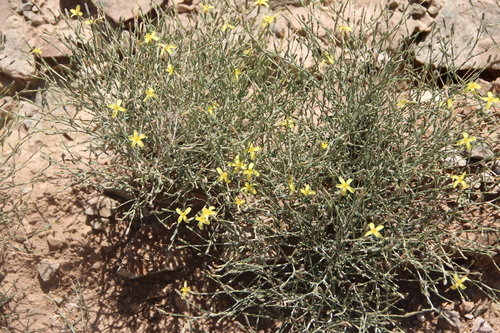
(c) Шильников Дмитрий Сергеевич, some rights reserved (CC BY-NC), uploaded by Шильников Дмитрий Сергеевич
What to Eat
Edible parts: Leaves
The leaves are eaten raw and probably also cooked.
Where to Find It
It is a Mediterranean plant. It grows in dry soils. It can grow in arid places. It grows in NW China on a range of soils below 3,800 m above sea level.
Africa, Asia, Central Asia, China, Egypt, Europe, Iran, Israel, Jordan, Kazakhstan, Kyrgyzstan, Lebanon, Mediterranean, Middle East, North Africa, Pakistan, Sinai, Tajikistan, Turkey, Türkiye,
How to Identify
A herb or small shrub. It keeps growing from year to year. It grows 20-60 cm tall. It has spines. It is branched from the base and the stems are white. The leaves at the base are in a ring. And have teeth or lobes along the edges. The leaves on the stem are smaller.
Wikipedia
Source ↗Lactuca orientalis is a Eurasian species of plant in the tribe Cichorieae within the family Asteraceae. It is widespread across the Middle East and southern Asia as far east as Tibet. Lactuca orientalis is a branching subshrub up to 60 cm tall. Leaves are both on the stem and also clustered in a circle around the base. The plant produces one flower head per branch, each head with 4–5 yellow ray flowers but no disc flowers.
References (5)
- Al-Qura'n, S. A., 2010, Ethnobotanical and Ecological Studies of Wild Edible Plants in Jordan. Libyan Agriculture Research Center Journal International 1(4):231-243
- Bailey, C. and Danin, A., 1981, Bedouin Plant Utilization in Sinai and the Negev. Economic Botany 35(2): 145-162
- Ertug, F, Yenen Bitkiler. Resimli Türkiye Florası -I- Flora of Turkey - Ethnobotany supplement
- Royal Botanic Gardens, Kew (1999). Survey of Economic Plants for Arid and Semi-Arid Lands (SEPASAL) database. Published on the Internet; http://www.rbgkew.org.uk/ceb/sepasal/internet [Accessed 11th April 2011]
- World Checklist of Useful Plant Species 2020. Royal Botanic Gardens, Kew