Centaurea jacea
L.
Harshweed

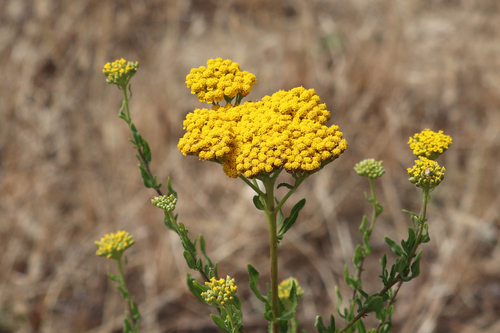
(c) D. Marullo-Masson, some rights reserved (CC BY-NC), uploaded by D. Marullo-Masson

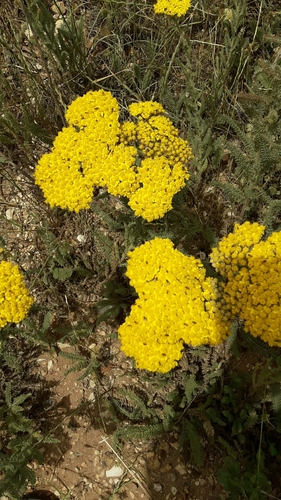
(c) Alexander Baransky, some rights reserved (CC BY-NC)
What to Eat
Edible parts: Leaves
Young leaves are cooked and eaten as a vegetable.
Where to Find It
It is a temperate plant. It is best in dry chalky soils. It needs a protected shady position. It is resistant to drought and frost.
Argentina, Australia, Balkans, Bosnia, Central Asia, Chile, Europe*, Luxembourg, Slovenia, South America, Tajikistan, Tasmania,
How to Identify
A plant that keeps growing from year to year. It grows 60 cm high and spreads 50 cm wide. The stems are erect and have grooves. The leaves at the base are oval and have lobes. They taper to the leaf stalk. There are teeth around the edge. They leaves are arranged in a ring. The stem leaves are sword shaped, hairy and do not have a leaf stalk. The flowers are reddish-purple. They are 20 cm across. They occur singly at the top of the plant.
How to Grow
Succeeds in ordinary garden soil. Prefers a well-drained fertile soil and a sunny position. Tolerates dry, low fertility and alkaline soils. Plants are suitable for the wild garden and for naturalising. This species is hardy to at least -15°c. Members of this genus are rarely if ever troubled by browsing deer.
Propagation: Sow seed in April in a cold frame. Once seedlings are large enough to handle, prick them into individual pots and plant out into permanent positions during the summer. Division in autumn is straightforward — larger clumps can be replanted directly, while smaller ones are better potted up in a cold frame until rooting well, then planted out in summer or the following spring. Divide at least every three years to maintain plant vigour. For basal cuttings in spring, harvest shoots at 10–15cm long with plenty of underground stem, pot individually, and keep in light shade in a cold frame or greenhouse until well rooted before planting out in summer.
Medicinal Uses
The root is a bitter tonic, diuretic, and stomachic. It is considered an excellent bitter for supporting difficult digestive systems and is still used in rural areas both as a digestive aid and to reduce fever in children. A distilled water prepared from the leaves is applied as an eye lotion for treating conjunctivitis.
Other Uses
None known.
Wikipedia
Source ↗Centaurea jacea, brown knapweed or brownray knapweed, is a species of herbaceous perennial plants in the genus Centaurea native to dry meadows and open woodland throughout Europe. In Britain and America, it is often found as a hybrid of black knapweed, Centaurea nigra. Unlike the black knapweed, the flower heads always look as if they are rayed, forming a more open star rather than a brush-like tuft.
Names & Synonyms
Brown knapweed, brownray knapweed