Pinus mugo
Turra
Dwarf mountain pine
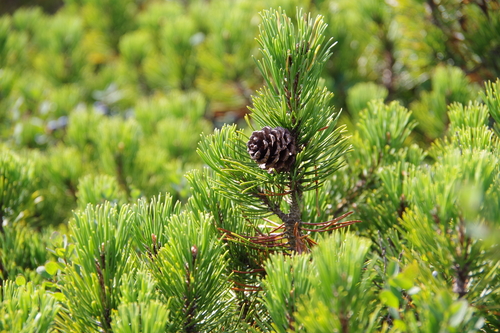
(c) miwa98, some rights reserved (CC BY-NC)

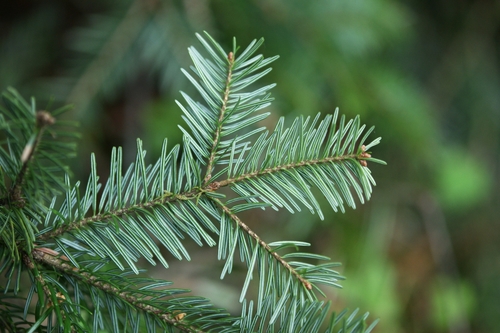
(c) Svetlana Nesterova, some rights reserved (CC BY-NC), uploaded by Svetlana Nesterova

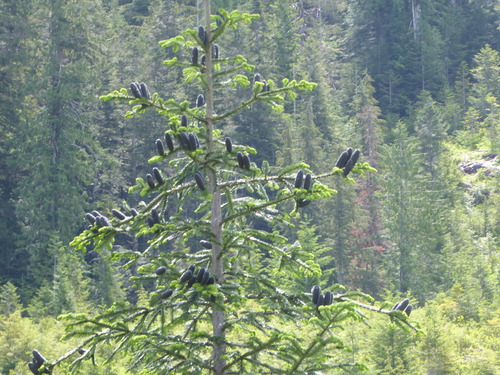
(c) Li Jianong, some rights reserved (CC BY-NC), uploaded by Li Jianong
What to Eat
Edible parts: Leaves - drink, Buds, Young cones, Seeds - oil
A vanillin flavouring is obtained as a by-product of resins released from the pulpwood.
Known Hazards
Where to Find It
It is a temperate plant. It needs well-drained soils. It can grow in poor soils. It is hardy to hardiness zone 3. Arboretum Tasmania.
Albania, Alps, Australia, Austria, Balkans, Bosnia, Britain, Bulgaria, Canada, Czech Republic, Denmark, Europe*, France, Germany, Ireland, Italy, North America, Norway, Poland, Romania, Slovenia, Sweden, Switzerland, Tasmania, Ukraine, Yugoslavia,
How to Identify
An evergreen tree. It grows 4.5 m tall and spreads 8 m wide. The leaves are dark green. The flowers are yellow.
How to Grow
Thrives in a light well-drained sandy or gravelly loam. Dislikes poorly drained moorland soils. Established plants tolerate drought. Thrives in the poorest of soils. Tolerates strong winds, including maritime exposure. A polymorphic species, there are many named varieties. Plants are strongly outbreeding, self-fertilized seed usually grows poorly. They hybridize freely with other members of this genus. There are some named forms selected for their ornamental value. Unlike most species of pine. this tree transplants well. Leaf secretions inhibit the germination of seeds, thereby reducing the amount of plants that can grow under the trees. Plants in this genus are notably susceptible to honey fungus.
Propagation: Sow seed in individual pots in a cold frame as soon as it is ripe, or in late winter if not. Stored seed benefits from 6 weeks of cold stratification at 4°c to improve germination. Move seedlings to permanent positions as soon as possible and protect them for the first winter or two. The root system is very sparse, so early planting is critical for good establishment and growth. Plant trees when small — between 30 and 90cm, ideally around 5–10cm tall — with a thorough weed-excluding mulch. Larger transplants check badly, barely growing for several years, with poor root development and wind resistance as a result. Cuttings are only viable from trees under 10 years old, using single leaf fascicles with the base of the short shoot. Disbudding a few weeks before taking cuttings can assist, though cuttings are generally slow to establish.
Medicinal Uses
Turpentine from pine resin is antiseptic, diuretic, rubefacient, and vermifuge. Used internally, it treats kidney and bladder complaints, and is applied both internally and as a rub or steam bath for rheumatic conditions. It supports the respiratory system and is useful for mucous membrane diseases, coughs, colds, influenza, and TB. Externally it treats skin complaints, wounds, sores, burns, and boils via liniment plasters, poultices, herbal steam baths, and inhalers. The apical branches are antiasthmatic, balsamic, cardiotonic, and expectorant. Distillation of the leaves and branches yields an essential oil widely used in pharmaceutical balsamic preparations for its antiseptic and expectorant properties. It is used internally and externally for upper respiratory tract infections, chronic bronchitis, catarrh, and asthma, and applied externally to treat rheumatism and muscular stiffness.
Other Uses
A tan or green dye comes from the needles. The needles release terpene when rained on, negatively affecting germination of some plants including wheat. Trees are sometimes planted as shelterbelts at high altitudes, and dwarf forms are useful for covering dry slopes and mounds. An essential oil from the young twigs is used medicinally and in woody perfumeries. Trees are also planted for sand binding and shelter in northern Europe. Oleo-resins are extracted by tapping the trunk or by destructive distillation of wood; warmer-region trees tend to yield more. Turpentine, averaging 20% of the oleo-resin, is separated by distillation and used as a solvent for waxes, in varnish, and medicinally. Rosin, the residue after turpentine removal, is used on violin bows, in sealing wax, and varnish. Pitch from the resin is used for waterproofing and wood preservation. The wood is used to make shoes and similar items.
Wikipedia
Source ↗Pinus mugo, known as dwarf mountain pine, mountain pine, scrub mountain pine, Swiss mountain pine, bog pine, creeping pine, or mugo pine, is a species of conifer, native to high elevation habitats from southwestern to Central Europe and Southeast Europe.
Other Information
It is cultivated.
Names & Synonyms
Mugo pne, Planinski bor, Rušje, Scrub mountain pine
References (6)
- Christanell, A., et al, 2010, The Cultural Significance of Wild Gathered Plant Species in Kartitsch (Eastern Tyrol, Austria) and the Influence of Socioeconomic Changes on Local Gathering Practices. Chapter 3 in Ethnobotany in the New Europe. Berghahn Books.
- http://www.botanic-gardens-ljubljana.com/en/plants
- Kew Plants of the World Online
- Redzic, S. J., 2006, Wild Edible Plants and their Traditional Use in the Human Nutrition in Bosnia-Herzegovina. Ecology of Food and Nutrition, 45:189-232
- Wiersema, J. H. & Leon, B., 2013, World Economic Plants. A Standard Reference CRC Press. 2nd Ed. p 532
- World Checklist of Useful Plant Species 2020. Royal Botanic Gardens, Kew