Dicoma capensis
Less.
Karmedik

(c) Nicola van Berkel, some rights reserved (CC BY-SA), uploaded by Nicola van Berkel

(c) pietermier, some rights reserved (CC BY-NC)

(c) Sabine Atteln, some rights reserved (CC BY-NC), uploaded by Sabine Atteln
What to Eat
Edible parts: Leaves
The leaves are cooked and eaten.
Where to Find It
It is a subtropical plant. It grows in dry sandy soils. It grows between 150-1,400 m above sea level. It grows in areas with a rainfall below 250 mm per year. It can grow in arid places.
Africa, Botswana, Eswatini, Europe, Namibia, South Africa, Southern Africa, Swaziland,
How to Identify
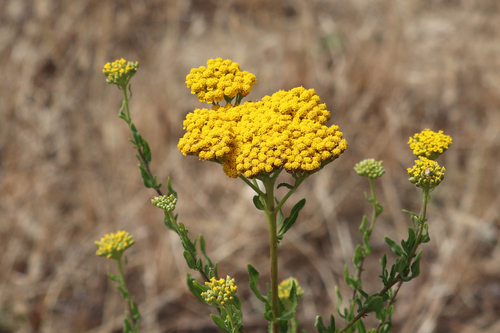
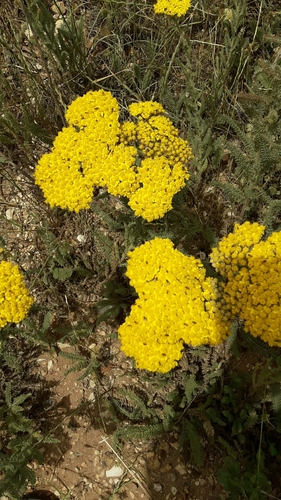
A herb. It lies along the ground. It can grow each year from seed or take 2 years to complete its life cycle. It has a taproot and can keep growing for several years. The stem have a white coating. The leaves are simple and narrowly oval. They taper to the base and there are small teeth along the edge. The flowers are in pale red heads. There are some long spiny bracts. The flower heads are 2 cm across. They occur singly in the axils of the upper leaves.
Names & Synonyms
Manku, Tshefhifha-vhana, Umgilane
References (7)
- Fox, F. W. & Young, M. E. N., 1982, Food from the Veld. Delta Books. p 121
- Long, C., 2005, Swaziland's Flora - siSwati names and Uses http://www.sntc.org.sz/flora/
- Plowes, N. J. & Taylor, F. W., 1997, The Processing of Indigenous Fruits and other Wildfoods of Southern Africa. in Smartt, L. & Haq. (Eds) Domestication, Production and Utilization of New Crops. ICUC p 189
- Royal Botanic Gardens, Kew (1999). Survey of Economic Plants for Arid and Semi-Arid Lands (SEPASAL) database. Published on the Internet; http://www.rbgkew.org.uk/ceb/sepasal/internet [Accessed 11th April 2011]
- Ruiters-Welcome, A. K., 2019, Food plants of southern Africa. Ph.D. thesis. Univ. of Johannesburg p 34
- Welcome, A. K. & Van Wyk, B.-E., 2019, An inventory and analysis of the food plants of southern Africa. South African Journal of Botany 122 (2019) 136–179
- World Checklist of Useful Plant Species 2020. Royal Botanic Gardens, Kew