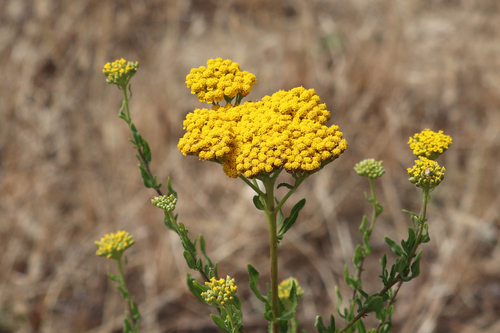
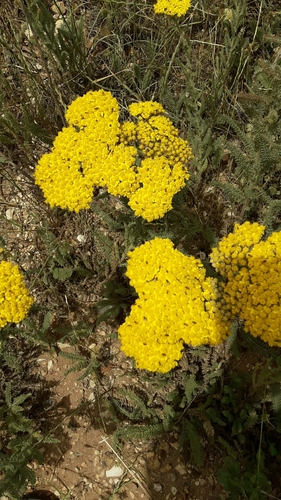
Senecio pterophorus
DC.
Groundsel

iNaturalist · cc-by-nc
(c) David Eedes, some rights reserved (CC BY-NC), uploaded by David Eedes
(c) David Eedes, some rights reserved (CC BY-NC), uploaded by David Eedes
iNaturalist · cc-by-nc
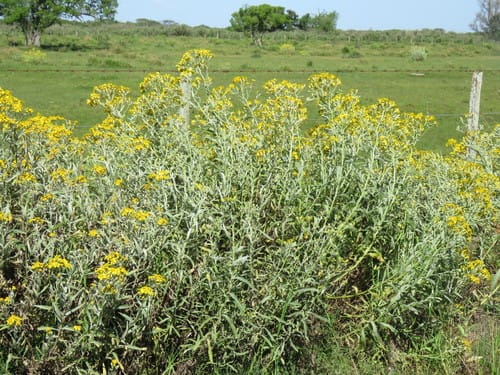
(c) Gustavo Puente, some rights reserved (CC BY-NC)
(c) Gustavo Puente, some rights reserved (CC BY-NC)
iNaturalist · cc-by-nc
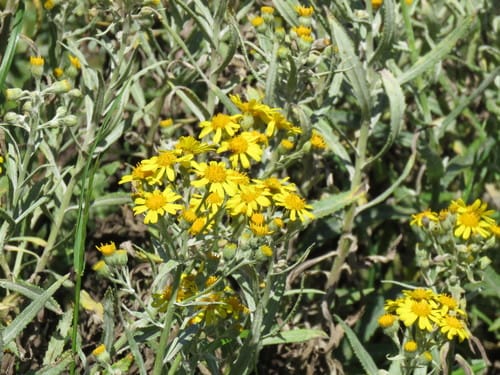
(c) Gustavo Puente, some rights reserved (CC BY-NC)
(c) Gustavo Puente, some rights reserved (CC BY-NC)
What to Eat
Edible parts: Leaves, Caution
The leaves are cooked and eaten as a vegetable.
Known Hazards
Where to Find It
It is a Mediterranean plant. It can grow in arid places. In Argentina it grows from sea level to 1,000 m above sea level.
Africa, Argentina, East Africa, Eswatini, Mozambique, Paraguay, South Africa, Southern Africa, South America*, Swaziland, Uruguay,
Countries: Angola, Argentina, Burkina Faso, Burundi, Benin, Bolivia, Brazil, Botswana, Congo (DRC), Central African Republic, Congo (Republic), Cote d'Ivoire, Chile, Cameroon, Colombia, Cape Verde, Djibouti, Algeria, Ecuador, Egypt, Eritrea, Ethiopia, Gabon, French Guiana, Ghana, Gambia, Guinea, Equatorial Guinea, Guinea-Bissau, Guyana, Kenya, Comoros, Liberia, Lesotho, Libya, Morocco, Madagascar, Mali, Mauritania, Mauritius, Malawi, Mozambique, Namibia, Niger, Nigeria, Peru, Paraguay, Rwanda, Seychelles, Sudan, Sierra Leone, Senegal, Somalia, Suriname, South Sudan, Sao Tome & Principe, Eswatini, Chad, Togo, Tunisia, Tanzania, Uganda, Uruguay, Venezuela, South Africa, Zambia, Zimbabwe
How to Identify
A Mediterranean herb in the Asteraceae family that tolerates arid conditions and grows from sea level to 1,000 m elevation in Argentina.
Names & Synonyms
Senecio pterophorus DC. var. apterus DC.
References (4)
- Long, C., 2005, Swaziland's Flora - siSwati names and Uses http://www.sntc.org.sz/flora/
- Royal Botanic Gardens, Kew (1999). Survey of Economic Plants for Arid and Semi-Arid Lands (SEPASAL) database. Published on the Internet; http://www.rbgkew.org.uk/ceb/sepasal/internet [Accessed 14th April 2011]
- Ruiters-Welcome, A. K., 2019, Food plants of southern Africa. Ph.D. thesis. Univ. of Johannesburg p 37
- Welcome, A. K. & Van Wyk, B.-E., 2019, An inventory and analysis of the food plants of southern Africa. South African Journal of Botany 122 (2019) 136–179