Senecio venosus
Harv.
Groundsel

iNaturalist · cc-by-nc
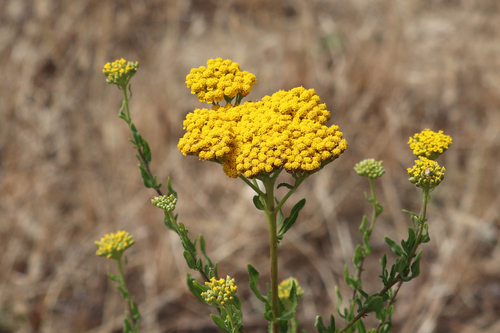
(c) Joan Faiola, some rights reserved (CC BY-NC), uploaded by Joan Faiola
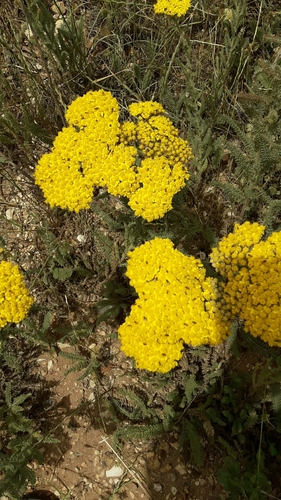
(c) Joan Faiola, some rights reserved (CC BY-NC), uploaded by Joan Faiola
iNaturalist · cc-by-nc
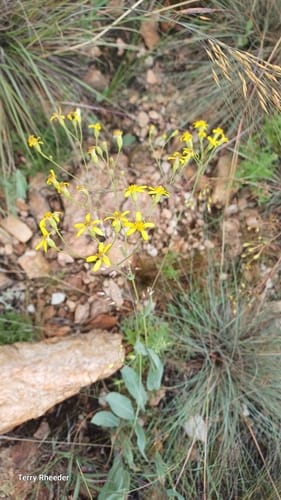
(c) Terry Rheeder, some rights reserved (CC BY-NC)
(c) Terry Rheeder, some rights reserved (CC BY-NC)

iNaturalist · cc-by-nc
(c) sarah_on_earth, some rights reserved (CC BY-NC)
(c) sarah_on_earth, some rights reserved (CC BY-NC)
What to Eat
Edible parts: Leaves - drink, Stems - drink, Caution
The dry leaves and stems are boiled in water for about 15 minutes to make a drink that produces a light red colour.
Known Hazards
Where to Find It
It is a subtropical plant. It grows in the high veld. It can grow in arid places.
Africa, Botswana, Eswatini, South Africa, Southern Africa, Swaziland,
Countries: Angola, Burkina Faso, Burundi, Benin, Botswana, Congo (DRC), Central African Republic, Congo (Republic), Cote d'Ivoire, Cameroon, Cape Verde, Djibouti, Algeria, Egypt, Eritrea, Ethiopia, Gabon, Ghana, Gambia, Guinea, Equatorial Guinea, Guinea-Bissau, Kenya, Comoros, Liberia, Lesotho, Libya, Morocco, Madagascar, Mali, Mauritania, Mauritius, Malawi, Mozambique, Namibia, Niger, Nigeria, Rwanda, Seychelles, Sudan, Sierra Leone, Senegal, Somalia, South Sudan, Sao Tome & Principe, Eswatini, Chad, Togo, Tunisia, Tanzania, Uganda, South Africa, Zambia, Zimbabwe
How to Identify
An herb in the daisy family (Asteraceae) with slender underground rhizomes, growing to 90 cm high in subtropical and arid regions of the high veld.
Wikipedia
Source ↗Senecio venosus is a species of flowering plant in the family Asteraceae. It is endemic to South Africa, Botswana, and Zimbabwe.
Names & Synonyms
Imfenyane
References (6)
- Fox, F. W. & Young, M. E. N., 1982, Food from the Veld. Delta Books. p 124
- Long, C., 2005, Swaziland's Flora - siSwati names and Uses http://www.sntc.org.sz/flora/
- Royal Botanic Gardens, Kew (1999). Survey of Economic Plants for Arid and Semi-Arid Lands (SEPASAL) database. Published on the Internet; http://www.rbgkew.org.uk/ceb/sepasal/internet [Accessed 14th April 2011]
- Ruiters-Welcome, A. K., 2019, Food plants of southern Africa. Ph.D. thesis. Univ. of Johannesburg p 37
- Welcome, A. K. & Van Wyk, B.-E., 2019, An inventory and analysis of the food plants of southern Africa. South African Journal of Botany 122 (2019) 136–179
- World Checklist of Useful Plant Species 2020. Royal Botanic Gardens, Kew