Capsicum baccatum
L.
Peruvian pepper
(c) aacocucci, some rights reserved (CC BY), uploaded by aacocucci
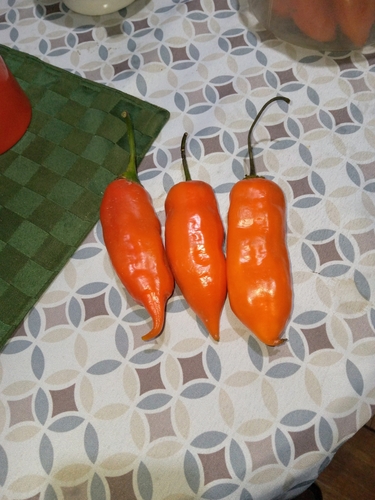
(c) Franco Carramiñana, some rights reserved (CC BY-NC), uploaded by Franco Carramiñana

(c) Manuel Martín Vicente, some rights reserved (CC BY-SA)
What to Eat
Edible parts: Leaves, Fruit, Spice, Vegetable
The fruit has a medium to very hot pungent flavour and is mainly used as a flavouring in cooked foods. It can be dried and ground into a powder for use as a pepper-like condiment. Individual fruits grow up to 13cm long.
Known Hazards
Where to Find It
A tropical plant. It grows from sea level up to 1600 m altitude in Argentina. It needs a temperature above 4-13°C depending on cultivar.
Africa, Andes, Angola, Argentina, Bermuda, Bolivia, Brazil, Cape Verde, Central America, Chad, Colombia, Congo DR, Congo R, Costa Rica, Dominican Republic, East Africa, Ecuador, Europe, Guatemala, Haiti, Hawaii, Honduras, India, Jamaica, Japan, Leeward Is., Madagascar, Mexico, Mozambique, North America, Pacific, Paraguay, Peru, Puerto Rico, South America, Trinidad-Tobago, Turkey, Türkiye, Uruguay, USA, Venezuela, West Indies, Zambia,
How to Identify
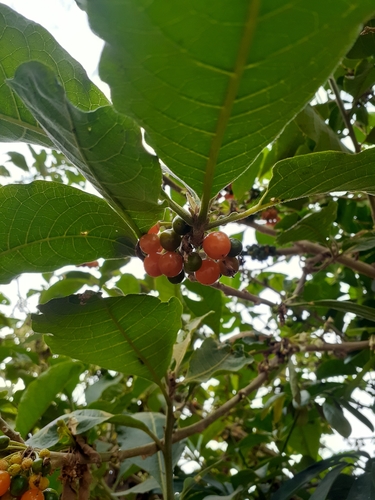
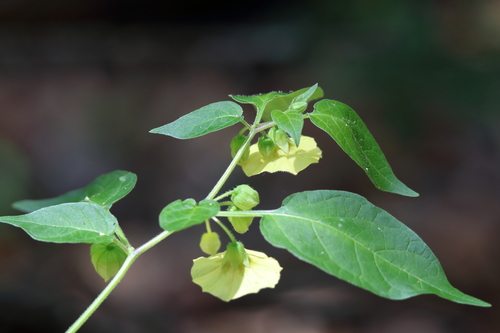
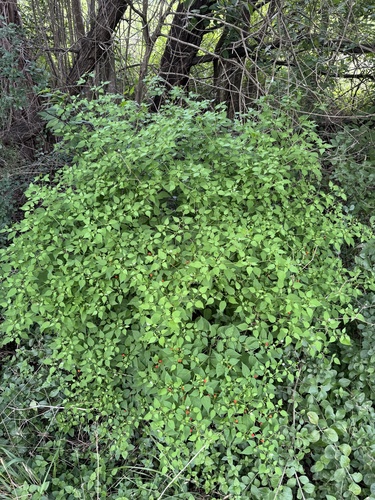
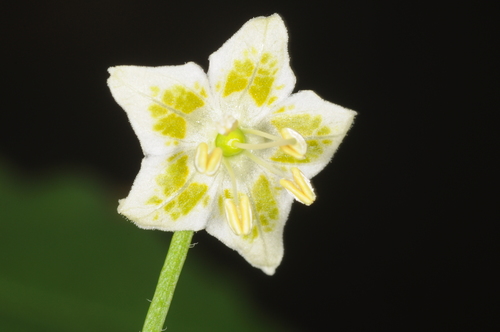
A spreading shrubby plant. It grows 3 m high and spreads 1.5-2 m wide. The leaves are sword shaped and 1.5-3 cm long by 2-2.5 cm wide. The flowers are white or yellow and 1 cm across and in the axils of leaves. The fruit are small. The fruit is 8-10 mm long by 5 mm across. They are green or red. There are several named cultivated varieties.
How to Grow
Requires a very warm sunny position and a fertile well-drained soil. Tolerates a pH in the range 4.3 to 8.3. This species is a half-hardy perennial that can tolerate light frosts. The sub-species C. baccata pendulum is hardier than the type and more likely to be successful in temperate climates. It might be possible to grow it outdoors in the mildest areas of the country, especially if given the protection of a sunny wall. It is usually cultivated as an annual when grown for its fruits.
Propagation: Sow seed in late winter to early spring in a warm greenhouse; germination typically takes 3–4 weeks at 20°C. Prick seedlings out into individual pots of reasonably rich soil and grow on quickly. For outdoor cultivation, plant out after the last expected frosts and protect with a cloche or frame until plants are well established.
Medicinal Uses
The hot, pungent fruit is antihaemorrhoidal when taken in small amounts, antirheumatic, antiseptic, diaphoretic, digestive, irritant, rubefacient, sialagogue, and tonic. Internally it is used in the treatment of the cold stage of fevers, debility in convalescence or old age, varicose veins, asthma, and digestive problems. Externally it is applied in the treatment of sprains, unbroken chilblains, neuralgia, and pleurisy. The German Commission E Monographs approve Capsicum for muscular tension and rheumatism.
Other Uses
The growing plant repels insects.
Wikipedia
Source ↗Capsicum baccatum, also simply referred to as ají (Spanish: [aˈxi]), is a member of the genus Capsicum, and is one of the five domesticated chili pepper species. The fruit tends to be very pungent and registers 30,000 to 50,000 on the Scoville heat unit scale.
Other Information
It is a commercially cultivated vegetable.
Notes
There are 10 Capsicum species.
Names & Synonyms
Aji, Aji amarillo, Aji mirasol, Aji puta pario, Andeanchili, Aribibi, Boopaish, Camari, Cumari, Kiimi, Locoto, Pimenta-cumari, Pimenta-cumbari, Pimento, Sakay lakilosy, Uchu, Zacu quey
References (33)
- Bortolotto, I. M., et al, 2018, Lista preliminar das plantas alimenticias nativas de Mato Grosso do Sul, Brasil. Iheringia, Serie Botanica, Porto Alegre, 73 (supl.):101-116
- Brown, D., 2002, The Royal Horticultural Society encyclopedia of Herbs and their uses. DK Books. p 154
- Castillo, R. O., 1995, Plant Genetic Resources in the Andes: Impact, Conservation, and Management. Crop Science 35:355-360
- Descr. pl. 2:371. 1802 (As Capsicum microcarpum)
- Duarte, M. C., et al, 2022, Diversity of Useful Plants in Cabo Verde Islands: A Biogeographic and Conservation Perspective. Plants 2022, 11, 1313 p 16
- Ekman Herbarium records Haiti
- Facciola, S., 1998, Cornucopia 2: a Source Book of Edible Plants. Kampong Publications, p 232
- Hedrick, U.P., 1919, (Ed.), Sturtevant's edible plants of the world. p 154
- Heiser, C.B., 1979, Peppers, in Simmonds, N.W., (ed), Crop Plant Evolution. Longmans. London. p 265
- Herklots,
- Hermandez Bermejo, J.E., and Leon, J. (Eds.), 1994, Neglected Crops. 1492 from a different perspective. FAO Plant Production and Protection Series No 26. FAO, Rome. p 13
- Kays, S. J., and Dias, J. C. S., 1995, Common Names of Commercially Cultivated Vegetables of the World in 15 languages. Economic Botany, Vol. 49, No. 2, pp. 115-152
- Kew Plants of the World Online
- Kinupp, V. F., 2007, Plantas alimenticias nao-convencionais da regiao metropolitana de Porto Alegre, RS, Brazil p 100
- Kinupp, V. F. & Bergman, I., 2008, Protein and minerals of native species, potential vegetables and fruits. Cienc.Tecnol. Aliment. Vol. 28 No. 4 Campinas Oct/Dec.
- Kiple, K.F. & Ornelas, K.C., (eds), 2000, The Cambridge World History of Food. CUP p 1715
- Macmillan, H.F. (Revised Barlow, H.S., et al), 1991, Tropical Planting and Gardening. Sixth edition. Malayan Nature Society. Kuala Lumpur. p 376
- Mant. pl. 1:47. 1767
- Martin, F.W. & Ruberte, R.M., 1979, Edible Leaves of the Tropics. Antillian College Press, Mayaguez, Puerto Rico. p 219
- Montani, M. C. & Scarpa, G. F., 2016, Recursos vegetales y prácticas alimentarias entre indígenas tapiete del noreste de la provincia de Salta, Argentina. Darwiniana, nueva serie vol.4 no.1 San Isidro jul. 2016
- Plant Ecology - Reviews of Research. 1955, Arid Zone Research VI. UNESCO p 97 (As Capsicum microcarpum)
- Plants for a Future database, The Field, Penpol, Lostwithiel, Cornwall, PL22 0NG, UK. http://www.scs.leeds.ac.uk/pfaf/
- Razanameharizaka, J., et al, 2022, Catalogue Legumes Traditionnels de Madagascar. Université d’Antananarivo, Antananarivo (101), Madagascar. Vol. 1. p 54
- Roa, J. A. G. & Boada, D. S. G., 2018, Fundación para el Fortalecimiento de la Fruticultura y Plantas Alimenticias no Convencionales en Colombia.
- Scarpa, G. F., 2009, Wild food plants used by the indigenous peoples of South American Gran Chaco: A general synopsis and intercultural comparison. Journal of Applied Botany and Food Quality 83:90-101
- Seidemann J., 2005, World Spice Plants. Economic Usage, Botany, Taxonomy. Springer. p 83
- Staples, G.W. and Herbst, D.R., 2005, A tropical Garden Flora. Bishop Museum Press, Honolulu, Hawaii. p 532
- Tozer, F., 2007, The Uses of Wild Plants. Green Man Publishing. p 54
- van Wyk, B., 2005, Food Plants of the World. An illustrated guide. Timber press. p 117
- Vasquez, Roberto Ch. & Coimbra, German S., 1996, Frutas Silvestres Comestibles de Santa Cruz. p 222 (As Capsicum microcarpum)
- Wiersema, J. H. & Leon, B., 2013, World Economic Plants. A Standard Reference CRC Press. 2nd Ed. p 141
- World Checklist of Useful Plant Species 2020. Royal Botanic Gardens, Kew
- www.theplantlist.org