Tagetes multiflora
Kunth
Anis bush
AsteraceaeLeaves
iNaturalist · cc-by-nc
(c) Fabien Anthelme, some rights reserved (CC BY-NC)
(c) Fabien Anthelme, some rights reserved (CC BY-NC)
iNaturalist · cc-by-nc
(c) Mayriliz Coro, some rights reserved (CC BY-NC)
(c) Mayriliz Coro, some rights reserved (CC BY-NC)
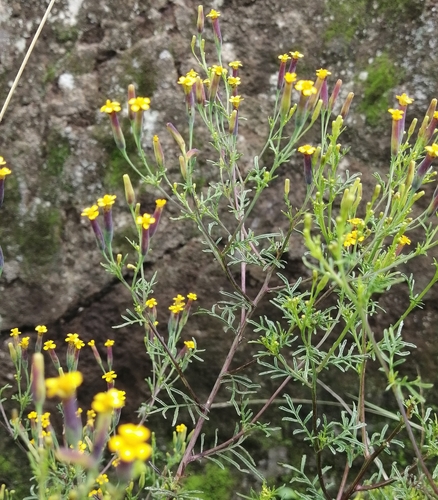
iNaturalist · cc-by-nc
(c) Mayriliz Coro, some rights reserved (CC BY-NC)
(c) Mayriliz Coro, some rights reserved (CC BY-NC)
What to Eat
Edible parts: Leaves
The leaves are used for flavouring.
Where to Find It
It is a warm temperate plant. In Chile it grows from 500-3,000 m altitude. It grows in very dry areas with a rainfall below 100 mm per year. It grows in full sun. In Argentina it grows between 1,000-4,500 m above sea level. It suits hardiness zone 9. It can tolerate some frost.
Argentina, Bolivia, Brazil, Chile, Ecuador, South America*,
How to Identify
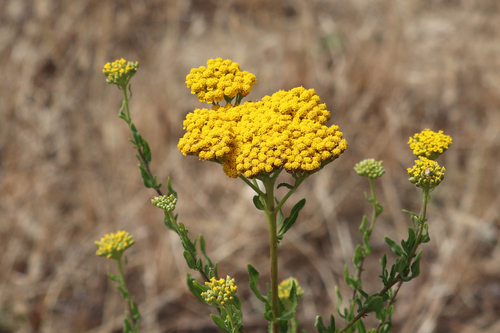
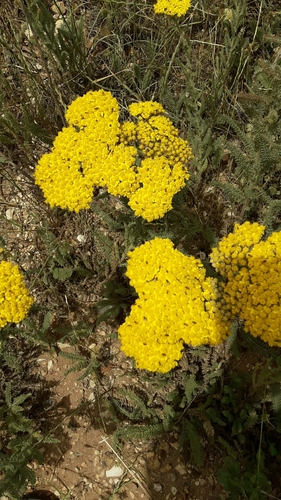
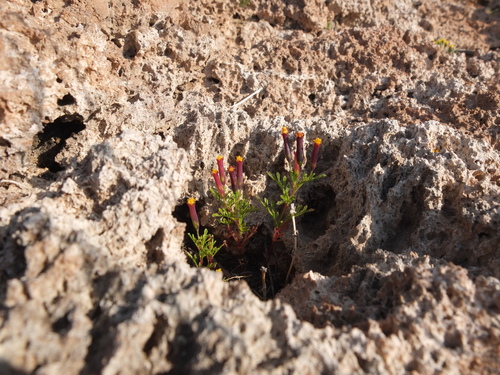
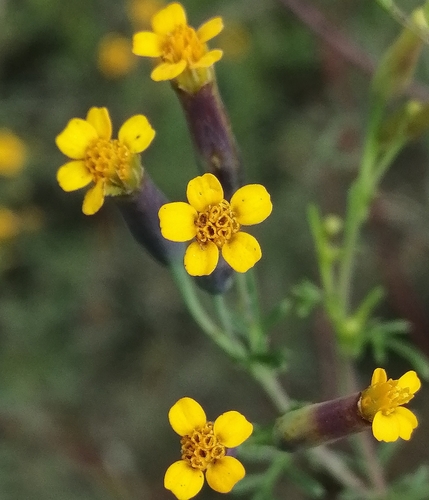
An annual herb. It grows 20 cm high. The stems are thin. The leaves are divided. The flowers are yellow. It has the smell of anis.
Names & Synonyms
Allpa anis, Allpa tsintsu, Ashna yuyu, Haya sitzo, Seyko, Sincho, Suycito, Suycu, Suyko
References (6)
- Hensen, I., 1992, La Flora de la Comunidad Chorojo, Su uso, taxonomía científica y vernacular. Agroecología Universidad Cochabamba p 23
- Leon-Lobos, P., et al, 2022, Patterns of Traditional and Modern Uses of Wild Edible Native Plants of Chile: Challenges and Future Perspectives. Plants (Basel) v 11 (6) Table S1
- Quintana, C. M., 2010, Wild Plants in the Dry Valleys Around Quito Ecuador. An Illustrated Guide. Publicationes del Harbario, QCA p 77
- Torre, de la L., et al, 2008, Enciclopedia de las Plantas Útiles del Ecuador. Herbario QCA. Pontificia Universidad Católica del Ecuador. p 235
- Villagran, C., et al, 1999, La Tradicion Altiplanica: Estudio Etnobotanico en Los Andes de Iquique, Primera Region, Chile. Chungara, volumen 31 No. 1 pp 81-186
- www.chileflora.com