Carpesium cernuum
L.
Nodding carpesium
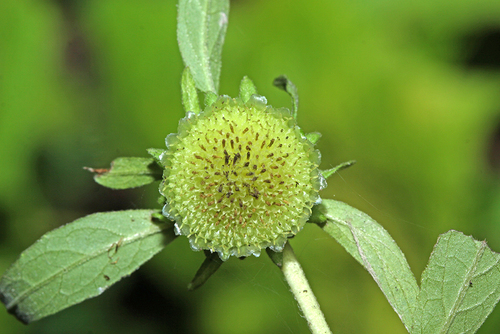
(c) V.S. Volkotrub, some rights reserved (CC BY-NC), uploaded by V.S. Volkotrub

(c) liuhuashun, some rights reserved (CC BY-NC)
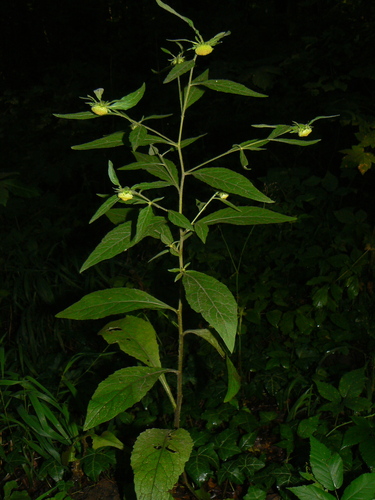
(c) rubescens, some rights reserved (CC BY-NC)
What to Eat
Edible parts: Leaves
Leaves are eaten raw or boiled, typically seasoned with oil and salt.
Known Hazards
Where to Find It
It is a temperate to tropical plant. In China it grows in waste fields and mountain slopes below 2,900 m above sea level. In Sichuan and Yunnan.
Afghanistan, Asia, Australia, Caucasus, China, Europe, India, Indonesia, Japan, Korea, Myanmar, Pakistan, Papua New Guinea, PNG, Philippines, Russia, SE Asia, Taiwan, Tibet, Vietnam,
How to Identify
A herb. It keeps growing form year to year. It grows 50-100 cm tall. They are robust and have a white coating and hairs at the base. The lower leaves are thin and spoon shaped. They are 9-25 cm long by 4-6 cm wide. They are pale underneath. There are irregular double teeth along the edge.
Nutrition Score: 27/100
| Part | Moisture | kJ | kcal | Protein | Vit A | Vit C | Iron | Zinc |
|---|---|---|---|---|---|---|---|---|
| Leaves | 85.2 | — | — | 17.2 | — | — | — | — |
Notes
It contains glycosides.
Names & Synonyms
Jakhain, La men ga
References (5)
- Ambasta S.P. (Ed.), 2000, The Useful Plants of India. CSIR India. p 106
- Geng, Y., et al, 2016, Traditional knowledge and its transmission of wild edibles used by the Naxi in Baidi Village, northwest Yunnan province. Journal of Ethnobiology and Ethnomedicine. 12:10
- Hwang, H., et al, 2013, A Study on the Flora of 15 Islands in the Western Sea of Jeollanamdo Province, Korea. Journal of Asia-Pacific Biodiversity Vol. 6, No. 2 281-310
- READ
- Seal, T., et al, 2013,Evaluation of Proximate and Mineral Composition of Wild Edible Leaves, traditionally used by the Local People of Meghalaya State in India. Asian Journal of Plant Sciences 12(4): 171-175