Carpesium divaricatum
Siebold. & Zucc.
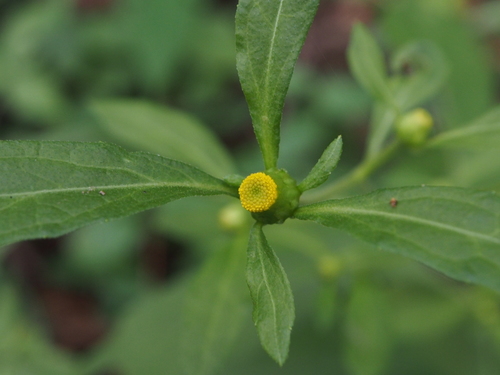
(c) Keita Watanabe, some rights reserved (CC BY-NC), uploaded by Keita Watanabe
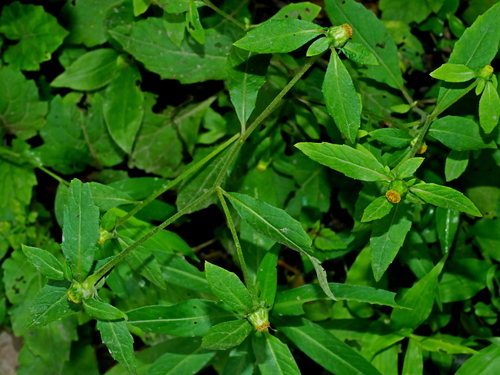
(c) Jacy Chen, some rights reserved (CC BY), uploaded by Jacy Chen
(c) 淑端, some rights reserved (CC BY-NC), uploaded by 淑端
What to Eat
Edible parts: Leaves
The leaves are edible and best eaten cooked.
Where to Find It
It is a temperate plant. It grows in broad-leaved forests between 600-1,600 m above sea level. In Sichuan.
Asia, China, Japan, Korea, Manchuria, Taiwan,
How to Identify
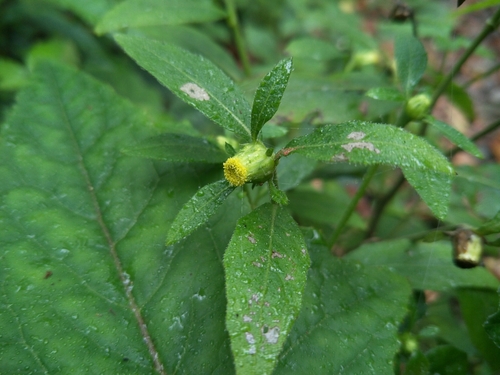
A herb. It keeps growing from year to year. The stems are 25-100 cm tall. They are hairy. The leaves are oval to oblong and 7-23 cm long. They are pale underneath. There are irregular teeth along the edge.
How to Grow
We have very little information on this species and do not know if it will be hardy in Britain, though judging by its native range it should succeed outdoors in many parts of this country. See the plants native habitat for ideas on its cultivation needs.
Propagation: Sow seed in spring in a cold frame, barely covering it and keeping the compost moist at all times. Prick seedlings out into individual pots once large enough to handle, and grow on in a cold frame for at least their first winter. Plant out into permanent positions in late spring or early summer, after the last expected frosts. Can also be propagated by division in spring.
Medicinal Uses
The root, or the whole plant, is carminative, depurative, febrifuge, and vermifuge. A decoction is used to treat acute enteritis, abdominal pains, abscesses, poisonous snakebite, and arthralgia. The seeds are likely the part used as a vermifuge — the source is vague on this point, but seeds of other plants in this genus are known to be vermicidal.
Other Uses
None known Special Uses
Wikipedia
A perennial herbaceous plant reaching 1 meter tall with hermaphroditic flowers pollinated by insects. Blooms August to October with seeds maturing September to October. Tolerates light sandy, medium loamy, and heavy clay soils across mildly acidic to basic pH ranges. Grows in semi-shade or full sun and prefers consistently moist conditions.
References (3)
- Hwang, H., et al, 2013, A Study on the Flora of 15 Islands in the Western Sea of Jeollanamdo Province, Korea. Journal of Asia-Pacific Biodiversity Vol. 6, No. 2 281-310
- Hwang, HS, et al, 2014, Distribution characteristics of plant in the Ungseokbong Mountain, Gyeongsangnam-do, Korea. Journal of Asia-Pacific Biodiversity. 7(2014) e164-e178
- Plants for a Future database, The Field, Penpol, Lostwithiel, Cornwall, PL22 0NG, UK. http://www.scs.leeds.ac.uk/pfaf/