Isoglossa lactea
Lindau ex Engl.
(c) kenny_well, some rights reserved (CC BY-NC)

(c) opalfate, some rights reserved (CC BY-NC)

(c) Nancy McIntyre, some rights reserved (CC BY-NC)
What to Eat
Edible parts: Leaves, Vegetable
The leaves are collected, chopped, and cooked with coconut milk. Fresh leaves are sold in local markets.
Where to Find It
It is a tropical plant. In grows in evergreen forests in mountain regions. In Tanzania it grow between 1,300-1,800 m above sea level.
Africa, East Africa, Kenya, Tanzania, Uganda,
How to Identify
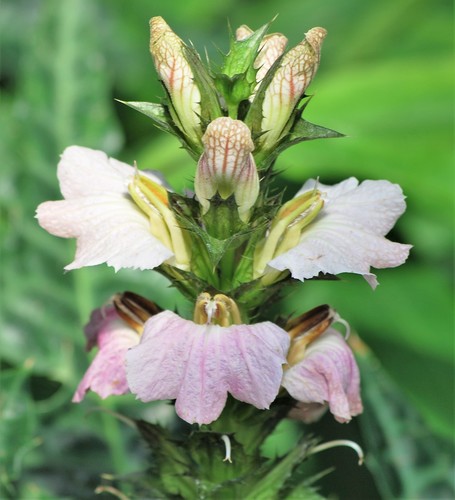
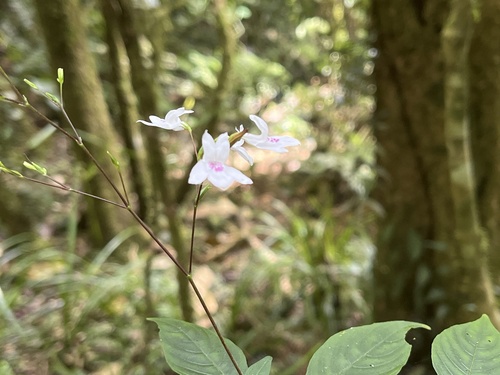
A trailing or scrambling herb. The stems can climb 1-2,5 m. They develop from a woody base. The leaves are opposite and narrowly oval. They are 8 cm long. The tip tapers and the base narrows. They are red underneath. The flowers are white. They are in large open heads. Each flower is 12 mm long. They are funnel shaped. The fruit are hard capsules. They are brown and pointed. They are 2 cm long.
How to Grow
Plants can be grown from seed or cuttings.
Propagation: Seed - Cuttings
Medicinal Uses
The roots are boiled and the decoction drunk three times a day as a remedy for VD and coughs.
Production
Leaves are collected during the rainy season.
Other Information
Leaves are sold in local markets.
Names & Synonyms
Litimbatimba, Mtonyati-ngoshi
References (3)
- Grubben, G. J. H. and Denton, O. A. (eds), 2004, Plant Resources of Tropical Africa 2. Vegetables. PROTA, Wageningen, Netherlands. p 562
- Ruffo, C. K., Birnie, A. & Tengnas, B., 2002, Edible Wild Plants of Tanzania. RELMA p 402
- World Checklist of Useful Plant Species 2020. Royal Botanic Gardens, Kew