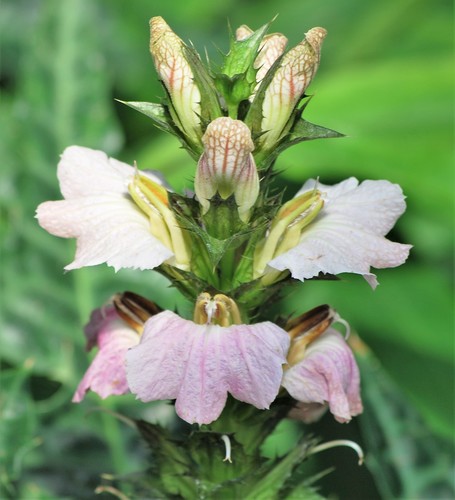
Rungia congoensis
C. B. Clarke

gbif · cc-by
Meise Botanic Garden
Meise Botanic Garden

gbif · cc-by-nc-sa
MBG
MBG

gbif · cc-by-nc
GBIF
GBIF
What to Eat
Edible parts: Flavouring, Vegetable, Leaves, Spice
The leaves are eaten with other vegetables or dried and used as a spice with meat.
Where to Find It
It is a tropical plant. It grows in cool shady sites.
Africa, Cameroon, Central Africa, Congo DR, Gabon, Nigeria, West Africa,
Countries: Angola, Burkina Faso, Burundi, Benin, Botswana, Congo (DRC), Central African Republic, Congo (Republic), Cote d'Ivoire, Cameroon, Cape Verde, Djibouti, Algeria, Egypt, Eritrea, Ethiopia, Gabon, Ghana, Gambia, Guinea, Equatorial Guinea, Guinea-Bissau, Kenya, Comoros, Liberia, Lesotho, Libya, Morocco, Madagascar, Mali, Mauritania, Mauritius, Malawi, Mozambique, Namibia, Niger, Nigeria, Rwanda, Seychelles, Sudan, Sierra Leone, Senegal, Somalia, South Sudan, Sao Tome & Principe, Eswatini, Chad, Togo, Tunisia, Tanzania, Uganda, South Africa, Zambia, Zimbabwe
How to Identify
A small creeping herb. It grows 20 cm tall and 30 cm long. The leaf stalks are 1-3 cm long. The leaves are opposite and wedge shaped at the base.
Notes
An unresolved name in The Plant List.
Names & Synonyms
Kinzonzi
References (3)
- Grubben, G. J. H. and Denton, O. A. (eds), 2004, Plant Resources of Tropical Africa 2. Vegetables. PROTA, Wageningen, Netherlands. p 564
- Latham, P., 2004, Useful Plants of Bas-Congo province. Salvation Army & DFID p 241
- World Checklist of Useful Plant Species 2020. Royal Botanic Gardens, Kew