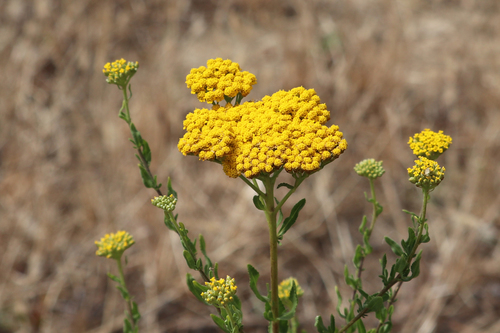
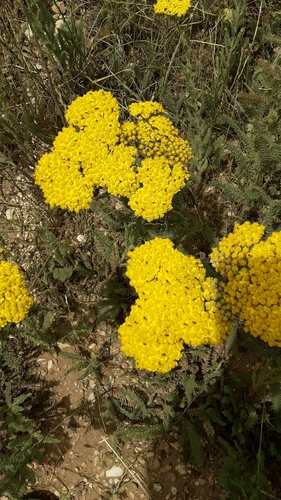
Eriophyllum ambiguum
(Gray) Gray
Beautiful woollysunflower

(c) Merav Vonshak, some rights reserved (CC BY-NC), uploaded by Merav Vonshak

(c) randomtruth, some rights reserved (CC BY-NC-SA)

(c) Nature Ali, some rights reserved (CC BY-NC-ND), uploaded by Nature Ali
What to Eat
Edible parts: Seeds
The seeds are parched, pounded, and eaten dry.
Where to Find It
It is a temperate plant.
North America, USA,
How to Identify
A temperate herb in the Asteraceae family with seeds that are traditionally processed for consumption.
Wikipedia
Source ↗Eriophyllum ambiguum is a species of flowering plant in the family Asteraceae known by the common name beautiful woolly sunflower. It is native to the deserts and adjacent hills of southern and eastern California, northwestern Arizona, and southern Nevada. Eriophyllum ambiguum grows in chaparral, woodlands, and desert habitat. It is an annual herb growing decumbent or upright with stems up to 30 centimeters (1 foot) long. The leaves are widely lance-shaped or oblong and sometimes have lobes, with woolly hairs on both sides. The inflorescence produces one flower head containing many yellow disc florets and 6 to 10 yellow, white, or bicolored ray florets which are each 2 millimeters to one centimeter (0.08-0.40 inches) long. The fruit is a rough-haired achene which may have a very small pappus. Varieties Eriophyllum ambiguum var. ambiguum - California, mostly in Kern County Eriophyllum ambiguum var. paleaceum (Brandegee) Ferris - California, Nevada, Arizona
References (1)
- Moerman, D. F., 2010, Native American Ethnobotany. Timber Press. p 225