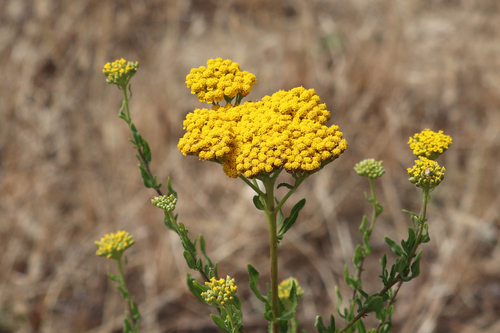
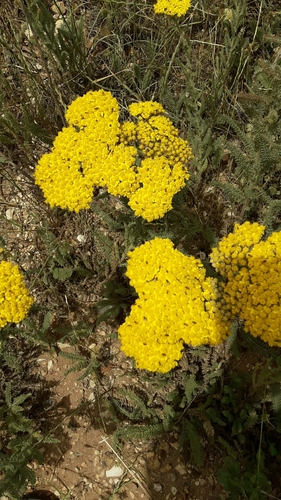
Madia gracilis
(Sm.) Keck & J. Clausen ex Applegate
AsteraceaeSeeds/Nuts

iNaturalist · cc-by
(c) Amy, some rights reserved (CC BY), uploaded by Amy
(c) Amy, some rights reserved (CC BY), uploaded by Amy

iNaturalist · cc-by-nc
(c) dickwood, some rights reserved (CC BY-NC), uploaded by dickwood
(c) dickwood, some rights reserved (CC BY-NC), uploaded by dickwood

iNaturalist · cc-by
(c) Ken-ichi Ueda, some rights reserved (CC BY)
(c) Ken-ichi Ueda, some rights reserved (CC BY)
What to Eat
Edible parts: Seeds
The seeds are mixed with maize flour and cooked together as a dish.
Where to Find It
It is a temperate plant.
North America, USA,
Countries: Antigua & Barbuda, Barbados, Bahamas, Belize, Canada, Costa Rica, Cuba, Dominica, Dominican Republic, Grenada, Guatemala, Honduras, Haiti, Jamaica, St Kitts & Nevis, St Lucia, Mexico, Nicaragua, Panama, Puerto Rico, El Salvador, Trinidad & Tobago, United States, St Vincent
How to Identify
A temperate herb in the daisy family (Asteraceae). The seeds are consumed as food.
Wikipedia
Source ↗Madia gracilis is a species of flowering plant in the family Asteraceae known by the common names grassy tarweed, slender tarweed, and gumweed madia.
Names & Synonyms
Madia dissitiflora (Nutt.) Torr. & A. Grayand others
References (3)
- Beckstrom-Sternberg, Stephen M., and James A. Duke. "The Foodplant Database." http://probe.nalusda.gov:8300/cgi-bin/browse/foodplantdb.(ACEDB version 4.0 - data version July 1994) (As Madia dissitiflora)
- Moerman, D. F., 2010, Native American Ethnobotany. Timber Press. p 327
- Plants for a Future database, The Field, Penpol, Lostwithiel, Cornwall, PL22 0NG, UK. http://www.scs.leeds.ac.uk/pfaf/ (As Madia dissitiflora)