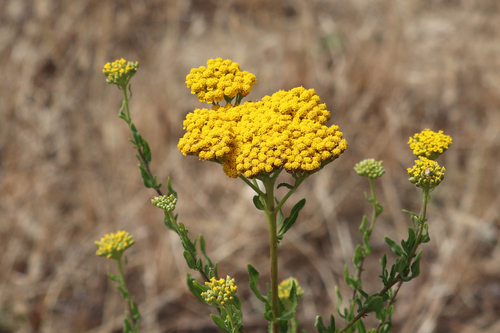
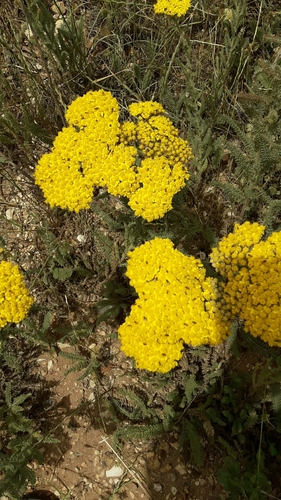
Centipeda minima
(L.) A. Braun & Ascheron
Sneezeweed
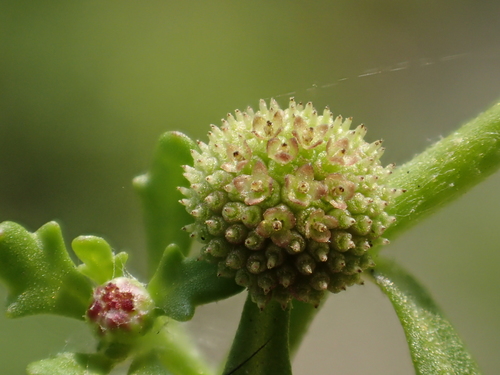
no rights reserved, uploaded by 葉子

(c) Hong, some rights reserved (CC BY-NC)

(c) hcl, some rights reserved (CC BY-NC)
What to Eat
Edible parts: Leaves
No edible uses are known for this plant.
Known Hazards
Where to Find It
It is a tropical and subtropical plant. It grows in wet places. It can be in shallow water and flowers as the water recedes. In Sichuan and Yunnan.
Asia, Fiji, India, Indochina, Indonesia, Japan, Korea, Laos, Malaysia, Myanmar, Nepal, New Zealand, Northeastern India, Pacific, Papua New Guinea, PNG, Philippines, Russia, Samoa, SE Asia, Taiwan, Thailand,
How to Identify
A herb. It often lies along the ground. It grows each year from seed. The stems can be erect or spreading from a single taproot. The leaves are alternate and broadly oval with teeth towards the end. The flower heads occur singly in the axils of leaves. They are white. The fruit is a dry.
How to Grow
The plant can be a weed of cultivated crops, but is considered to be only a minor weed because it does not root deeply, and it stays small
Propagation: Sow seed in a seed tray in mid spring and plant out after the last expected frosts. If sufficient seed is available, it can be sown in situ outdoors in late spring.
Medicinal Uses
The plant is anodyne, antitussive, depurative and diuretic, and stimulates blood circulation. Inhaling the aroma of squeezed flower heads induces sneezing and is used to relieve nasal congestion, particularly during coughs and colds. A paste made from the flower heads is applied externally to treat swellings and skin inflammations.
Other Uses
No other uses are known for this plant.
Wikipedia
A low-growing annual reaching 0.1 m tall with a 0.5 m spread. Hermaphroditic flowers. Adapts to light sandy, medium loamy, and heavy clay soils across mildly acid to basic pH ranges. Grows in semi-shade or full sun, preferring moist soil.
Notes
It has medicinal properties against allergies and against bacteria.
Names & Synonyms
Chay-sat, Hachuti, Hansia bon, Hansio bighang, Sat-cahy
References (4)
- Baro, D., Baruah, S. and Borthukar, S. K. 2015, Documentation on wild vegetables of Baksa district, BTAD (Assam). Scholars Research Library. Archives of Applied Science Research, 2015, 7 (9):19-27
- Dutta, U., 2012, Wild Vegetables collected by the local communities from the Churang reserve of BTD, Assam. International Journal of Science and Advanced Technology. Vol. 2(4) p 119
- Patiri, B. & Borah, A., 2007, Wild Edible Plants of Assam. Geethaki Publishers. p 71
- Swapna, M. M. et al, 2011, A review on the medicinal and edible aspects of aquatic and wetland plants of India. J. Med. Plants Res. 5 (33) pp. 7163-7176