Acmella paniculata
(Wall. ex DC.) R. K. Jansen
Paracress, Panicled spot flower
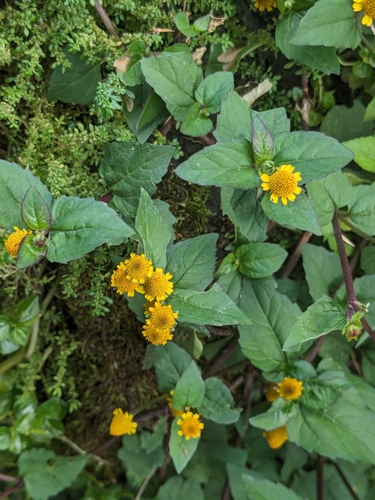
(c) portioid, some rights reserved (CC BY), uploaded by portioid
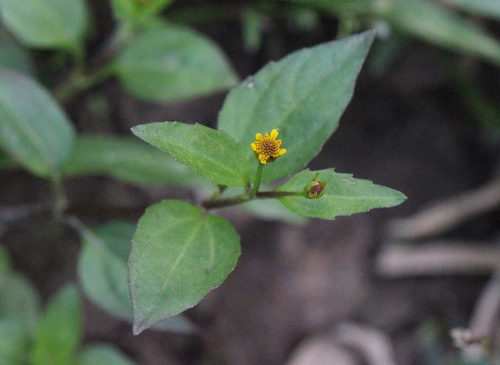
no rights reserved, uploaded by Agnes Trekker

(c) Inaya Rizqi, some rights reserved (CC BY-NC), uploaded by Inaya Rizqi
What to Eat
Edible parts: Leaves, Shoots, Flowers
The shoots and leaves are cooked with meat and eaten; the flowers are boiled or cooked with rice. Shoots are sold in local markets.
Where to Find It
It is a tropical plant. It grows in moist and boggy ground. It can be in rice fields. In Yunnan.
Asia, Bangladesh, China, Himalayas, India, Indochina, Indonesia, Laos, Malaysia, Myanmar, Nepal, Northeastern India, Philippines, SE Asia, Sri Lanka, Taiwan, Thailand, Vietnam,
How to Identify
A shrub or small tree. It grows 5 m tall. There are prickles along the stem. The leaves are twice divided and there are 8-18 pairs of pinnae. There are up to 50 pairs of pinnules on each pinnae. The flowers are yellow. They are in large clusters at the ends of branches. The pods are flattened.
How to Grow
Plants are grown by seeds.
Medicinal Uses
The whole plant is used in the treatment of dysentery. A paste made from the plant is applied topically to snake bites. The pungent flower heads are chewed to relieve a toothache and other mouth-repated troubles. The juice of the flower heads is drunk as a remedy for stomach pains. A decoction of the leaves is used as a diuretic and lithotriptic. The leaves are used externally in the treatment of skin diseases. A root decoction is used as purgative.
Other Information
Shoots are sold in local markets.
Names & Synonyms
Akkalkara, An-ka-sa-kir, Ansache, Ansa tlang, An-sa-te, Bapchuki, Bab soki, Eripacha, Haperphang, Klunbgua, Mersha ao, Pajong nam, Rasun, Samberma, Usni sag
References (18)
- Balkrishna, A., et al, 2022, Indigenous Uses of Plants among Forest-dependent Communities of Seijosa, Arunachal Pradesh. International Journal of Economic Plants 2022, 9(1):064-080
- Das, S. and Mohiuddin, M., 2012, Gender role in Home Garden Management in the Indigenous Community: A case study in Bandarban Hill District, Bangladesh. International Journal of Social Forestry. 5(1):22-37 (As Spilanthes calva)
- Datar, M. N. & Upadhye, A. S., 2016, Forest foods of northern region of Western Ghats. MACS - Agharkar Research Institute, Pune. Pp 1-160. ISBN: 978-93-85735-10-3 p
- Hossain, U. & Rahman, A., 2018, Study and quantitative analysis of wild vegetable floral diversity available in Barisal district, Bangladesh. Asian J. Med. Biol. Res. 2018, 4 (4), 362-371 (As Spilanthes calva)
- Jadhav, R., et al, 2015, Forest Foods of Northern Western Ghats: Mode of Consumption, Nutrition and Availability. Asian Agri-History Vol. 19, No. 4: 293-317
- Kar, A., & Borthakur, S. K., 2008, Wild vegetables of Karbi - Anglong district, Assam, Natural Product Radiance, Vol. 7(5), pp 448-460
- Kar, A., et al, 2013, Wild Edible Plant Resources used by the Mizos of Mizoram, India. Kathmandu University Journal of Science, Engineering and Technology. Vol. 9, No. 1, July, 2013, 106-126 (As Spilanthes calva)
- Khodram,S. D., et al, 2019, Local knowledge of edible flowers used in Mizoram. Indian Journal of Traditional Knowledge Vol 18(40 pp 715-723
- Kumar, S. A., Manus, D. & Mallika, M., 2018, Impact of non-timber forest products on Forest and in Livelihood Economy of the People of Adjoining Areas of Jalpaiguri Forest Division, West Bengal, India. Int. J. of Life Sciences, 2018; 6 (2):365-385
- Lokho, K. & Narasimhan, D., 2013, Ethnobotany of Mao-Naga Tribe of Manipur, India. Pleione 7(2): 314-324
- Lungphi, P., Wangpan, T. & Tangjang, S., 2018, Wild edible plants and their additional uses by the Tangsa community living in the Changlang district of Arunachal Pradesh, India. Pleione 12(2): 151 - 164. 2018.
- Medhi, P., Sarma, A and Borthakur, S. K., 2014, Wild edible plants from the Dima Hasao district of Assam, India. Pleione 8(1): 133-148 (As Spilanthes acmella var. paniculata)
- Meitei, L. R., et al, 2022, An ethnobotanical study on the wild edible plants used by forest dwellers in Yangoupokpi Lokchao Wildlife Sanctuary, Manipur, India. Ethnobotany Research and Application 23:15
- Murtem, G. & Chaudhrey, P., 2016, An ethnobotanical note on wild edible plants of Upper Eastern Himalaya, India. Brazilian Journal of Biological Sciences, 2016, v. 3, no. 5, p. 63-81 (As Spilanthes paniculata)
- Phangchopi, U., et al, 2015, Diversity of wild edible plants in Marat Longri Wildlife Sanctuary, Assam. Indian Journal of Natural Products and Resources Vol. 6(4), December 2015 pp. 305-313
- Swapna, M. M. et al, 2011, A review on the medicinal and edible aspects of aquatic and wetland plants of India. J. Med. Plants Res. 5 (33) pp. 7163-7176 (As Spilanthes calva)
- Teron, R. & Borthakur, S. K., 2016, Edible Medicines: An Exploration of Medicinal Plants in Dietary Practices of Karbi Tribal Population of Assam, Northeast India. In Mondal, N. & Sen, J.(Ed.) Nutrition and Health among tribal populations of India. p 149 (As Spilanthes calva)
- World Checklist of Useful Plant Species 2020. Royal Botanic Gardens, Kew