Pinus radiata
D. Don
Monterey pine

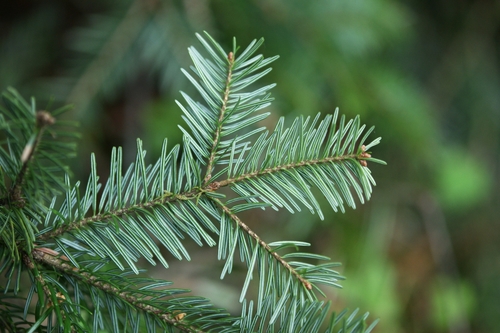
(c) Jeff Bisbee, some rights reserved (CC BY-NC), uploaded by Jeff Bisbee
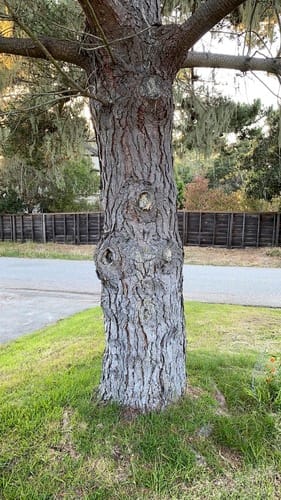
(c) Wyatt Patry, some rights reserved (CC BY-NC)
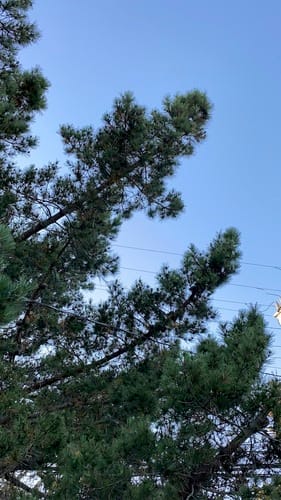
(c) Wyatt Patry, some rights reserved (CC BY-NC)
What to Eat
Edible parts: Catkins, Nuts, Needles - tea, Seeds
The seeds of all Pinus species are more or less edible, and some are of good size and make very tasty and nutritious foods, often eaten in quantitiy. Others can be less desireable, either having a strongly resinous flavour, being bitter or, more commonly, rather too small and fiddly to make it very worthwhle even trying to eat them, We have no specific information of the desireability of this species, though they are rather small (the size given includes the shell). A vanillin flavouring is obtained as a by-product of other resins that are released from the pulpwood.
Known Hazards
Where to Find It
It is a temperate plant. It needs well-drained soil. It can grow on poor soils. It is best in acid or neutral soils. It suits hardiness zone 8. Arboretum Tasmania.
Argentina, Australia, Britain, Chile, Colombia, Ethiopia, Falklands, France, Ireland, Italy, Kenya, Mexico*, North America*, Portugal, South America, Spain, Tasmania, Turkey, Türkiye, Uruguay, USA,
How to Identify
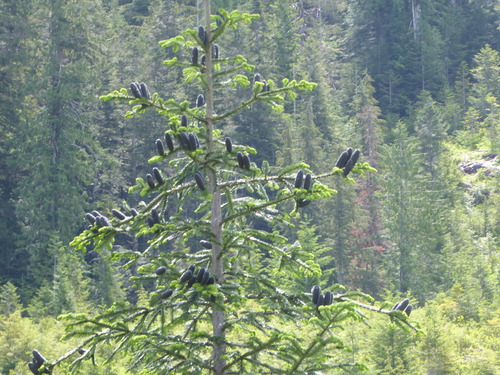
A fast-growing evergreen tree reaching 65m tall and 10m wide, hardy to UK zone 8. Flowering occurs February to March with seeds ripening January to February. Wind-pollinated and monoecious, it requires full sun and well-drained soil, tolerating poor soil and drought. Highly tolerant of maritime exposure and salt-laden winds, it grows 1-2.5m annually even in exposed positions.
How to Grow
Thrives in a light well-drained sandy or gravelly loam. Dislikes poorly drained moorland soils. Established plants tolerate drought. Very resistant to maritime exposure, the leaves can be badly burned by cold dry winds but this does not seem to affect growth. Mature trees produce a broad heavy crown and are somewhat likely to be blown down in severe gales. Trees are somewhat tender when young. Any transplanting is best done when the plant is in active growth in the summer. Only small plants should be moved. Extensively cultivated for timber in warm temperate zones, especially in New Zealand, it grows larger in cultivation than it does in the wild. It is a very vigorous tree in S.W. England where growth takes place almost all year round and annual height increases of 2.5 metres in young plants are not uncommon. Outside the milder areas growth is less vigorous, taking place from June to September. A short-lived tree in the wild, where it rarely lives longer than 100 years. It is probably going to be long-lived in cultivation in Britain. It often self-sows in Britain, though the seedlings are usually found in the shade of the tree and do not flourish there. Plants are strongly outbreeding, self-fertilized seed usually grows poorly. They hybridize freely with other members of this genus. The cones are 8 - 17cm long, they remain closed on the tree for many years, only opening after the heat of a forest fire followed by rain. Plants can produce new shoots from reasonably old wood so the lower branches can be cut back to produce a hedge-like effect. Leaf secretions inhibit the germination of seeds, thereby reducing the amount of plants that can grow under the trees. Plants in this genus are notably susceptible to honey fungus.
Propagation: Sow seed in individual pots in a cold frame as soon as it is ripe, or in late winter if necessary. A short stratification of 6 weeks at 4°C can improve germination of stored seed. Plant seedlings into their permanent positions as soon as possible and protect them through their first winter or two. Because plants have a very sparse root system, early transplanting is important for good establishment. Trees should be moved to their final positions when small — between 30 and 90cm — though in practice planting out at around 5–10cm tall works well, provided a thorough weed-excluding mulch is used. Larger transplants establish poorly, putting on little growth for several years, which also compromises root development and wind resistance. Cuttings can be taken, but this method only works on trees less than 10 years old. Use single leaf fascicles with the base of the short shoot attached. Disbudding the shoots a few weeks before taking cuttings can improve success. Cuttings are generally slow to grow away.
Medicinal Uses
The turpentine derived from pine resin is antiseptic, diuretic, rubefacient, and vermifuge. Taken internally, it is a valuable remedy for kidney and bladder complaints, and is used both internally and as a rub or steam bath for rheumatic conditions. It also benefits the respiratory system, making it useful against diseases of the mucous membranes and complaints such as coughs, colds, influenza, and TB. Externally, it treats skin complaints, wounds, sores, burns, and boils, and is applied as liniment plasters, poultices, herbal steam baths, or inhalers.
Other Uses
Very tolerant of maritime exposure and salt-laden winds, and extremely fast-growing — height increases of between 1 and 2.5 metres per year have been recorded even in exposed positions — this tree makes an excellent shelterbelt species. A tan or green dye is obtained from the needles. The needles contain terpene, which is released by rain and negatively affects the germination of some plants, including wheat. Oleo-resins are present in all pine species but are often insufficient for economical extraction; they are obtained by tapping the trunk or by destructive distillation of the wood, with warmer-region trees giving higher yields. Turpentine makes up an average of 20% of the oleo-resin and is separated by distillation for use as a solvent, in varnish-making, and medicinally. The remaining rosin is used on violin bows and in sealing wax and varnish. Pitch from the resin is used for waterproofing and wood preservation. The wood is tough and hard — though described elsewhere as light, soft, brittle, close-grained, and not strong — and is widely grown for lumber in warm temperate zones, with uses including flooring, finishings, and fuel.
Wikipedia
Source ↗Pinus radiata (syn. Pinus insignis), the Monterey pine, insignis pine or radiata pine, is a species of pine native to the Central Coast of California and Mexico (on Guadalupe Island and Cedros island). It is an evergreen conifer in the family Pinaceae. Pinus radiata is a versatile, fast-growing, medium-density softwood, suitable for a wide range of uses and valued for rapid growth (up to two meters (6.5 feet) in one year), as well as desirable lumber and pulp qualities. Its silviculture reflects a century of research, observation and practice. It is often considered a model for growers of other plantation species. Although P. radiata is extensively cultivated as a plantation timber in many temperate parts of the world, it faces serious threats in its natural range, due to the introduction of a fungal parasite, the pine pitch canker (Fusarium circinatum). The pine shoot moth Rhyacionia buoliana is another serious problem. In cultivation in New Zealand, Pinus radiata has grown as much as 61 m (200 ft) in 41 years, an average of 1.5 m (4 ft 11 in) per year.
Production
It grows quickly.
Names & Synonyms
References (6)
- Kew Plants of the World Online
- Menendez-Baceta, G., et al, 2012, Wild edible plants traditionally gathered in Gorbeialdea (Biscay, Basque Country) Genetic Resources and Crop Evolution 59:1329-1347
- Roa, J. A. G. & Boada, D. S. G., 2018, Fundación para el Fortalecimiento de la Fruticultura y Plantas Alimenticias no Convencionales en Colombia.
- Upson, R., & Lewis R., 2014, Updated Vascular Plant Checklist and Atlas for the Falkland Islands. Falklands Conservation and Kew.
- USDA plants
- World Checklist of Useful Plant Species 2020. Royal Botanic Gardens, Kew