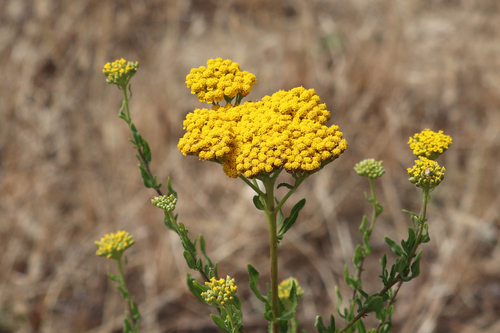
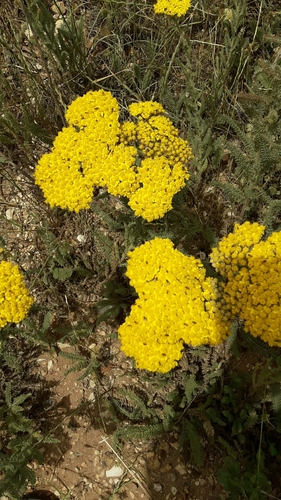
Coreopsis verticillata
L.

(c) gilbertblythe, some rights reserved (CC BY-NC)

(c) jmikkelson, some rights reserved (CC BY-NC)

(c) Carol Ann McCormick, some rights reserved (CC BY), uploaded by Carol Ann McCormick
What to Eat
Edible parts: Flowers
The flowers are edible.
Where to Find It
It is a temperate plant. It suits hardiness zones 4-9.
Asia, China, North America, Slovenia, USA,
How to Identify
Perennial reaching 1 m tall and wide with fast growth rate. Hardy to UK zone 4. Flowers over an extended season. Hermaphrodite plant. Adapts to light sandy and medium loamy well-drained soils, including nutritionally poor ground, across mildly acid to neutral pH. Requires full sun, tolerates both dry and moist conditions with good drought resistance.
How to Grow
A hardy herbaceous rhizomatous perennial. It can tolerate drought, poor soil, extreme heat, and neglect. Life Span: Short-Lived Perennial. Stand Persistence: Long. Form: Clump. Texture: Fine. Sun: Full Sun. Soil Type: Sandy, Loamy, Silty. Soil Moisture: Moderate, Dry. Soil pH: 6.5 - 7.5. Root Type: Rhizome. Seasonal Interest: Summer-Fall. Notes: Spreads via rhizome, forms a dense clump. Seeds resemble ticks, hence the name. Cultivars available. The following notable cultivars have all gained the Royal Horticultural Society's Award of Garden Merit: 'Grandiflora' - taller than other cultivars, with slightly larger flowers. 'Moonbeam' - pale, sulphur-yellow flowers, slightly shorter growth. 'Zagreb' - shorter than the species, bright yellow flowers. Flower Color: Yellow. Drought: Tolerant. Flood: Sensitive. Cold Injury: Infrequent. Wind Storm Damage: Infrequent. Disease Issues: Minor. Insect/Pest Damage: Minor. Animal Damage: Deer. Bloom Time: Summer - Late Fall. Fruit Time: Summer - Fall. Tends to sprawl, particularly if grown in moist and/or fertile soils. Crown rot may occur if grown in moist, poorly drained soils. Plants may be sheared in mid to late summer to promote a fall rebloom and to remove any sprawling or unkempt foliage. Species plants can spread somewhat aggressively in the garden by both rhizomes and self-seeding.
Propagation: Propagate by seed or by division of the rhizomes.
Medicinal Uses
Diuretic.
Other Uses
Forms a medium to high density, fast-growing ground cover useful for erosion control and soil stabilization. Suited to flower beds, borders, mass plantings, entryways, foundations, raised planters, and naturalized sunny areas, including sites with poor, dry soils. Its long flowering period attracts butterflies. Also suitable for container growing and as a cut flower.
Wikipedia
Source ↗Perennial reaching 1 m tall and wide with fast growth rate. Hardy to UK zone 4. Flowers over an extended season. Hermaphrodite plant. Adapts to light sandy and medium loamy well-drained soils, including nutritionally poor ground, across mildly acid to neutral pH. Requires full sun, tolerates both dry and moist conditions with good drought resistance.
Names & Synonyms
Vretenčnik
References (1)
- Jackes, D. A., Edible Forest Gardens