Packera aurea
(L.) A Love & D. Love

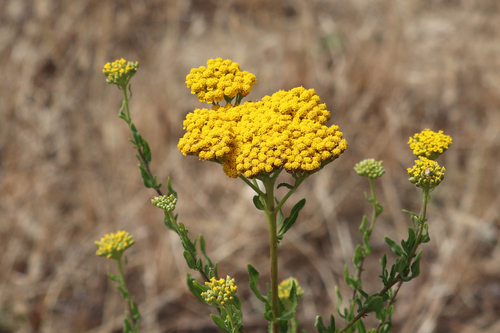
(c) Nicholas, some rights reserved (CC BY)
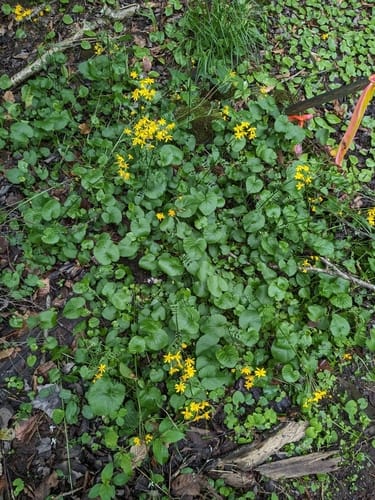
(c) Callicladium, some rights reserved (CC BY-NC)
What to Eat
None known.
Where to Find It
It is a cool temperate plant. It suits hardiness zone 4.
North America, USA,
How to Identify
A perennial reaching 0.8m tall by 0.5m wide, hardy to UK zone 3. Flowers May to July with hermaphroditic insect-pollinated blooms. Tolerates light sandy to heavy clay soils with mildly acid to very alkaline pH. Grows in semi-shade to full sun. Prefers moist to wet soil conditions.
How to Grow
Propagation: Sow seed in spring in a greenhouse, barely covering it. Prick out seedlings into individual pots when large enough to handle and grow on in the greenhouse through their first winter. Plant out into permanent positions in late spring or early summer, after the last expected frosts. Division in spring and root cuttings in early spring are also suitable methods.
Medicinal Uses
Golden groundsel is a medicinal plant considered deserving of greater attention. It was widely used by North American Indians to treat complaints of the female reproductive system and to ease childbirth. Though often stated to be completely safe, recent research has found the plant contains pyrrolizidine alkaloids that can cause liver damage in isolation, so it can no longer be recommended for internal use. The roots and leaves are abortifacient, diaphoretic, diuretic, emmenagogue, pectoral, stimulant, and uterine tonic. It is used externally for vaginal discharge. A tea made from the plant was frequently used by North American Indians for female troubles, including pain during childbirth. Pharmacologists have not reported uterine effects, but the plant contains an essential oil (inuline) and the alkaloids senecine and senecionine, which are poisonous to grazing animals. The plant is harvested before flowering and the roots are collected in autumn; both are dried for later use.
Other Uses
None known.
Wikipedia
Source ↗Packera aurea (formerly Senecio aureus), commonly known as golden ragwort or simply ragwort, is a perennial flower in the family Asteraceae. It is also known as golden groundsel, squaw weed, life root, golden Senecio, uncum, uncum root, waw weed, false valerian, cough weed, female regulator, cocash weed, ragweed, staggerwort, and St. James wort. It is native to eastern North America, from Labrador to Minnesota and from North Carolina to Arkansas (with additional populations in the panhandle of Florida).
Names & Synonyms
References (1)
- Jackes, D. A., 2007, Edible Forest Gardens (As Senecio aureus)