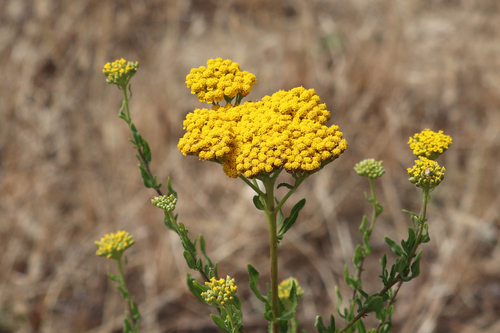
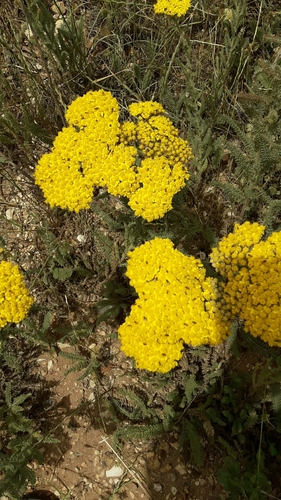
Solidago flexicaulis
L.

(c) Dan Mullen, some rights reserved (CC BY-NC-ND)

(c) Peter Gorman, some rights reserved (CC BY-NC-SA)

(c) Douglas Goldman, some rights reserved (CC BY-SA), uploaded by Douglas Goldman
What to Eat
Leaves can be used to make tea. The seed is also edible. No further information is available.
Where to Find It
It is a cool temperate plant. It suits hardiness zone 4.
USA,
How to Identify
A compact perennial goldenrod growing to 0.6 m tall and wide at medium rate. Hardy to UK zone 4. Tolerates light sandy, medium loamy, and heavy clay soils, including very acidic conditions. Grows in full shade, semi-shade, or full sun. Prefers dry or moist soil and tolerates drought well. Notable for attracting wildlife and functioning as a drought-tolerant nurse plant.
How to Grow
A long-lived upright herbaceous perennial in the sunflower family (Compositae/Asteraceae). Prefers average, medium moisture, well-drained soils in full sun to part shade. This is a woodland species that perhaps does best in sun-dappled part shade, but will also grow in full shade. Established plants tolerate some dry soils. Soil Type: Loamy, Silty. Tolerat clay or rocky soils. Soil Moisture: Moderate - mesic or dry soils. Minimum Root Depth: 20cm/8 inches. Root Type: Fibrous Shallow. Yellow flower; adds bright color to woodland gardens in fall. Bloom Time: July to September.
Propagation: Propagate by fresh seed or root division. Seeds ripen soon after the plant blooms.
Medicinal Uses
Many Solidago species have medicinal qualities, though specific information for Solidago flexicaulis has not been confirmed.
Other Uses
A good nurse plant for sites prone to drought, and useful for erosion control. Beneficial to insects and other arthropods as shelter and as a nectar and pollen source. The flowerheads are pollinated by many insects including long-tongued bees, small-tongued bees, wasps, flies, and butterflies. Several bees are oligoleges of Solidago spp., including Andrena hirticincta, Andrena nubecula, Andrena placata, Andrena simplex, Andrena solidaginis, and Colletes simulans armata. Many insects feed on the leaves, flowers, seeds, and roots, including plant bugs, stink bugs, aphids, leaf beetles, and caterpillars of many moths — these in turn provide food for woodland songbirds and some upland gamebirds. White-tailed Deer readily browse the foliage. An interesting goldenrod for shady woodland areas.
Wikipedia
Source ↗Solidago flexicaulis, the broadleaved goldenrod, or zigzag goldenrod, is a North American species of herbaceous perennial plants in the family Asteraceae. It is native to the eastern and central parts of the United States and Canada, from Nova Scotia west to Ontario and the Dakotas, and south as far as Alabama and Louisiana. It grows in a variety of habitats including mesic upland forests, well drained floodplain forests, seepage swamp hummocks, and rocky woodlands. The plant is called the "zigzag goldenrod" because the thin, wiry stem zigs and zags back and forth, changing direction at each node (leaf attachment point). The plant bears sometimes as many as 250 small yellow flower heads, some at the end of the stem, others in the axils of the leaves. The leaves are very broad, almost round, but with an elongated tip at the end and large teeth along the edges. Solidago flexicaulis shares some similarities to Solidago albopilosa, both molecularly and physically. There is some evidence indicating that the plant is an ancient autopolyploid of S. flexicaulis.
Names & Synonyms
Zig-zag goldenrod, Zigzag golden rod, Broadleaved goldenrod
References (1)
- Jackes, D. A., 2007, Edible Forest Gardens