Artemisia alba
Turra
Camphor absinthe

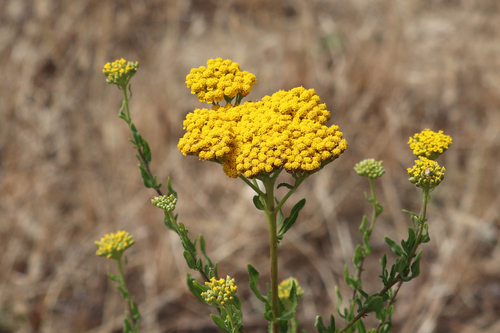
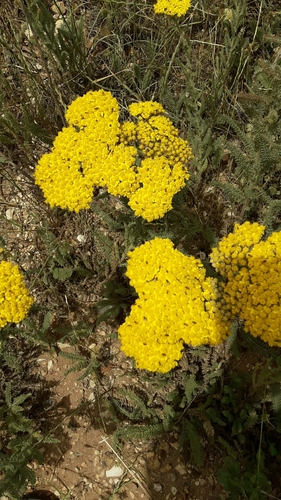
(c) Emanuele Santarelli, some rights reserved (CC BY-SA), uploaded by Emanuele Santarelli
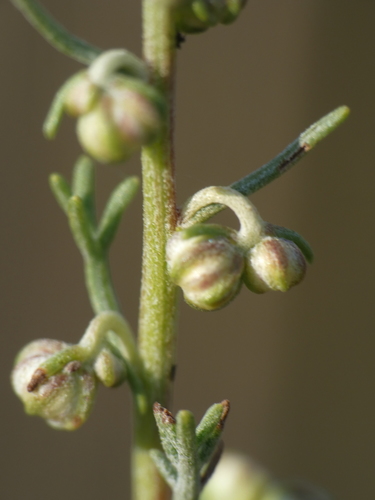
(c) Luciano Arcorace, some rights reserved (CC BY-NC), uploaded by Luciano Arcorace

(c) Franco Barbadoro, some rights reserved (CC BY-NC), uploaded by Franco Barbadoro
What to Eat
Edible parts: Herb, Spice, Flavouring
The herb is used as a spice and flavouring.
Where to Find It
It is a temperate or Mediterranean plant.
Africa, Albania, Balkans, Bosnia, Canada, Central Asia, Europe, Germany, Italy, Mediterranean, Morocco, North Africa, North America, Sicily, Slovenia, Spain, Tajikistan,
How to Identify
An erect herb. It grows 1 m tall. It has a rhizome. The leaves are green to white and hairy. They have a camphor like smell. The leaves have 2 lobes at the base. The flowers are in a small compact head.
Wikipedia
Source ↗Artemisia alba, called white mugwort, white wormwood, white artemisia, or camphor southernwood, is a species of Artemisia native to Spain, France, Belgium, Italy, Sicily, the Czech Republic, Slovakia, Hungary, Romania, and the Balkans. Its currently unrecognized subtaxon Artemisia alba 'Canescens' has gained the Royal Horticultural Society's Award of Garden Merit.
Names & Synonyms
Beli pelin, Camphor southernwood, White artemisia
References (3)
- Licata, M., et al, 2016, A survey of wild plant species for food use in Sicily (Italy) – results of a 3-year study in four Regional Parks. Journal of Ethnobiology and Ethnomedicine 12:12
- Seidemann J., 2005, World Spice Plants. Economic Usage, Botany, Taxonomy. Springer. p 52
- Trendafilova, A., et al, 2020, Research Advances on Health Effects of Edible Artemisia Species and Some Sesquiterpene Lactones Constituents. Foods 2021, 10, 65. p 4