Celtis integrifolia
Lam.
Nettle tree, African false elm

Wikimedia Commons - USGS

GBIF
What to Eat
Edible parts: Leaves, Fruit
The young leaves can be eaten raw in salads or used in soups, sometimes combined with baobab leaves. The fresh fruit are eaten.
Where to Find It
A tropical plant. It grows in the Sahel in West Africa. It needs are rainfall of 500-700 mm per year. It is often in depressions and near waterholes. It can grow in arid places.
Africa, Arabia, Benin, Burkina Faso, Cameroon, Central Africa, Congo, East Africa, Ethiopia, Gambia, Ghana, Guinea, Guinée, Liberia, Mali, Mauritania, Middle East, Nigeria, North America, Sahel, Saudi Arabia, Senegal, Sierra Leone, South Sudan, Sudan, Togo, Uganda, West Africa,
How to Identify
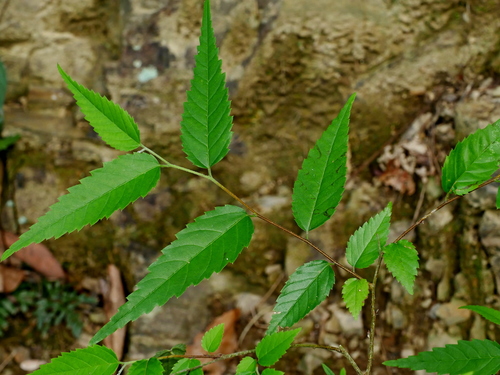
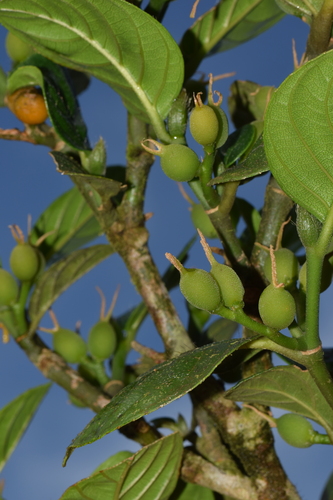
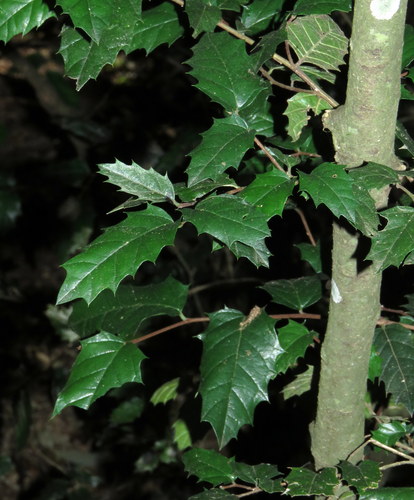
A large tree. It grows to 25 m high. The trunk is 1.5 m across. It can have short buttresses. The branches occur low down. The bark is grey and smooth. The leaves are alternate and oblique but oval. They taper to the tip. The twigs are green with white hairs. The flowers are in clusters in the axils of leaves on one year old shoots. The fruit are oval. They are 1 cm long. They have one seed. The seed is white.
Nutrition Score: 57/100
| Part | Moisture | kJ | kcal | Protein | Vit A | Vit C | Iron | Zinc |
|---|---|---|---|---|---|---|---|---|
| Leaves dried | 10.8 | 1058 | 253 | 8 | — | — | 19.7 | — |
| Fruit | — | — | — | — | — | — | — | — |
Notes
There are 70-100 Celtis species. They are mostly in the tropics. There are 8-10 species in tropical America. Also put in the family Ulmaceae.
Names & Synonyms
Aboun gatou, Aling, Nguzo, Samparanga, Tabakoudou, Zuwo
References (20)
- Abbiw, D.K., 1990, Useful Plants of Ghana. West African uses of wild and cultivated plants. Intermediate Technology Publications and the Royal Botanic Gardens, Kew. p 41, 47
- Anywar, G., et al, 2014, Wild Plants Used as Nutraceuticals from Nebbi District, Uganda. European Journal of medicinal Plants. 4(6):641-660
- Ballal, M. E., et al, 2014, Ethno-botany of Natural Forests of Nuba Mountains, South Kordofan State, Sudan. Journal of Forest Poducts & Industries. 3(1):13-19
- Belem, M., et al, 2017, Strategy of Conservation and Protection of Wild Edible Plants Diversity in Burkina Faso. ANADOLU 27 (2) 2017, 82- 90
- Bonou, A., et al, 2013, Valeur economique des Produits Forestiers Non Ligneux (PFNL) au Benin. Editions Universitaires Europeennes p 94
- Burkill, H. M., 1985, The useful plants of west tropical Africa, Vol. 5. Kew.
- Dalziel, J. M., 1937, The Useful plants of west tropical Africa. Crown Agents for the Colonies London.
- Food Composition Tables for use in Africa FAO http://www.fao.org/infoods/directory No. 942
- Gallagher, D. E., 2010, Farming beyond the escarpment: Society, Environment, and Mobility in Precolonial Southeastern Burkina Faso. PhD University of Michigan.
- Heywood, V.H., Brummitt, R.K., Culham, A., and Seberg, O. 2007, Flowering Plant Families of the World. Royal Botanical Gardens, Kew. p 327
- Jardin, C., 1970, List of Foods Used In Africa, FAO Nutrition Information Document Series No 2.p 65, 126
- Le Houerou, H. N., (Ed.), 1980, Browse in Africa. The current state of knowledge. International Livestock Centre for Africa, Ethiopia. p 163
- Martin, F.W. & Ruberte, R.M., 1979, Edible Leaves of the Tropics. Antillian College Press, Mayaguez, Puerto Rico. p 222
- Maydell, H. von, 1990, Trees and shrubs of the Sahel: their characteristics and uses. Margraf. p 231
- Moksia, F., et al, 2019, Diversity and Socio-Economic Value of Wild Edible Plants in the Mounts Mandara Region, Cameroon. International Journal of Sciences. Vol. 8:10
- Monod, T., (On wild edible plants of Mauritania)
- MORTIMORE,
- Peters, C. R., O'Brien, E. M., and Drummond, R.B., 1992, Edible Wild plants of Sub-saharan Africa. Kew. p 195
- Seidemann J., 2005, World Spice Plants. Economic Usage, Botany, Taxonomy. Springer. p 91
- Vivien, J., & Faure, J.J., 1996, Fruitiers Sauvages d'Afrique. Especes du Cameroun. CTA p 357