Celtis laevigata
Willd.
Sugarberry, Mississippi Sugarberry, Mississippi hackberry, Sugar hackberry, Southern hackberry

(c) sirrichardv, some rights reserved (CC BY-NC)

(c) Becky Brenner, some rights reserved (CC BY-NC), uploaded by Becky Brenner
What to Eat
Edible parts: Fruit, Seeds
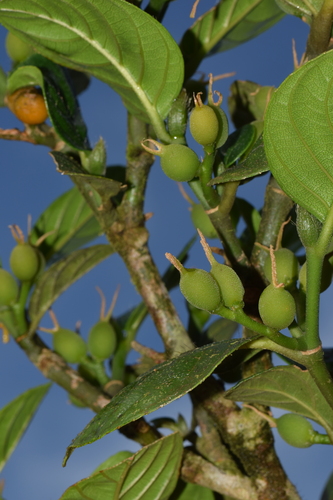
Netleaf hackberry offers small, dryish but tasty drupes whose thin pulp can be eaten fresh and whose seeds, although challenging to extract, provide a nutritious meal for porridges or drinks. It is best seen as a high-effort, high-resilience wild food: not your first choice when cultivated foods are abundant, but a genuinely helpful component of a diversified wild diet, especially in autumn and winter when few other fruits remain on the landscape. Fruit - raw or cooked. The flesh is thin, dry, and sweetish, covering a single large seed. The fruit, which is orange to brown or red when fully ripe, is 5 - 8mm in diameter. Edible Uses & Rating: The main edible parts are the drupes and the seeds within. As a fruit, netleaf hackberry scores modestly: flavor can be pleasant, but pulp is thin, and the pit dominates. As a seed crop, it is more promising, since the kernel inside the stone is edible and energy-dense, though laborious to extract. It is therefore a “high-value, high-effort” food. Relative to desert hackberry, netleaf hackberry fruits are less juicy and more seed-dominated, but because they can persist into winter, they extend the hackberry foraging season. Taste, Processing & Kitchen Notes: Fresh fruits are 5–10 mm across and may be red, orange, purple, or bicolored as they ripen. They can be eaten directly from the tree, but most of what you bite is the hard pit with a thin, somewhat sweet and slightly date-like or raisin-like coating. The texture is mostly that of a hard kernel with a papery, adherent layer, so swallowing whole drupes can pose a minor risk of choking. The seeds themselves, once freed from the shells, have a mild, nutty, somewhat bland flavor with a soft, mealy texture. Traditional and modern processing often focuses on using entire fruits or cracked fruits to make beverages or gruels, where distinguishing shell from seed is less critical. Pounded fruits can be boiled and strained to yield a sweetish drink or thin porridge. Cracked pits can be boiled with water; seed fragments tend to float while shell pieces sink, allowing some separation before further cooking. The resulting seed meal can be eaten as a mush, added to other foods, or dried for storage. Seasonality (Phenology): Leaves flush in spring, typically around the same time as many desert riparian trees. Flowers appear in spring (April to June), with fruit development through late spring and summer. Fruits ripen in autumn and often persist into early winter, gradually drying on the branches. This late persistence is one of the species’ key ecological and foraging traits: unlike many summer fruits, netleaf hackberry can still provide food after frosts and early winter storms. Safety & Cautions (Food Use): The fruits and seeds of netleaf hackberry have a long history of use and are not generally considered toxic when eaten in normal foraging quantities. The main practical concerns are the hardness of the pits and the potential choking risk, especially for children. Care should be taken when cracking pits to avoid hand injuries or flying fragments. As with any wild harvest, avoid fruits with mold, significant insect damage, or contamination from pollutants, and be cautious about gathering along heavily trafficked roads or in chemically treated areas. Harvest & Processing Workflow: For fruits, harvesting is typically done by hand in autumn when drupes have fully colored red, orange, or purple and have begun to soften or dry slightly. Entire clusters can be stripped off into a basket. For fresh eating, fruits can be consumed on the spot, but bite carefully and spit out pits if you do not wish to swallow them. For beverages, pound the whole fruits into a coarse mash, simmer in water for several minutes, then strain to remove shells and skins; the resulting liquid can be consumed warm or cooled. For seed harvest, dried winter fruits are collected, soaked, and crushed to free stones from the skins. Pits are then cracked with a stone or hammer; the mixture of shell and kernel fragments can be boiled so that kernels float and shells sink, then skimmed and further processed into mush or mixed with other foods. Drying seed meal on trays or in low-temperature ovens allows for longer storage. Cultivar/Selection Notes: Unlike some larger Celtis species used in landscaping, netleaf hackberry is rarely subject to formal cultivar selection. Most trees in the landscape are seed-grown and reflect local genetic variation. There is potential for selection of individuals with larger fruits or slightly thicker pulp, but such selection has not been widely pursued. For restoration and ecological planting, local provenance seed is preferable. Look-Alikes & Confusion Risks: Netleaf hackberry can be confused with other small riparian trees such as young elms, some willows, or certain Prunus species at a glance. However, its combination of asymmetrical leaf base, rough sandpapery texture, prominent net venation, and small spherical drupes is distinctive once learned. Compared with desert hackberry, netleaf hackberry lacks spines and has larger, broader leaves and a more tree-like form. Full confidence in identification should be achieved before eating fruits, especially in regions where other shrub or tree drupes include mildly toxic species. Traditional / Indigenous Use Summary: Netleaf hackberry drupes and seeds were used by Indigenous peoples in parts of the Southwest as late-season and winter foods, particularly when fresh plant foods were scarce. Fruits could be eaten fresh, dried, or ground and cooked as part of composite dishes or gruels. Their persistence on the tree and the energy density of the seeds made them valuable as a fallback or supplement rather than a primary staple. The trees also played roles in riparian camp and travel routes, providing shade and structural wood for small implements and potentially contributing to the cultural landscapes along desert waterways.
Known Hazards
Where to Find It
It is native to N. Mexico and S. United States. It grows on moist flood plains and in woods. It can grow with part shade or full sun. It can grow with a pH of 4-8. It can grow in most soils. It can tolerate soils poor in nutrients. It can tolerate short periods of waterlogging and even some salt water flooding. It is reasonably drought tolerant. It is frost hardy. It grows best with a summer temperature of about 26°C. It can tolerate air pollution. It suits hardiness zones 6-11.
Australia, Bermuda, Mexico, North America, USA,
How to Identify
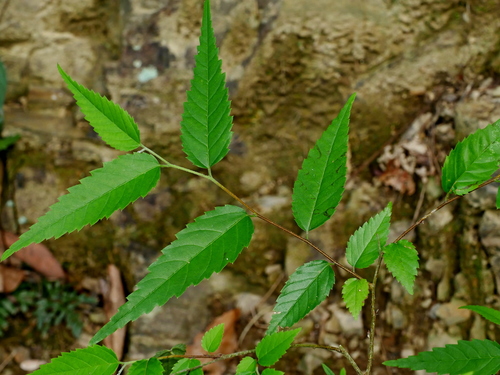
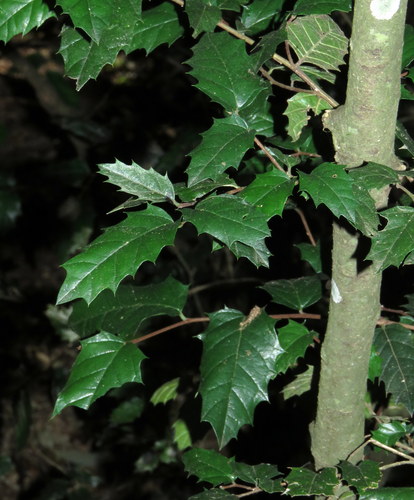
A deciduous tree. It grows 25 m tall. It is a broad column shape. The bark is pale grey and smooth. It has corky lenticels. The leaves are narrowly oval and 10 cm long by 4 cm wide. They have 3 veins. The leaves taper at the tip. There can be a few teeth. The leaves are pale and smooth. The male and female flowers are both small and green. They occur either singly or in small clusters in the axils of leaves. They are separate but on the same plant. The fruit is round and berry-like. They are orange-red and 8 mm across. They are edible.
How to Grow
Netleaf hackberry is a small tree or large shrub of desert uplands and foothill streamcourses, producing small, dryish but flavorful drupes with a relatively large seed and thin, adherent pulp. While each fruit yields little flesh, the seeds themselves are edible and nutritious, and the fruits persist on the branches into winter, making them an important seasonal resource. The rough, net-veined leaves and variable red-orange-purple fruits give the tree a distinctive appearance in canyons and riparian edges. Netleaf hackberry is a small tree or large shrub of desert uplands and foothill streamcourses, producing small, dryish but flavorful drupes with a relatively large seed and thin, adherent pulp. While each fruit yields little flesh, the seeds themselves are edible and nutritious, and the fruits persist on the branches into winter, making them an important seasonal resource. The rough, net-veined leaves and variable red-orange-purple fruits give the tree a distinctive appearance in canyons and riparian edges. Succeeds in any reasonably good soil, preferring a good fertile well-drained loamy soil. Succeeds on dry gravels and on sandy soils. Plants are usually found on clay soils in the wild. Established plants are very drought resistant. Trees prefer hotter summers and more sunlight than are normally experienced in Britain, they often do not fully ripen their wood when growing in this country and they are then very subject to die-back in winter. A very variable species, according to some botanists, these merit varietal status, whilst other botanists say that the differences are too slight. Trees are moderate to fast-growing, probably living no more than 125 - 150 years. They can be very long-lived according to another report, perhaps surviving for 1000 years. Trees fruit most years heavily. Plants in this genus are notably resistant to honey fungus. The plant is heat-tolerant in zones 9 through 3. For polyculture design as well as the above-ground architecture (form - tree, shrub, etc., and size shown above), information on the habit and root pattern is also useful and given here if available. Habitat & Range: Within the Southwest, netleaf hackberry is associated with desert uplands and lower to mid-elevation foothills, especially along creeks and washes, canyon bottoms, and alluvial fans. It occurs from west Texas through New Mexico and Arizona into parts of Utah and adjacent regions. It extends more broadly eastward and northward as Celtis laevigata in its various regional forms. In many desert canyon systems it is one of the characteristic small trees in riparian or wash-edge woodlands, along with species of Prosopis, Populus, Salix, and Juglans depending on elevation. Size & Landscape Performance: In typical desert foothill settings, it reaches 2–5 m tall, with lightly branching trunks and a spreading crown. In more mesic microhabitats, it can grow somewhat larger and more tree-like. As a landscape plant, it is valued for toughness, wildlife support, and subtle seasonal interest rather than showy flowers. It is tolerant of pruning and can be used as a small shade tree in arid gardens. USDA hardiness is approximately Zones 6–9, with some regional variation among varieties; it is hardier than desert hackberry and can tolerate colder winters. Cultivation (Horticulture): Netleaf hackberry is relatively easy to grow as a dryland ornamental or restoration tree. It prefers full sun, well-drained to moderately heavy soils, and infrequent deep irrigation once established. Young trees benefit from protection from browsing and trunk damage. In desert food-forest or agroforestry plantings, it can function as an overstory or midstory component, providing light shade and fruit for wildlife and humans. It handles urban conditions reasonably well and can tolerate some soil compaction and reflected heat, though fruiting is best with better soil structure and moisture. Pests & Problems: In its native range netleaf hackberry is resilient and not highly disease-prone. Occasional leaf spots, galls, or minor insect feeding are common but rarely serious. Where water is overly abundant or drainage is poor, root diseases or crown dieback can occur. In urban or grazed settings, mechanical damage to trunks and compacted soils can stress trees. Overall, it is a low-maintenance, tough species once established. Cultivar/Selection Notes: Unlike some larger Celtis species used in landscaping, netleaf hackberry is rarely subject to formal cultivar selection. Most trees in the landscape are seed-grown and reflect local genetic variation. There is potential for selection of individuals with larger fruits or slightly thicker pulp, but such selection has not been widely pursued. For restoration and ecological planting, local provenance seed is preferable. Pollination: As with desert hackberry, netleaf hackberry bears small, inconspicuous, greenish flowers that do not rely on showiness for pollinator attraction. Pollination is primarily by small insects—tiny bees, flies, and other generalist flower visitors—that move among clusters of flowers during spring. The simple, exposed flower structure also allows some contribution from wind pollination. This mixed strategy ensures reliable fruit set even when specific pollinator populations fluctuate.Identification & Habit: Netleaf hackberry typically forms a spineless shrub or small tree 2–5 m tall, sometimes taller in favorable sites, with a short trunk and a rounded to irregular crown. Leaves are simple, alternate, and deciduous, lance-ovate to heart-shaped, distinctly asymmetrical at the base, and rough-textured with prominent netted venation, especially on the underside—hence “netleaf.” Leaves are more than 2 cm wide, with entire or slightly toothed margins. Branches are not spiny, distinguishing it from desert hackberry. Small, greenish flowers are carried singly or in small clusters in spring, giving way to marble-sized drupes that ripen later in the year.
Propagation: Propagate from seed. Collect fruits when fully colored, then clean the pits by soaking and rubbing away the thin pulp. Seeds often benefit from a period of cold stratification to break dormancy. Sow in a well-drained medium and keep moist but not waterlogged. Seedlings are reasonably robust. Vegetative propagation from cuttings or grafting is possible but less common; seed propagation is preferred in restoration contexts as it retains local genetic diversity.
Medicinal Uses
A decoction of the bark has been used to treat sore throats. It has also been used, mixed with powdered shells, as a treatment for venereal disease.
Other Uses
The wood is soft, not strong, and close-grained, weighing 49lb per cubic foot. It is used for cheap furniture, fencing, and fuel. The tree is useful for erosion control, and its persistent drupes provide important winter food for birds — including thrushes and mockingbirds — and small mammals. Several Celtis species support specialist butterfly and moth larvae, and netleaf hackberry likely contributes to local Lepidoptera diversity. Its roots help stabilize streambanks and canyon soils, and its canopy provides shade for understory plants and animals in hot, exposed environments. It handles urban conditions reasonably well and can tolerate some soil compaction and reflected heat, though fruiting is best with good soil structure and moisture. It is suited to food forest and agroforestry plantings as an overstory or midstory component.
Wikipedia
Source ↗Celtis laevigata is a medium-sized tree native to North America. Common names include sugarberry, southern hackberry, or in the southern U.S. sugar hackberry or just hackberry. Sugarberry is easily confused with common hackberry (C. occidentalis) where the range overlaps. Sugarberry has narrower leaves with mostly smooth margins, the berries are juicier and sweeter, while the bark is less corky. The species can also be distinguished by habitat: where the ranges overlap, common hackberry occurs primarily in upland areas, whereas sugarberry occurs mainly in bottomland areas. Sugarberry's range extends from the Southeastern United States west to Texas and south to northeastern Mexico. It is also found on the island of Bermuda.
Production
It is reasonably fast growing. The first fruit are produced after 15 years. The fruit are best gathered after the first frost. They are harvested when fully ripe. Trees can live for 150 years.
Notes
There are 70-100 Celtis species. They are mostly in the tropics. There are 8-10 species in tropical America. Also put in the family Ulmaceae.
Names & Synonyms
Mora blanca, Palo blanco
References (17)
- Berlin. Baumz. ed. 2, 81. 1811
- Bodkin, F., 1991, Encyclopedia Botanica. Cornstalk publishing, p 234
- Brickell, C. (Ed.), 1999, The Royal Horticultural Society A-Z Encyclopedia of Garden Plants. Convent Garden Books. p 244
- Coombes, A.J., 2000, Trees. Dorling Kindersley Handbooks. p 307
- Cundall, P., (ed.), 2004, Gardening Australia: flora: the gardener's bible. ABC Books. p 353
- Etherington, K., & Imwold, D., (Eds), 2001, Botanica's Trees & Shrubs. The illustrated A-Z of over 8500 trees and shrubs. Random House, Australia. p 197
- Facciola, S., 1998, Cornucopia 2: a Source Book of Edible Plants. Kampong Publications, p 75
- Glowinski, L., 1999, The Complete Book of Fruit Growing in Australia. Lothian. p 182
- Jackes, D. A., Edible Forest Gardens
- Jordan, J., et al, 2006, Vascular Plants Utilized by the Plains Apache in Southwestern Oklahoma, Publications of the Oklahoma Biological Survey. 2nd Series. Volume 7: 24-33, 2006
- Kiple, K.F. & Ornelas, K.C., (eds), 2000, The Cambridge World History of Food. CUP p 1783
- Little, E.L., 1980, National Audubon Society Field Guide to North American Trees. Alfred A. Knopf. p 412
- Lord, E.E., & Willis, J.H., 1999, Shrubs and Trees for Australian gardens. Lothian. p 50
- Lyle, S., 2006, Discovering fruit and nuts. Land Links. p 115
- Piedra-Malagón, E. M. et al, 2022, Edible native plants of the Gulf of Mexico Province. Biodiversity Data Journal 10: e80565 p 16
- Plants for a Future database, The Field, Penpol, Lostwithiel, Cornwall, PL22 0NG, UK. http://www.scs.leeds.ac.uk/pfaf/
- Segura, S., et al, 2018, The edible fruit species in Mexico. Genet Resour Crop Evol (2018) 65:1767–1793