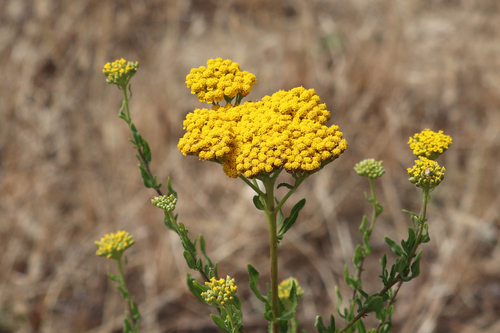
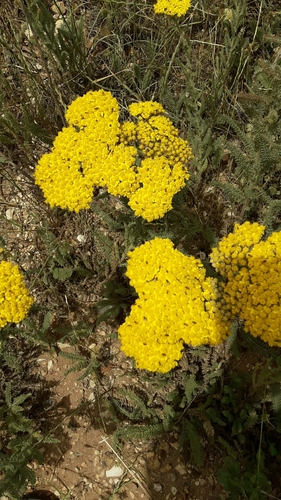
Eupatorium cannabinum
L.
Hemp weed
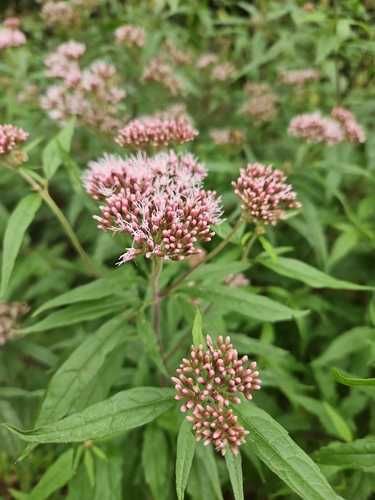
no rights reserved, uploaded by Hayley

(c) Kieran Roy Powell, some rights reserved (CC BY)

(c) Kieran Roy Powell, some rights reserved (CC BY)
What to Eat
Edible parts: Leaves - spice
None known
Known Hazards
Where to Find It
It is a temperate plant. In China it grows on the top of small hills and among bamboos
Africa, Algeria, Asia, Balkans, Canada, Caucasus, China, Europe, Himalayas, Israel, Lebanon, Luxembourg, Macedonia, Mediterranean, Middle East, Morocco, Myanmar, North Africa, North America, SE Asia, Slovenia, Turkey, Türkiye, USA,
How to Identify
A herb. It keeps growing from year to year. It grows 50-150 cm tall. It has robust rhizomes. The stems are erect and purplish red. The leaves are opposite. The lower leaves have irregular lobes. The leaves are 6-11 cm long by 2-3 cm wide. The leaves get smaller up the stem.
How to Grow
An easily grown plant, it succeeds in ordinary garden soil in sun or part shade. Prefers a rich moist soil. Grows well in marshy soils. Plants are hardy to about -25°c. A very ornamental plant, it has a pleasant aromatic smell when cut. Often found as a weed in British gardens, it can be allowed to naturalize in short grass in the wild garden. Plants seem to be immune to the predations of rabbits. An excellent bee and butterfly plant.
Propagation: Sow seed in spring in a cold frame, barely covering it. Prick seedlings out into individual pots when large enough to handle and plant out into permanent positions during summer. If sufficient seed is available, it can be sown outdoors in situ. Division in spring or autumn is very easy — clumps can be replanted directly into permanent positions.
Medicinal Uses
Hemp agrimony has been used chiefly as a detoxifying herb for fevers, colds, flu, and other viral conditions, and also stimulates the removal of waste products via the kidneys. Because the plant contains alkaloids, it should only be used under professional supervision. The leaves and flowering tops are alterative, cholagogue, depurative, diuretic, emetic, expectorant, febrifuge, purgative, and tonic. The plant has a long history of use as a gentle laxative that does not cause irritation, though excessive doses provoke purging and vomiting. A tea made from the dried leaves gives prompt relief when taken at the onset of influenza. Recent research indicates possible anti-tumour activity, though the plant also contains pyrrolizidine alkaloids that can cause liver damage or cancer. The plant is harvested in summer and dried for later use. The roots are diaphoretic, laxative, and tonic; they are harvested in autumn and dried for later use. The plant has more recently been found useful as an immune system stimulant, helping to maintain resistance to acute viral and other infections. A homeopathic remedy made from the leaves is used for influenza, feverish chills, and disorders of the liver, spleen, and gall bladder.
Other Uses
Leaves laid on bread help prevent it from going mouldy. Leaf juice rubbed onto the coats of animals acts as an insect repellent.
Wikipedia
Source ↗Eupatorium cannabinum, commonly known as hemp-agrimony, is a herbaceous plant in the family Asteraceae. It is a robust perennial native to Europe, Northwestern Africa, Turkey, Syria, Iran, Iraq, Jordan, the Caucasus and Central Asia, and grows in damp to wet habitats (also rarely on dry soils), usually in lowlands but known up to 410 m altitude in Britain. It is cultivated as an ornamental plant and occasionally found as a garden escape in scattered locations in China, the United States and Canada. It is extremely attractive to butterflies, much like buddleia. If the genus Eupatorium is defined in a restricted sense (about 42 species), E. cannabinum is the only species of that genus native to Europe, with the remainder in Asia or North America.
Names & Synonyms
Bizat, Hkwe-thay-pan, Konjska griva
References (2)
- Rexhepi, B., et al, 2018, Ethnobotanical Study of Wild Edible Plants in Pelagonia Region (Southwestern Macedonia) International Journal of Advances in Science Engineering and Technology, Vol. 6 (1) p 57
- Seidemann J., 2005, World Spice Plants. Economic Usage, Botany, Taxonomy. Springer. p 151