Celtis pallida
Torrey
Desert Hackberry, Spiny hackberry

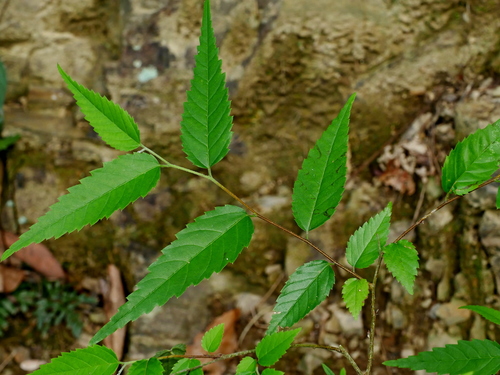
(c) Steve Jones, some rights reserved (CC BY-NC), uploaded by Steve Jones

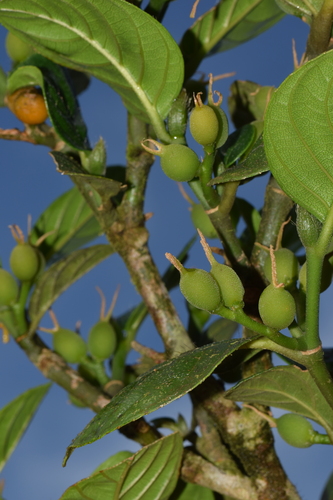
(c) aacocucci, some rights reserved (CC BY), uploaded by aacocucci

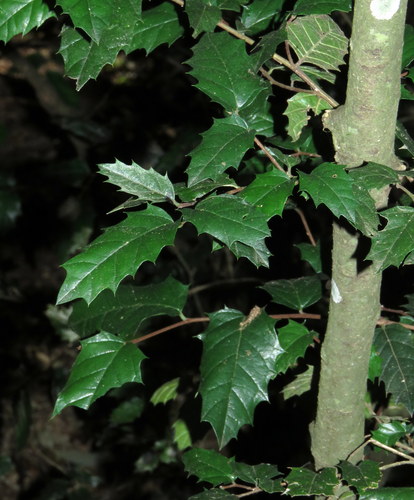
(c) Douglas Goldman, some rights reserved (CC BY-SA), uploaded by Douglas Goldman
What to Eat
Edible parts: Fruit
The fruit is eaten raw and has a mealy texture with a pleasant, mildly acidic taste. It reaches up to 8mm in diameter, though most of this is taken up by the large seed. North American Indigenous peoples ground the fruit and ate it mixed with parched corn or fat, suggesting the seed was ground and consumed along with the flesh.
Where to Find It
It is a temperate plant. It grows in desert foothills. It is usually between 400-1,000 m altitude. It needs well drained soil. It can grow in arid places.
Argentina, Brazil, Central America, Mexico, North America, South America, USA,
How to Identify
A shrub or small tree. It grows 5 m high. It can form thickets. There are many branches and these have thorns at the base of the leaves. The leaves are simple and alternate. They are irregular shaped at the base and widest at the middle. There are teeth towards the tip. The leaves have a rough coarse upper surface. The flowers are small and pale green. They are in clusters at the base of younger leaves. The fruit are fleshy and yellow to orange. The fruit are 6-8 mm across. There is one large seed.
How to Grow
Succeeds in any reasonably good soil, preferring a good fertile well-drained loamy soil. Succeeds on dry gravels and on sandy soils. Established plants are very drought resistant. Trees prefer hotter summers and more sunlight than are normally experienced in Britain, they often do not fully ripen their wood when growing in this country and they are then very subject to die-back in winter. Trees can be very long-lived, perhaps to 1000 years. A good bee plant. Plants in this genus are notably resistant to honey fungus.
Propagation: Seed is best sown as soon as it is ripe in a cold frame. Stored seed should be given 2–3 months of cold stratification before sowing in February or March in a greenhouse. Germination rates are usually good, though stored seed may take 12 months or more to germinate. Seed can be stored for up to 5 years. Prick seedlings out into individual pots as soon as they are large enough to handle. Seedling leaves often show white patches lacking chlorophyll — this is normal, and older plants produce fully green leaves. Grow seedlings on in a cold frame through their first winter, then plant out the following late spring or early summer, with some cold protection during their first winter outdoors. Cuttings can also be used.
Medicinal Uses
None known.
Other Uses
The plant has an extensive root system and is sometimes planted for erosion control and soil stabilization. The wood is of little value but is sometimes used for fence posts and fuel.
Wikipedia
Source ↗An evergreen tree reaching 5.5m in height, remaining in leaf year-round. Flowers appear in April with seeds maturing by October. Hermaphroditic and bee-pollinated, noted for attracting wildlife. Adapts to light sandy and medium loamy soils, preferring well-drained conditions and tolerating nutritionally poor soil. Grows in mildly acidic, neutral, and basic soils. Requires full sun and tolerates both dry and moist conditions with drought resistance. Has an extensive root system.
Notes
There are 70-100 Celtis species. They are mostly in the tropics. There are 8-10 species in tropical America. Also put in the family Ulmaceae.
Names & Synonyms
Granjeno
References (13)
- Arenas, P. and Scarpa, G. F., 2006, Edible wild plants of the Chorote Indians, Gran Chaco, Argentina. Botanical Journal of the Linnean Society. Vol. 153 (1): pp 73-85
- Elias, T.S. & Dykeman P.A., 1990, Edible Wild Plants. A North American Field guide. Sterling, New York p 220
- W. H. Emory, Rep. U.S. Mex. bound. 2(1):203. 1858 ("1859")
- Esperanca, M. J., 1988. Surviving in the wild. A glance at the wild plants and their uses. Vol. 1. p 305
- Estrada-Castillon, E., et al, 2014, Ethnobotany in Rayones, Nuevo Leon, Mexico. Journal of Ethnobiology and Ethnomedicine, 10:62
- Kermath, B. M., et al, 2014, Food Plants in the Americas: A survey of the domesticated, cultivated and wild plants used for Human food in North, Central and South America and the Caribbean. On line draft. p 206
- Kinupp, V. F., 2007, Plantas alimenticias nao-convencionais da regiao metropolitana de Porto Alegre, RS, Brazil p 71 (As Celtis lancifolia)
- Palmieri, V. S., et al, 2022, Wild edible plants of the Central Mountains in Argentina. Comparing subregions to understand the complexity of local botanical knowledge. Rodriguésia 73: e01092021. 2022
- Piedra-Malagón, E. M. et al, 2022, Edible native plants of the Gulf of Mexico Province. Biodiversity Data Journal 10: e80565 p 16
- Plants for a Future database, The Field, Penpol, Lostwithiel, Cornwall, PL22 0NG, UK. http://www.scs.leeds.ac.uk/pfaf/
- Reis, S. V. and Lipp, F. L., 1982, New Plant Sources for Drugs and Foods from the New York Botanical Garden herbarium. Harvard. p 39
- Tozer, F., 2007, The Uses of Wild Plants. Green Man Publishing. p 60
- www.desert-tropicals.com