Celtis philippensis
Blanco
Hard celtis tree
(c) frasergear, some rights reserved (CC BY-NC), uploaded by frasergear
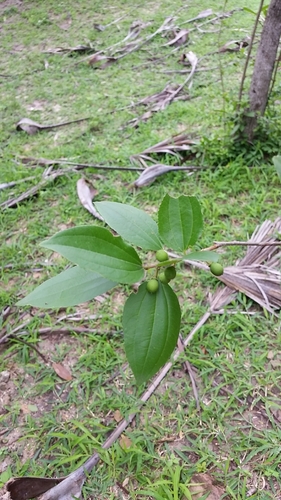
(c) frasergear, some rights reserved (CC BY-NC), uploaded by frasergear

(c) happy0502, some rights reserved (CC BY-NC)
What to Eat
Edible parts: Fruit, Seeds - oil, Seed
The ripe fruit are eaten raw. The seed oil is edible, and seeds themselves are also consumed.
Where to Find It
It is a tropical plant. It grows in coastal monsoon forests. It can be on sand dunes and is often near permanent water. It grows up to 1,200 m above sea level. It needs well drained soil. It suits hardiness zones 10-12. In XTBG Yunnan.
Africa, Asia, Australia, Central Africa, Central African Republic, CAR, China, East Africa, East Timor, Ethiopia, India, Indochina, Indonesia, Madagascar, Mozambique, Myanmar, Nigeria, Pacific, Papua New Guinea, PNG, Philippines, Sao Tome and Principe, SE Asia, Southern Africa, Sri Lanka, Sudan, Taiwan, Thailand, Timor-Leste, Vietnam, West Africa,
How to Identify
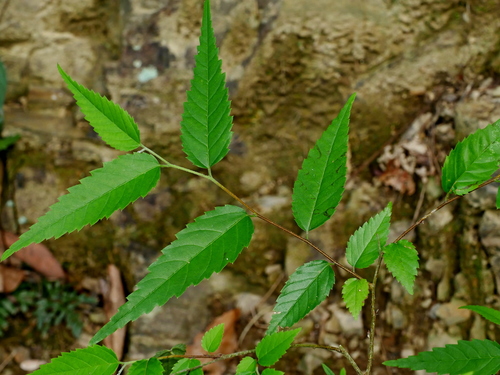
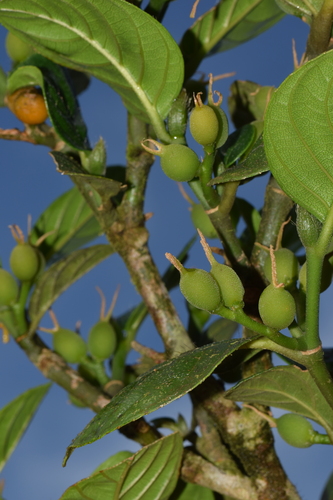
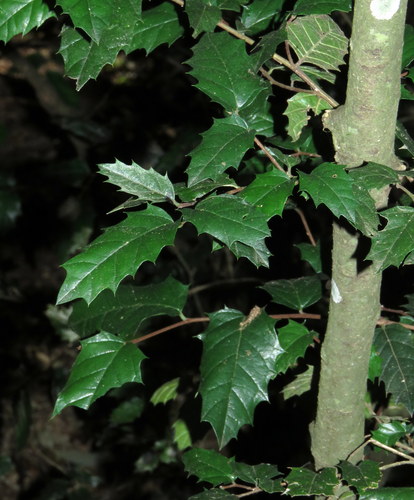
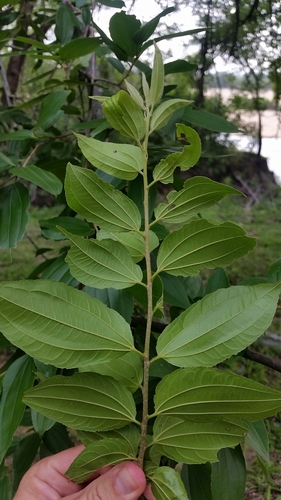
A medium sized tree. It grows 4-10 m tall. It often has buttresses. It has a dense rounded crown. The tree can lose many of its leaves during the dry season of the year. The bark is smooth with a mottled cream grey pattern on it. The leaves are alternate and smooth. They are stiff and brittle. They are oval and about 3-12 cm long by 2-6 cm wide. The leaves are dark green above and paler underneath. There are 3 easy to see veins along the leaf. These are raised and white, underneath the leaf. The leaves have a pointed tip and short stalk (1 cm). The young leaves have teeth along the edge. The flowers are small and white and 2-3 mm across. They occur in small clusters (2 cm across) in the axils of leaves. Flowers of one or both sexes can occur on the same plant. The fruit are smooth and fleshy. They are round but flattened. They can be 0.7-1 cm across. They are yellow, but bright red when ripe. They contain a single hard shelled seed. The seed can be 6 mm across.
How to Grow
Plants can be grown from fresh seed.
Propagation: Seed - best sown as soon as it is ripe in a nursery seedbed in a sunny position. A high germination rate can be expected, with the seeds sprouting within 28 - 42 days. The seedlings grow away quickly..
Medicinal Uses
The roots are used as a remedy for diarrhoea.
Other Uses
The oil from the seed can be used for making lubricants and soap. The bark provides a useful fibre used for making ropes and paper. The heartwood is a light yellowish gray, with irregular ashy grayish or brownish streaks in larger trees; it is not distinctly demarcated from the sapwood. The texture is generally fine, though rather coarse in some trees; the grain close and somewhat crossed. The wood is moderately hard to hard; moderately heavy; tough; faily durable, not commonly being attacked by insects. It seasons well; is fairly easy to work; difficult to split. It is used in construction, for making poles, tool handles, beams, joists, rafters, cheap furniture, box lumber, etc. The wood is used for fuel.
Wikipedia
Source ↗Celtis philippensis is an Asian species of flowering plant in the family Cannabaceae. It is a tree which can grow up to 30 metres (98 ft) tall. It ranges from India and Sri Lanka to southern China and Taiwan, the Philippines, New Guinea and the Solomon Islands, and northern Australia. It grows in tropical and subtropical forests, including moist evergreen forests, monsoon forests, and littoral forests, from sea level up to 1,400 metres (4,600 ft) elevation. It Australia it is an important food plant for larvae of the common aeroplane (Phaedyma shepherdi) and tailed emperor (Polyura sempronius) butterflies.
Production
In northern Australia plants flower from October to January and fruit mainly from April to August.
Other Information
It is not known if it is used as food in Papua New Guinea.
Notes
There are 70-100 Celtis species. They are mostly in the tropics. There are 8-10 species in tropical America. Also put in the family Ulmaceae.
Names & Synonyms
Bang, Bege, Bwege, Gulyindji, Itako, Kolohonfe, Odu amuk, Ohia, Shoboch, Vellaithuvari
References (29)
- Arinathan, V., et al, 2007, Wild edibles used by Palliyars of the western Ghats, Tamil Nadu. Indian Journal of Traditional Knowledge. 6(1) pp 163-168 (As Celtis philippensis var. wightii)
- Borrell, O.W., 1989, An Annotated Checklist of the Flora of Kairiru Island, New Guinea. Marcellin College, Victoria Australia. p 141
- Brock, J., 1993, Native Plants of Northern Australia, Reed. p 119
- Cherikoff V. & Isaacs, J., The Bush Food Handbook. How to gather, grow, process and cook Australian Wild Foods. Ti Tree Press, Australia p 198
- Cowie, I, 2006, A Survey of Flora and vegetation of the proposed Jaco-Tutuala-Lore National Park. Timor-Lests (East Timor) www.territorystories.nt/gov.au p 55
- Cribb, A.B. & J.W., 1976, Wild Food in Australia, Fontana. p 75
- Elliot, W.R., & Jones, D.L., 1984, Encyclopedia of Australian Plants suitable for cultivation. Vol 3. Lothian. p 5
- Etherington, K., & Imwold, D., (Eds), 2001, Botanica's Trees & Shrubs. The illustrated A-Z of over 8500 trees and shrubs. Random House, Australia. p 197
- Flora of Australia, Volume 3, Hamamelidales to Casuarinales, Australian Government Publishing Service, Canberra (1989) p 11
- Fl. Filip. 197. 1837
- Flora of China Vol. 5, p 16 and Flora of China. www.eFloras.org
- Foreman, D. B., 1971, A checklist of the Vascular Plants of Bougainville with Descriptions of some Common Forest Trees. Botany Bulletin No. 5. Department of Botany. p 96
- Glover, et al, 1969, (As Celtis wightii)
- http://palaeoworks.anu.edu.au/Nuno_PhD/04.pdf
- Kenneally, K.E., Edinger, D. C., and Willing T., 1996, Broome and Beyond, Plants and People of the Dampier Peninsula, Kimberley, Western Australia. Department of Conservation and Land Management. p 195
- Lazarides, M. & Hince, B., 1993, Handbook of Economic Plants of Australia, CSIRO. p 53
- Morley, B.D., & Toelken, H.R., (Eds), 1983, Flowering Plants in Australia. Rigby. p 61
- Paczkowska, G . & Chapman, A.R., 2000, The Western Australian Flora. A Descriptive Catalogue. Western Australian Herbarium. p 565
- Peters, C. R., O'Brien, E. M., and Drummond, R.B., 1992, Edible Wild plants of Sub-saharan Africa. Kew. p 195 (As Celtis wightii)
- Smith, M & Kalotas, A. C., 1985, Bardi Plants: An Annotated List of Plants and Their Use by the Bardi Aborigines of Dampierland, in North-western Australia. Rec. West Aust. Mus. 1985, 12(3): 317-359
- Specht, R.L.,
- Sukarya, D. G., (Ed.) 2013, 3,500 Plant Species of the Botanic Gardens of Indonesia. LIPI p 189
- Townsend, K., 1994, Across the Top. Gardening with Australian Plants in the tropics. Society for Growing Australian Plants, Townsville Branch Inc. p 128
- Vigilante, T., et al, 2013, Island country: Aboriginal connections, values and knowledge of the Western Kimberley islands in the context of an island biological survey. Records of the Western Australian Museum Supplement 81: 145-182
- Vivien, J. & Faure, J.J., 1985, Abres des forets dense d'Afrique Centrale. Agence de Cooperation Culturelle et Technique. Paris. p 472
- Wheeler, J.R.(ed.), 1992, Flora of the Kimberley Region. CALM, Western Australian Herbarium, p 75
- Wightman, G. M. & Andrews, M.R., 1989, Plants of Northern Territory Monsoon Vine Forests (Vol 1). Conservation Commission of Northern Territory. p 32
- Yimer, A., et al, 2021, Ethnobotanical study of wild edible plants used by Meinit Ethnic Community at Bench-Maji Zone, Southwest Ethiopia. Research Square. p 6
- Yunupinu Banjgul, Laklak Yunupinu-Marika, et al. 1995, Rirratjinu Ethnobotany: Aboriginal Plant Use from Yirrkala, Arnhem Land, Australia. Northern Territory Botanical Bulletin No 21. Parks and Wildlife Commission of the Northern Territory. p 27, 28