Celtis sinensis
Pers.
Chinese Hackberry, Portuguese Elm, Chinese nettle-tree
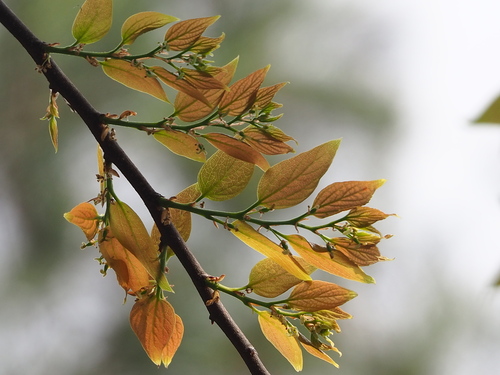
no rights reserved, uploaded by 葉子
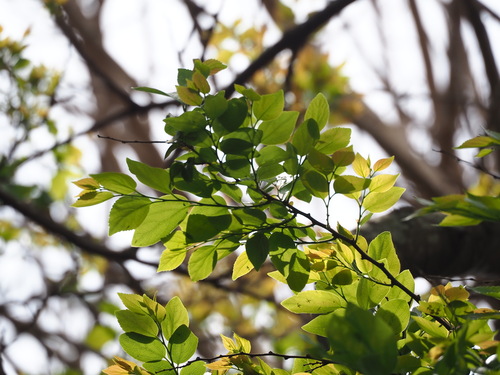
no rights reserved, uploaded by 葉子

(c) Young Chan, some rights reserved (CC BY-NC), uploaded by Young Chan
What to Eat
Edible parts: Fruit, Leaves
The fruit is eaten raw and grows up to 8mm in diameter. It likely has a thin, sweet but dry and mealy flesh around a large seed. The leaves are cooked and can also be used as a tea substitute.
Where to Find It
A tropical and subtropical plant. It is hardy and tolerant of poor conditions. In China it grows between 100-1,500 m above sea level. It suits hardiness zones 8-12. Mt Lofty Botanical Gardens. In XTBG Yunnan. It grows in Sichuan.
Asia, Australia, Central Asia, China, Indochina, Indonesia, Japan, Korea, Laos, SE Asia, Taiwan, Tajikistan,
How to Identify
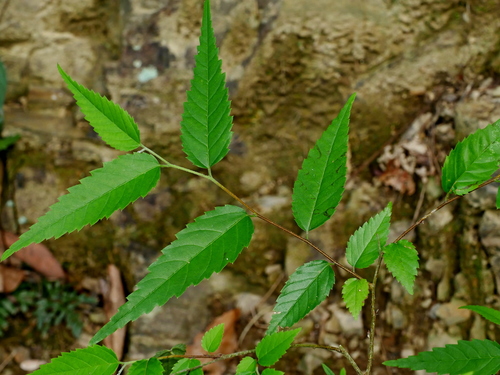
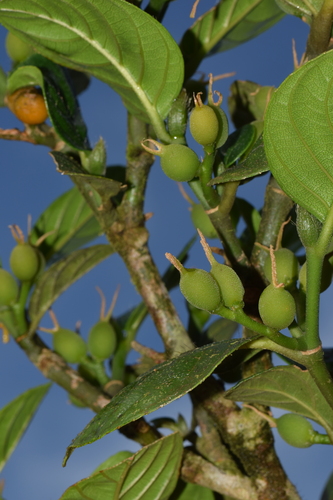
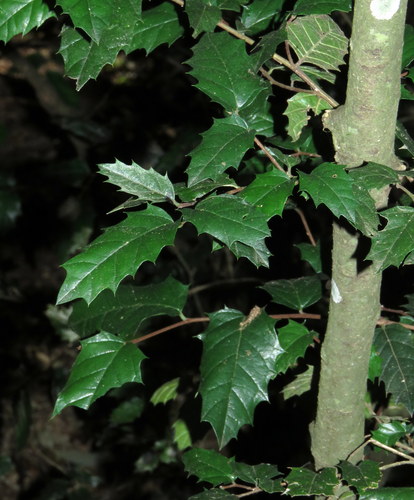
A large tree which loses its leaves. It grows 18 m tall. It forks fairly low and the crown is broad and irregular. The bark is smooth and grey. The leaves are dark glossy green above and olive green underneath. They are one sided at the base and they taper to a tip. There are teeth along the edge. The fruit are yellow and turn orange then black.
How to Grow
Succeeds in any reasonably good soil, preferring a good fertile well-drained loamy soil. Succeeds on dry gravels and on sandy soils. Established plants are very drought resistant. Trees prefer hotter summers and more sunlight than are normally experienced in Britain, they often do not fully ripen their wood when growing in this country and they are then very subject to die-back in winter. Trees can be very long-lived, perhaps to 1000 years. This species is closely allied to C. bungeana. Plants in this genus are notably resistant to honey fungus.
Propagation: Seed is best sown as soon as it is ripe in a cold frame. Stored seed should be given 2–3 months of cold stratification before sowing in February or March in a greenhouse. Germination rates are usually good, though stored seed may take 12 months or more to germinate. Seed can be stored for up to 5 years. Prick seedlings out into individual pots as soon as they are large enough to handle. Seedling leaves often show white patches lacking chlorophyll — this is normal, and older plants produce fully green leaves. Grow seedlings on in a cold frame through their first winter, then plant out the following late spring or early summer, with some cold protection during their first winter outdoors. Cuttings can also be used.
Medicinal Uses
The root bark is used in the treatment of dyspepsia, poor appetite, shortness of breath, and swollen feet.
Other Uses
None known.
Wikipedia
Source ↗Celtis sinensis (English: Japanese hackberry, Chinese hackberry; Chinese: 朴树; Japanese: 榎) is a species of flowering plant in the hemp family, Cannabaceae, that is native to slopes in East Asia.
Production
It is long lived. In China it flowers in March to April and fruits September to October.
Other Information
The fruit are eaten especially by children.
Notes
There are 70-100 Celtis species. They are mostly in the tropics. There are 8-10 species in tropical America. It can become invasive. Also put in the family Ulmaceae.
Names & Synonyms
Paengnamu, Plain tree, Pohon hakberi cina, Pohon hakberi jepang, Pushu
References (23)
- Bodkin, F., 1991, Encyclopedia Botanica. Cornstalk publishing, p 234
- Brickell, C. (Ed.), 1999, The Royal Horticultural Society A-Z Encyclopedia of Garden Plants. Convent Garden Books. p 244
- Cundall, P., (ed.), 2004, Gardening Australia: flora: the gardener's bible. ABC Books. p 353
- Etherington, K., & Imwold, D., (Eds), 2001, Botanica's Trees & Shrubs. The illustrated A-Z of over 8500 trees and shrubs. Random House, Australia. p 197
- Facciola, S., 1998, Cornucopia 2: a Source Book of Edible Plants. Kampong Publications, p 75
- Flora of Australia, Volume 3, Hamamelidales to Casuarinales, Australian Government Publishing Service, Canberra (1989) p 11
- Flora of China @ efloras.org Volume 5
- Hu, Shiu-ying, 2005, Food Plants of China. The Chinese University Press. p 353
- Hwang, H., et al, 2013, A Study on the Flora of 15 Islands in the Western Sea of Jeollanamdo Province, Korea. Journal of Asia-Pacific Biodiversity Vol. 6, No. 2 281-310
- Hwang, HS, et al, 2014, Distribution characteristics of plant in the Ungseokbong Mountain, Gyeongsangnam-do, Korea. Journal of Asia-Pacific Biodiversity. 7(2014) e164-e178
- Lazarides, M. & Hince, B., 1993, Handbook of Economic Plants of Australia, CSIRO. p 53
- Lord, E.E., & Willis, J.H., 1999, Shrubs and Trees for Australian gardens. Lothian. p 50
- Marinelli, J. (Ed), 2004, Plant. DK. p 448
- Plants for a Future database, The Field, Penpol, Lostwithiel, Cornwall, PL22 0NG, UK. http://www.scs.leeds.ac.uk/pfaf/
- READ,
- Reis, S. V. and Lipp, F. L., 1982, New Plant Sources for Drugs and Foods from the New York Botanical Garden herbarium. Harvard. p 39
- Song, M., et al, 2013, Traditional knowledge of wild edible plants in Jeju Island, Korea. Indian Journal of Traditional Knowledge. 12(2) pp 177-194
- Sukarya, D. G., (Ed.) 2013, 3,500 Plant Species of the Botanic Gardens of Indonesia. LIPI p 606
- Syn. pl. 1:292. 1805
- Tanaka,
- Valder, P., 1999, The Garden Plants of China. Florilegium. p 271
- Williams, J.B., Harden, G.J., and McDonald, W.J.F., 1984, Trees and shrubs in rainforests of New South Wales and Southern Queensland. Univ. of New England, Armidale. p 67
- Woo, Y., et al, 2017, Antioxidant Potential of Selected Korean Edible Plant Extracts. Hindawi BioMed Research International Volume 2017, Article ID 7695606